Contents
Introduction
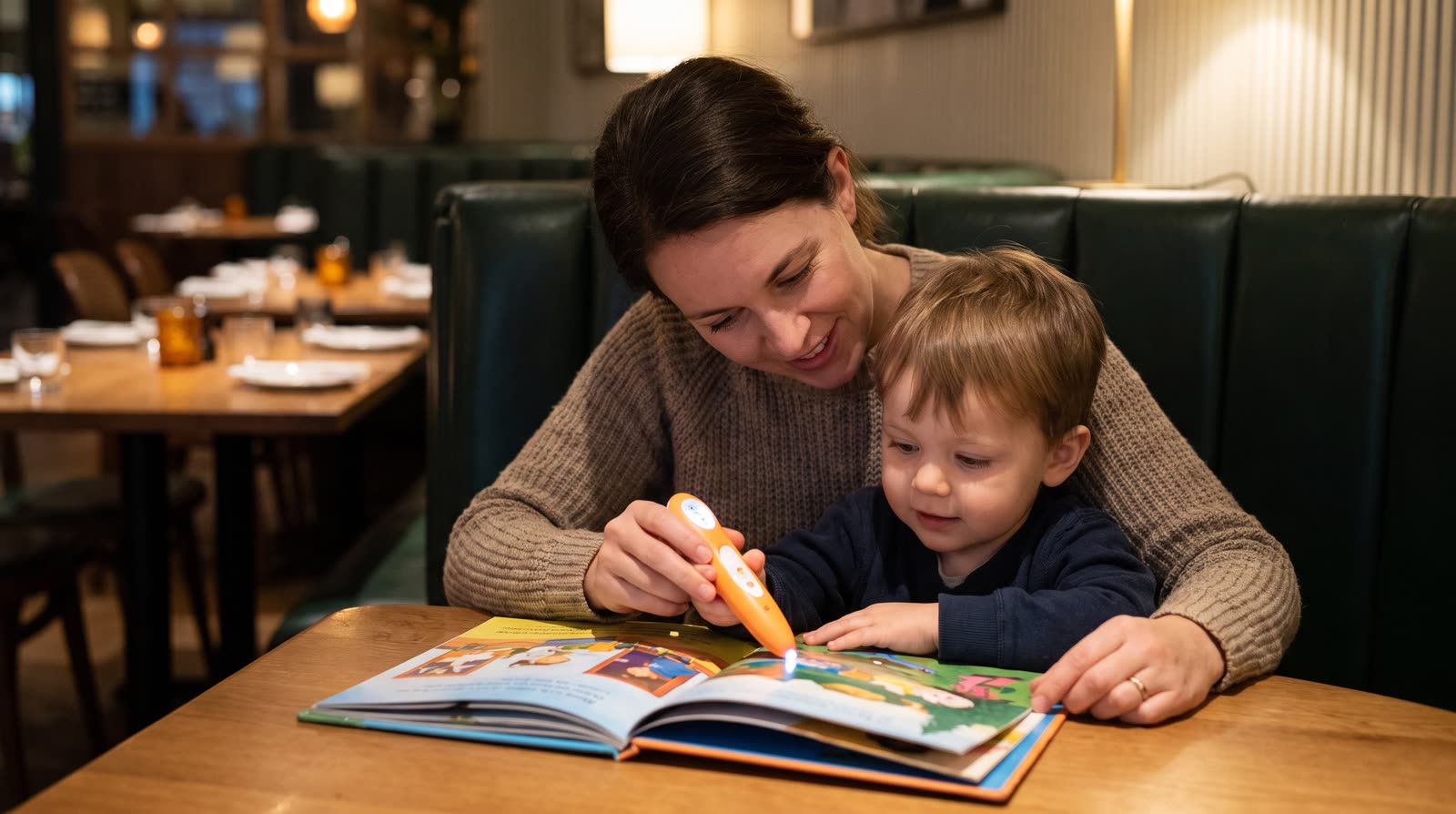
Integrating interactive learning tools into out-of-home settings, such as morning breakfast routines at restaurants, requires a balanced approach that supports child engagement while respecting public environments. For B2B distributors, educational publishers, and retail partners specializing in children's literacy, understanding how families utilize talking pen and interactive picture book sets in dynamic spaces like restaurants is vital for product design, packaging, and accessory curation. This guide examines the developmental, logistical, and safety considerations involved when parents introduce reading pen books during restaurant morning routines, offering practical frameworks grounded in early childhood education principles.
Understanding Portable Early Literacy and Child Engagement in Public Spaces
The Role of Multisensory Tools in Transitioning Environments
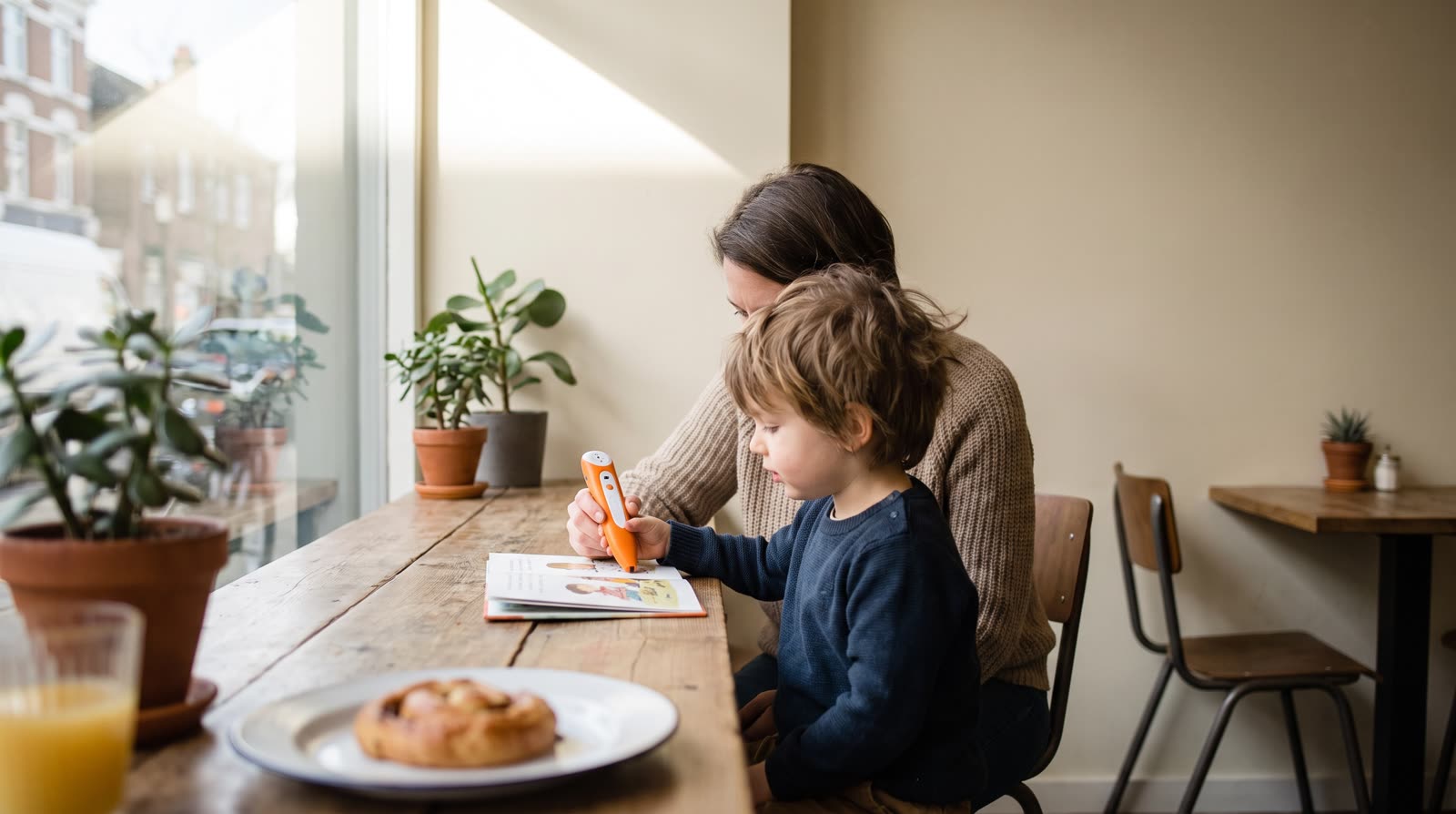
Morning routines outside the home often involve transitions—moving from the calm of home to the active environment of a restaurant or family dining space. Children benefit significantly from familiar, structured sensory touchpoints that anchor their attention. Interactive talking pens paired with tactile picture books provide a multisensory experience combining visual storytelling, tactile page turning, and auditory reinforcement. For B2B suppliers and toy/book retailers, designing compact, portable book sets with durable binding and secure headphone or volume-limiting capabilities ensures these tools meet the practical demands of family dining without disrupting surrounding patrons.
Balancing Independent Exploration with Adult Mediation
While interactive reading pens are designed for intuitive, independent use, out-of-home settings like restaurants highlight the importance of adult mediation. Parents often use morning breakfast waits as an opportunity for joint media engagement—sitting alongside the child, guiding optical code point-and-click interactions, and discussing story themes in soft voices. According to guidance from the American Academy of Pediatrics (AAP) on digital and media literacy in early childhood, co-engagement enhances comprehension and language acquisition. Retailers and educational developers can support this by incorporating parent-guidance inserts into book packaging, offering practical tips for quiet, respectful public reading.
Practical Preparation and Management for Restaurant Morning Routines
Pre-Outing Checklist and Kit Organization
Successful integration of reading pen sets in public environments depends heavily on pre-outing preparation. Parents should curate a dedicated, compact travel pouch containing the talking pen, a compatible interactive book title, a charging cable or spare batteries (depending on model specifications), and volume-limiting children's headphones or earbuds. For wholesale distributors and retail merchandisers, providing bundled accessories such as protective carrying cases and headphone adapters enhances the perceived value and practical utility of the product line for families on the go.
Managing Audio Output and Environmental Etiquette
Restaurants require consideration for shared acoustic spaces. While built-in speakers are ideal for quiet home settings, public spaces necessitate mindfulness regarding volume levels. Parents are encouraged to utilize pre-set low-volume modes or connect child-safe headphones to the talking pen's 3.5mm jack or Bluetooth audio output. B2B product developers should prioritize hardware designs featuring easily accessible, tactile volume controls and automatic standby timers to conserve battery life and prevent accidental sound activation while stored in bags.
Developmental and Behavioral Guidelines for Young Learners
Supporting Children with Diverse Learning Needs in Public Settings
Public environments can sometimes overstimulate young children, particularly those with sensory processing sensitivities, attention differences, or early reading difficulties. Structured, repetitive audio playback and predictable touch-and-read loops provided by talking pens can offer a calming, focused activity during restaurant waits. As emphasized by educational organizations such as Reading Rockets and the International Dyslexia Association, multisensory reinforcement helps anchor reading engagement. However, tools should be introduced as supportive aids rather than rigid pacifiers, and parents should remain attuned to signs of overstimulation, knowing when to transition to a verbal conversation or a physical break.
Age-Appropriate Engagement Limits and Screen/Audio Fatigue
Even with audio-based interactive books, prolonged engagement without breaks can lead to cognitive fatigue. During a 20-to-30-minute restaurant morning routine, limiting continuous active listening to short, interactive segments interspersed with natural pauses (such as ordering food, interacting with waitstaff, or observing surroundings) promotes balanced child development. Publishers and book creators should design page layouts with distinct interactive clusters that naturally encourage pacing rather than continuous, uninterrupted scrolling or tapping.
ReadGlo project support
Request Product Catalog & Wholesale Samples
Explore ReadGlo's premium talking pen sets, interactive picture books, and custom OEM/ODM manufacturing solutions designed for global educational markets.
Safety, Device Care, and Maintenance Standards
Low-Risk External Inspection and Handling
Ensuring the safety of electronic educational toys in daily travel requires adherence to established consumer safety guidelines. According to the U.S. Consumer Product Safety Commission (CPSC), parents and caregivers should regularly inspect electronic devices and accessories for external wear. For reading pens, this includes checking the optical sensor lens at the tip for dust or obstructions, inspecting the outer plastic housing for cracks, and ensuring battery compartments or charging port covers remain securely fastened.
Handling Anomalies, Moisture, and Power Safety
Restaurants present potential exposure risks such as spilled liquids (juice, milk, water) or food debris. If a reading pen or interactive book comes into contact with moisture or shows signs of abnormal heating, unusual odor, battery compartment swelling, or smoke, immediate action is required. Users must discontinue use immediately, avoid attempting to charge the device, refrain from attempting internal disassembly, and contact the manufacturer or authorized retail customer service channel. B2B distributors should ensure all partner manufacturing facilities comply with international electrical safety standards (e.g., CE, FCC, RoHS) and provide clear safety warnings in user manuals.
B2B Procurement, Merchandising, and Quality Assurance Considerations
Evaluating Optical Code Durability and Print Quality
For B2B buyers, educational institutions, and retail distributors sourcing talking pen systems, the reliability of OID (Optical Identification) dot codes printed on book pages is paramount. Restaurant environments test physical durability—pages are subjected to frequent handling, potential spills, and ambient lighting changes. Procurement teams must verify that printing partners utilize high-precision offset or digital printing with specialized carbon or invisible infrared ink layers that resist fading, scratching, and smudging under daily use.
Customization, Packaging, and Retail Readiness
To capture family-oriented retail and institutional markets, manufacturers must offer flexible packaging solutions—such as sturdy magnetic-closure gift boxes or travel-friendly blister packs that securely house both the pen and multiple companion books. Wholesalers evaluating suppliers should review sample quality control protocols, firmware update mechanisms for audio files, and multilingual audio resource management to ensure seamless localization across diverse international markets.
Frequently Asked Questions
How can parents prevent the reading pen from disturbing other restaurant patrons?
Parents can manage noise levels by utilizing the talking pen's adjustable volume control, setting it to the lowest comfortable listening level, or plugging in child-safe headphones with volume-limiting technology. Selecting interactive books with shorter narrative snippets also helps maintain a quiet, orderly dining environment.
What should a parent do if the reading pen stops recognizing the dot codes on the book page while at a restaurant?
First, check the optical sensor lens at the tip of the pen for smudges, dust, or food residue, and gently wipe it with a clean, dry microfiber cloth. Ensure the book is laid flat in adequate ambient lighting and that the correct audio book file has been loaded onto the pen's internal memory.
How long should a child be permitted to use an interactive reading pen during a restaurant meal wait?
It is recommended to use the tool in short, 10-to-15-minute intervals interspersed with natural pauses, such as ordering food, speaking with family members, or observing the surroundings. This prevents auditory fatigue and encourages well-rounded social interaction during dining.
What safety precautions should be taken if a beverage is spilled on the reading pen or interactive book?
Immediately power off the device if possible, remove it from the liquid source, and avoid plugging it into a charger. Do not attempt to disassemble the unit. Allow external surfaces to air dry in a well-ventilated area, and contact the manufacturer or customer service channel if internal moisture or electrical anomalies are suspected, following CPSC guidelines.
What features should B2B buyers look for when sourcing portable reading pen sets for retail distribution?
B2B buyers should evaluate robust outer casing materials (ABS food-grade plastics), rechargeable lithium-ion battery safety certifications, high-precision OID printing durability, intuitive tactile buttons for young children, and comprehensive multilingual audio book support.
Conclusion
Incorporating reading pen books into morning restaurant routines offers a valuable opportunity to foster early literacy, engagement, and calm transitions for young children outside the home. By balancing independent exploration with mindful adult mediation, adhering to appropriate time limits, and prioritizing device safety and maintenance, families can maximize the benefits of interactive educational tools. For B2B partners, educational publishers, and retail distributors, understanding these out-of-home use cases informs superior product design, durable packaging, and reliable safety standards that meet the evolving expectations of global educational markets.
Continue your research
Related reading pen buyer guides
Use these related guides to compare the next product, content, sourcing or channel decision in your project.
- Early LearningBridging Home and Classroom: Integrating Interactive Reading Pens into Kindergarten Morning RoutinesRead this guide
- Early LearningHow Parents Can Use Reading Pen Books at a Restaurant During Quiet TimeRead this guide
- Early LearningBridging Home and Kindergarten: How Portable Reading Pen Systems Support Mobile Learning and TransitRead this guide
Continue with ReadGlo
See a DOT-code picture-book set designed for guided early-learning programs.
ReadGlo project support
Get a Wholesale Quote Today
Partner with ReadGlo for reliable, certified, and innovative early literacy solutions tailored to your brand's distribution needs.