
Contents
Introduction
The transition from structured kindergarten classroom environments to calm evening home routines represents a critical juncture in early childhood literacy development. Educators, institutional buyers, and parents constantly seek innovative educational tools that maintain active learning engagement while fostering a natural, lifelong love for reading. Interactive reading pens (commonly known as talking pens) paired with optical-coded picture books have emerged as versatile, multi-sensory educational media capable of bridging formal school settings and informal domestic environments. When young learners engage with tactile books and synchronized audio feedback during daytime kindergarten literacy centers, carrying those familiar literacy rituals into evening bedtime reading can significantly enhance comprehension, vocabulary retention, and emotional security. However, successful implementation across both institutional and home contexts requires careful consideration of audio pacing, cognitive load, adult scaffolding, and stringent product safety standards. This comprehensive guide examines how educators, parents, and B2B educational distributors can thoughtfully integrate reading pen books across kindergarten classrooms and evening routines, offering evidence-based strategies, pedagogical insights, and rigorous quality assurance protocols to support holistic early childhood development.
Pedagogical Foundations of Interactive Reading Pens in Early Childhood Education
Bridging Formal Kindergarten Literacy and Informal Home Bedtime Reading
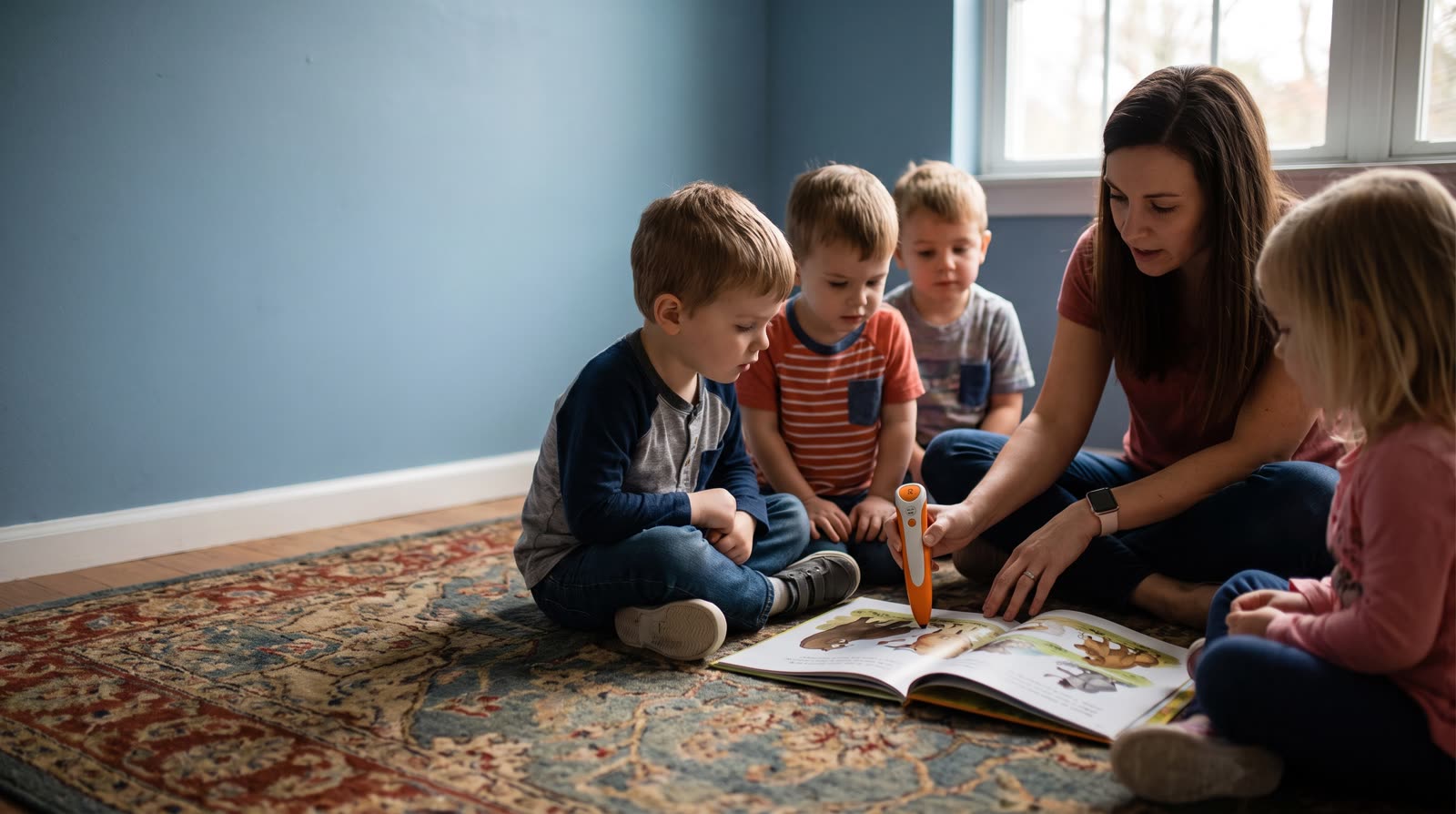
Early childhood education frameworks consistently emphasize the vital continuity between school-based literacy activities and home reading habits. Kindergarten classrooms utilize interactive learning centers to encourage independent exploration, phonemic awareness, and foundational vocabulary building. When children utilize optical reading pens—portable electronic devices equipped with integrated CMOS optical sensors that read invisible OID (Object Identification) dot matrix codes printed on paper to trigger pre-recorded audio files—they experience immediate, responsive multi-sensory feedback. Translating this classroom familiarity into home bedtime reading creates a powerful comforting routine anchor. Children recognize the familiar physical design of the pen and the auditory cues associated with their daytime learning experiences, effectively easing the psychological transition from active daytime play and structured classroom instruction to restful evening wind-down without experiencing abrupt shifts in sensory stimulus.
Multi-Sensory Engagement and Audio-Visual Synchronization
The integration of visual illustrations, tactile page turning, and synchronized auditory narration supports diverse learning styles in young children, accommodating auditory, visual, and kinesthetic modalities. According to guidance from pediatric and early literacy organizations such as the American Academy of Pediatrics (AAP), early literacy experiences are most effective when they combine rich verbal interaction with physical manipulation of books. Optical reading pens do not replace human instruction or parent-child communication; rather, they serve as supportive assistive scaffolding that reinforces letter-sound correspondence, correct pronunciation, and narrative pacing. In both kindergarten group settings and quiet one-on-one bedtime sessions, synchronized audio helps emerging readers connect written symbols with spoken language naturally and intuitively.
The Role of Adult Scaffolding in Guided Interactive Exploration
While interactive reading pens offer children a high degree of autonomous exploration, adult mediation remains an indispensable component for maximizing educational outcomes and emotional connection. In a kindergarten classroom environment, teachers actively guide children on how to navigate audio prompts, ask open-ended questions, and connect story themes to real-world experiences. Similarly, during bedtime reading at home, parents provide emotional warmth, physical closeness, and conversational scaffolding. Adults can pause the audio playback to ask children predictive questions about what might happen next, discuss character emotions, or relate the story's vocabulary to everyday family life. This collaborative approach ensures that technology acts as a bridge to deeper interpersonal communication rather than an isolated screen or audio distraction.
Structuring Bedtime Literacy Routines with Talking Books
Designing a Calm, Predictable Bedtime Literacy Environment
Bedtime routines require an intentional, mindful shift in atmosphere from daytime stimulation to peaceful relaxation. When incorporating reading pen books into the evening wind-down, educators and parents should establish a consistent, quiet space free from flashing lights, excessive screen glare, and loud electronic clutter. Soft ambient lighting, comfortable cushions, and quiet surroundings encourage children to slow their heart rates and settle down physically. Using the reading pen in touch-and-listen mode at a low, soothing volume helps signal to the child's nervous system that sleep time is approaching, turning literacy into a comforting, predictable pre-sleep ritual that promotes healthy sleep hygiene.
Balancing Independent Audio Exploration with Parent-Child Shared Reading
A successful evening reading routine combines independent exploration with shared adult-child storytelling. Children often enjoy using the reading pen to independently replay favorite sound effects, character dialogues, or musical refrains, exercising their agency and decision-making skills. However, parents should actively participate by sharing the physical book, pointing to illustrations together, and reading alternating pages aloud in their natural voices. This balanced approach fosters both independent self-regulation and the irreplaceable emotional bonding of parent-child co-reading, ensuring children develop positive emotional associations with books.
Age-Appropriate Content Selection and Pacing for Evening Wind-Down
Not all educational books or interactive media are suitable for bedtime use. Educational distributors, publishers, and content creators design specialized picture books featuring calming themes, gentle storylines, and soothing lullabies or ambient soundscapes specifically for evening reading routines. When selecting books for kindergarten-age children at bedtime, adults should prioritize simple narratives, predictable phrasing, and lower audio tempos. Fast-paced, high-energy interactive quiz games or competitive sound-matching activities included in some multimedia books should be strictly reserved for daytime kindergarten learning centers rather than bedtime wind-down periods.
ReadGlo project support
Request Product Catalog
Explore ReadGlo's certified talking pen and interactive picture book collections designed for educational distribution, schools, and wholesale partners.
Kindergarten Classroom Integration and Home-School Continuity
Extending Classroom Literacy Centers into Domestic Evening Routines
Kindergarten educators frequently seek effective methods to extend classroom learning into the home environment, ensuring that literacy practices do not abruptly stop when the school bell rings. Talking pen sets distributed through school lending programs or specialized educational packages allow children to bring familiar reading materials and compatible pens home. Because the optical OID codes and underlying audio library files remain identical between the kindergarten classroom library and the home set, children experience seamless continuity. They can proudly demonstrate to their parents what they explored during school reading centers, reinforcing self-efficacy, academic confidence, and positive attitudes toward reading.
Facilitating Consistent Literacy Habits Across Diverse Family Environments
Every family operates within a unique evening schedule, domestic dynamic, and linguistic background. Interactive reading pens offer adjustable volume controls, multilingual audio files, and intuitive touch operation that successfully accommodate diverse domestic environments. For bilingual families or households with working parents who have limited time for complex evening reading routines, talking pens provide consistent, native-pronunciation narration models. This standardization helps bridge socio-economic and linguistic achievement gaps, ensuring that all children receive high-quality auditory exposure regardless of immediate parental reading fluency or second-language proficiency.
Supporting Parental Involvement and Evening Literacy Engagement
Active parental participation in evening literacy routines is one of the strongest predictors of long-term academic success in early childhood. When kindergarten classrooms introduce talking pen books that easily travel between school and home, parents are equipped with tangible resources that remove the intimidation factor often associated with teaching reading. Because the pen handles accurate pronunciation and pronunciation modeling, parents who may feel insecure about their reading skills or second-language pronunciation can confidently engage in co-reading sessions, transforming bedtime into a collaborative learning adventure.
Evaluating Audio Clarity, Narration Pace, and Cognitive Load
From a professional evaluation standpoint, institutional buyers, school administrators, and educators must assess the acoustic and cognitive quality of reading pen systems. High-quality audio output must feature crisp, distortion-free pronunciation, natural intonation, and moderate speech rates tailored specifically for young children. Excessive background sound effects, abrupt volume spikes, or cluttered acoustic layers can overwhelm young learners, leading to cognitive fatigue and sensory overload. Ensuring clean, balanced audio design in both kindergarten settings and bedtime routines protects children's auditory processing capacity and supports healthy cognitive development.
B2B Procurement, Quality Assurance, and Safety Standards
Sourcing Safe, Durable Hardware and Non-Toxic Materials
For B2B buyers, educational distributors, and school districts, procuring interactive reading pens and talking books requires rigorous adherence to product safety and material compliance standards. Children's educational products must be manufactured using non-toxic, food-grade ABS plastics and eco-friendly soy-based inks for book printing to ensure absolute safety during handling and mouthing. Hardware must feature smooth, rounded ergonomic designs without sharp edges, secure battery compartments with screw-down covers to prevent accidental coin cell ingestion, and robust drop-resistance to withstand daily handling in bustling kindergarten classrooms and home environments.
Verifying Optical OID Code Precision and Book Compatibility
The technical reliability and user satisfaction of an optical reading pen depend heavily on the precision of its built-in CMOS camera sensor and high-resolution OID dot matrix printing on paper. B2B purchasers must verify that print suppliers maintain strict color calibration, dot pattern accuracy, and varnish coating standards. Misaligned, faded, or smudged OID codes cause reading latency, audio mismatch, or scan failure, which frustrates young users and educators alike. Establishing rigorous pre-shipment sample testing protocols ensures seamless compatibility between pen firmware versions and printed book batches across international supply chains.
Compliance with International Safety Regulations and Child Product Standards
Global educational suppliers must ensure their products comply with recognized international safety standards, such as ASTM F963 (United States), EN71 (European Union), CE marking, and RoHS directives for electronic components. According to safety guidance from the U.S. Consumer Product Safety Commission (CPSC), children's electronic learning aids must undergo rigorous third-party laboratory testing for small parts, sharp points, battery thermal safety, and restricted chemical substance limits. Educational institutions, importers, and wholesale buyers should always request up-to-date compliance certificates and test reports from manufacturing partners before finalizing large-scale procurement orders.
Frequently Asked Questions
Can reading pens be used safely by young children during bedtime without adult supervision?
While reading pens are designed for intuitive child use, adult supervision or guidance is recommended during bedtime routines to ensure safe handling, appropriate volume levels, and a calm pre-sleep atmosphere. Adults should also check that battery compartments are securely fastened and inspect the device for any signs of physical wear.
How do reading pens help bridge kindergarten classroom learning and home routines?
By using the exact same optical-coded books and audio files at school and at home, children experience continuity in their literacy environment. Familiar audio cues and characters reinforce daytime learning objectives during evening relaxation, reducing cognitive friction and supporting predictable routines.
What safety precautions should parents and educators follow regarding reading pen batteries and hardware?
Users should only use recommended batteries, ensure battery covers are tightly secured with screws, and avoid exposing the device to moisture or extreme heat. If a device shows signs of damage, unusual heating, or battery leakage, stop use immediately and contact the manufacturer or qualified service channels, following safety guidelines from the U.S. Consumer Product Safety Commission (CPSC).
Are interactive reading pens suitable for bilingual families or children with early reading difficulties?
Yes, reading pens with multi-language support and clear human-voice narration provide consistent auditory modeling that assists bilingual learners and children building early phonemic awareness. However, parents should consult qualified educators or pediatric specialists for individualized learning plans if specific developmental challenges are present.
What should B2B distributors look for when sourcing talking pen sets for schools?
Distributors should prioritize manufacturers offering robust educational durability, non-toxic materials (ABS plastic, soy-based ink), high-precision OID printing compatibility, and verified compliance certifications such as EN71, ASTM F963, and CE standards.
Conclusion
Integrating interactive reading pen books across kindergarten classrooms and home bedtime routines offers a powerful synergy between structured early education and comforting domestic habits. By combining tactile book manipulation with clear, multi-sensory audio feedback, educators and parents can foster lifelong literacy engagement while respecting the need for calm, predictable evening wind-down periods. For B2B educational distributors, school suppliers, and brand partners, delivering safe, high-quality, and pedagogically sound talking pen systems represents an exceptional opportunity to support modern early childhood learning. Manufacturers and buyers must maintain rigorous standards in material safety, optical coding precision, and acoustic quality to ensure reliable performance across both school and home environments.
Continue your research
Related reading pen buyer guides
Use these related guides to compare the next product, content, sourcing or channel decision in your project.
- Early LearningBridging Home and Classroom: Integrating Interactive Reading Pens into Kindergarten Morning RoutinesRead this guide
- Early LearningHow Can Parents Use Reading Pen Books in the Car During Morning RoutinesRead this guide
- Early LearningBridging Home and Kindergarten: How Portable Reading Pen Systems Support Mobile Learning and TransitRead this guide
Continue with ReadGlo
See a DOT-code picture-book set designed for guided early-learning programs.
ReadGlo project support
Get a Wholesale Quote
Contact ReadGlo's engineering and export team to discuss custom OEM/ODM solutions, sample evaluation, and safety compliance documentation.