
Contents
Introduction
Kindergarten quiet time represents a critical transition window within the daily classroom schedule, balancing the high-energy demands of group instruction with moments of restorative calm. For educators and parents exploring independent learning tools, incorporating talking pen books during this period offers a structured avenue for self-directed literacy engagement. When children interact with optical reading pens and specially encoded picture books, they encounter multisensory audio reinforcement without requiring constant adult intervention. However, successful integration relies on establishing clear routines, defining appropriate boundaries for autonomous device usage, and fostering collaborative communication between home and school environments. This comprehensive guide examines how stakeholders in the educational publishing and toy manufacturing sectors can design, communicate, and support effective quiet-time literacy protocols that respect child development principles and align with recognized educational standards.
Understanding the Role of Quiet Time in Early Childhood Development
Defining Structured Independent Time in Kindergarten Classrooms
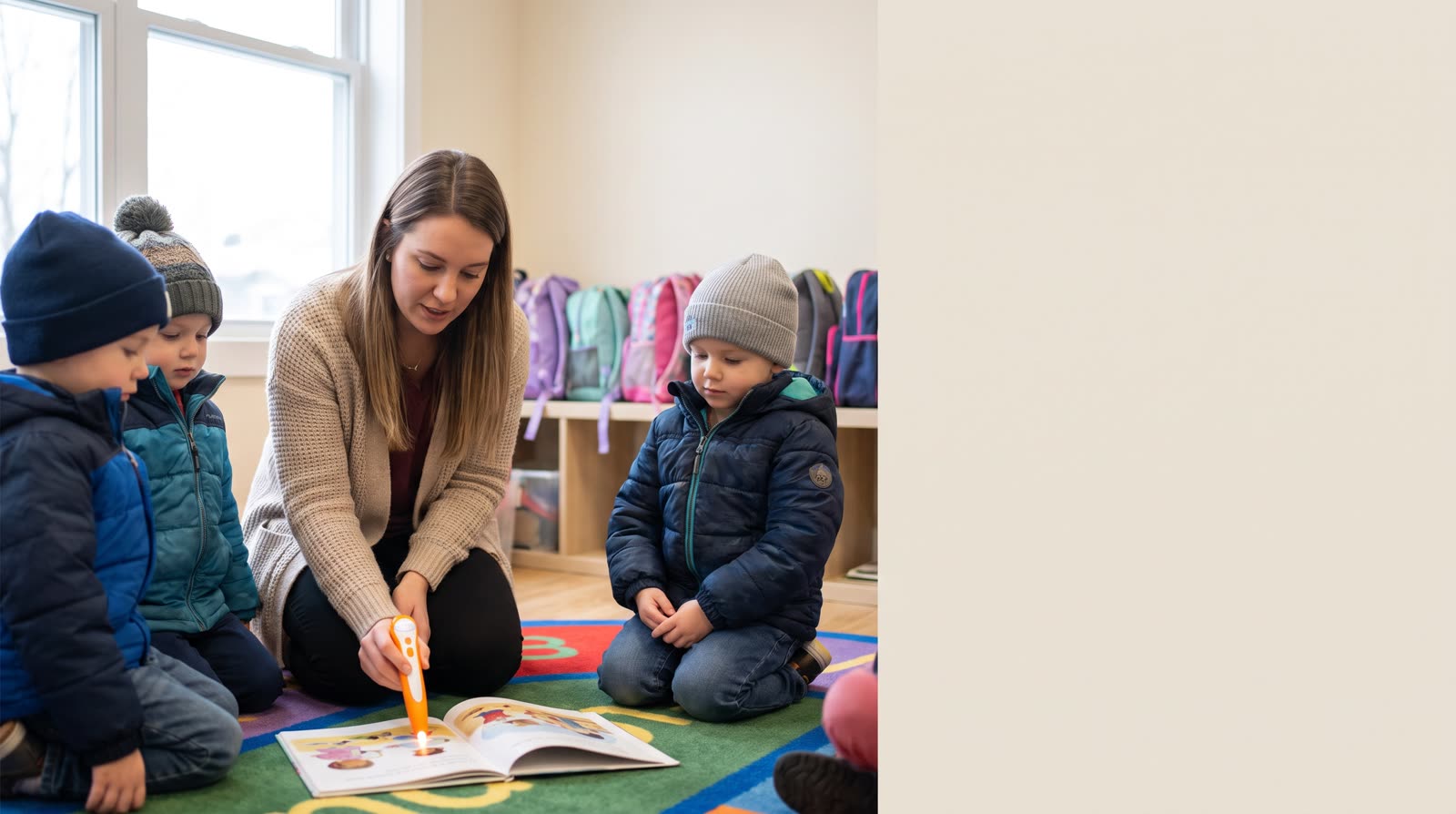
In early childhood education, quiet time is not merely a break from academic activities; it is a foundational practice designed to help young learners regulate their energy levels, process daily experiences, and practice independent self-soothing. Structuring this time effectively requires environments that encourage low-intensity, focused engagement rather than chaotic play. Talking pen books fit naturally into this framework because the tactile act of holding a pen, turning physical pages, and listening to clear audio prompts creates an immersive, self-contained learning loop. Educators design quiet time zones with comfortable seating, low ambient noise, and accessible book racks where children can independently select titles without disrupting peers. For B2B manufacturers and educational publishers, understanding these classroom spatial and temporal dynamics ensures that product packaging, book weight, and audio clarity are optimized for independent, low-volume use in communal spaces.
Balancing Teacher-Led Instruction and Self-Directed Exploration
A balanced kindergarten curriculum seamlessly transitions between explicit teacher-led instruction and autonomous student exploration. While direct instruction builds foundational vocabulary and phonemic awareness, independent quiet time empowers children to explore narratives at their own pace, reinforcing concepts previously introduced by educators or reinforced by parents at home. Interactive talking books bridge this gap by acting as patient, responsive facilitators. When a child touches a word or illustration with an optical reader, the device provides immediate, accurate auditory feedback, allowing the child to pause, repeat, or skip sections according to their individual curiosity. Parents collaborating with educators can mirror these routines at home, ensuring that independent reading time reinforces school-based literacy goals without overwhelming the child with rigid performance expectations or standardized testing pressures.
How Talking Pen Technology Supports Independent Quiet Engagement
Multisensory Feedback and Multisensory Literacy Engagement
Multisensory learning is a cornerstone of early childhood pedagogy, supported by leading developmental guidelines from organizations such as the American Academy of Pediatrics (AAP). When children engage with reading pen systems, visual literacy (interpreting illustrations), tactile literacy (holding the pen and turning pages), and auditory literacy (listening to narration, sound effects, or pronunciation) operate simultaneously. During kindergarten quiet time, this multisensory convergence helps maintain focused attention and deepens cognitive processing. Rather than passive listening, the child's active physical touch drives the learning experience. B2B buyers seeking reliable educational devices prioritize optical recognition accuracy, clear speaker acoustics with adjustable volume controls, and high-fidelity audio encoding to ensure that children receive crisp, distortion-free pronunciation models every time they interact with the page.
Ergonomic Design and Intuitive Point-and-Listen Mechanics
For young children in kindergarten, fine motor skills are still developing, making device ergonomics a critical consideration for manufacturers and school purchasers. Talking pens must feature lightweight, cylindrical bodies suited for small hands, durable outer shells capable of withstanding accidental drops, and intuitive power and volume buttons that prevent accidental setting changes. The point-and-listen mechanism relies on invisible micro-dot OID (Optical Identification) codes printed alongside traditional ink. When designing quiet time materials, publishers must ensure that activation spots are sufficiently large and well-spaced so that children do not experience frustration when attempting to trigger audio. This seamless mechanical interaction minimizes the need for adult troubleshooting during independent sessions, allowing teachers to supervise the classroom environment smoothly.
Practical Strategies for Parents and Educators Collaborating on Quiet Time Routines
Establishing Clear Expectations and Gentle Boundaries for Device Usage
Introducing technology into kindergarten quiet time requires thoughtful change management and clear behavioral frameworks. Both educators and parents should establish predictable routines, such as designating specific listening corners, utilizing low-profile headphones or splitters when necessary to maintain classroom tranquility, and setting clear time limits for device use. Children learn that talking pens are specialized learning tools rather than recreational gaming consoles. Adults can guide this understanding by introducing the devices during supervised group sessions before transitioning them to independent quiet time. Furthermore, establishing a consistent post-reading routine—such as placing the pen back into its designated charging dock or storage slot—teaches responsibility and preserves equipment longevity for daily classroom use.
Selecting Appropriate Interactive Book Content for Focused Listening
Not all children's books are equally suited for independent quiet-time exploration. During rest periods, content should feature calming narratives, predictable sentence structures, gentle rhythm and rhyme, and uncluttered page layouts that prevent cognitive overload. Parents and educators should curate a specialized collection of quiet-time titles that emphasize social-emotional learning, nature exploration, and gentle storytelling. B2B educational suppliers often package these collections into themed library sets complete with teacher guidebooks and parent connection sheets, facilitating seamless alignment between classroom activities and home reading habits. When selecting books, adults must verify that book codes match the firmware version of the accompanying reading pen to prevent operational errors that could disrupt the quiet time atmosphere.
ReadGlo project support
Request B2B Product Catalog
Explore ReadGlo's customizable talking pen sets and interactive book collections designed for early childhood educators, publishers, and global distributors.
Ensuring Safety, Durability, and Product Care in Environment Settings
Managing Equipment Care, Battery Safety, and Storage Protocols
Classroom and home environments demand rigorous adherence to product safety and maintenance protocols, particularly when electronic devices are handled by young children. According to guidance from the U.S. Consumer Product Safety Commission (CPSC), electrical and battery-operated children's products must be inspected regularly for signs of wear, moisture exposure, or structural damage. Users must never attempt to disassemble talking pens or tamper with internal lithium-ion battery compartments. If a device exhibits unusual heating, swelling, abnormal odors, or charging failures, adults must immediately disconnect the power source, cease usage, and contact the manufacturer or authorized service channels. Implementing daily charging and storage checklists ensures that devices remain safe, fully powered, and properly maintained for each new quiet-time session.
Aligning with Regulatory Safety Standards and Product Compliance
B2B buyers, school administrators, and conscientious parents must verify that all educational electronic products comply with international safety and toy standards, such as ASTM F963, EN71, FCC, and RoHS certifications. These standards govern non-toxic materials, safe acoustic output limits (protecting young ears from excessive decibel levels), and secure battery enclosures that prevent child access to small components. When sourcing talking pen sets and interactive books, purchasers should request official compliance documentation and review manufacturer specifications carefully. Maintaining transparent, safety-first procurement practices protects young learners and establishes professional credibility for educational publishers and toy brands operating in competitive global markets.
Evaluating Learning Engagement and Gathering Feedback Without Over-Testing
Observing Child Autonomy and Engagement During Independent Sessions
Evaluating the effectiveness of quiet-time reading tools should rely on naturalistic observation rather than formal, high-pressure testing. Educators and parents can monitor how children interact with the books—noting whether they maintain focus, explore diverse vocabulary points, demonstrate spontaneous storytelling behaviors, or show enjoyment through facial expressions and relaxed posture. By observing these qualitative indicators, adults gain insights into which book topics and audio pacing strategies resonate best with the child's developmental stage. Documenting these observations helps educators tailor future classroom resource allocations and enables parents to select complementary titles for home reading routines.
Communicating Between Home and School for Consistent Literacy Support
A unified approach to early literacy bridges the gap between kindergarten classrooms and family living rooms. Establishing regular communication channels—such as take-home reading logs, parent-teacher conferences, and shared resource newsletters—allows educators and parents to discuss how talking pen books are utilized during quiet moments. When parents understand the specific learning objectives pursued in school, they can reinforce similar routines at home, creating a stable, supportive literacy ecosystem. Educational publishers can support this partnership by including structured parent guidance notes inside book covers and providing digital resource portals that offer tips on fostering independent reading habits.
Frequently Asked Questions
Can talking pen books be used without headphones during kindergarten quiet time?
Yes, talking pens feature adjustable volume controls, allowing them to be set to a low, whisper-like volume suitable for individual listening corners. However, in larger or shared classroom quiet spaces, using low-profile juvenile headphones or audio splitters is often recommended to maintain a peaceful environment.
How should parents and teachers clean and maintain optical reading pens in a shared environment?
Optical reading pens and interactive books should be cleaned using a soft, slightly damp microfiber cloth lightly wiped across exterior surfaces. Never submerge devices in water, use harsh chemical solvents, or spray liquids directly onto the optical lens or speaker grilles.
What safety precautions should be observed regarding talking pen batteries?
Adults must supervise charging using certified USB adapters and standard cables. Users should never attempt to disassemble the device or access internal battery compartments. If a device shows signs of damage, swelling, or overheating, immediately stop use and consult manufacturer guidelines.
How do parents ensure book codes match the talking pen firmware?
Before introducing new interactive books, parents and educators should verify that the book series matches the optical encoding format supported by the pen model. Manufacturers provide firmware update tools and compatibility charts via official support channels to ensure seamless audio playback.
Are talking pen books appropriate for children with special learning needs during quiet time?
Talking books provide multisensory reinforcement that can benefit diverse learners by allowing self-paced repetition. However, they are educational tools rather than clinical medical devices. For specific developmental or learning accommodations, consult qualified educational professionals or specialists.
Conclusion
Integrating talking pen books during kindergarten quiet time offers a powerful synthesis of independent exploration and structured literacy support. By combining the multisensory engagement of optical reading technology with thoughtful adult guidance, educators and parents can create calm, focused environments that foster a lifelong love of reading. Success depends on maintaining clear routines, upholding rigorous safety and product care standards, and fostering open communication between home and school. ReadGlo remains committed to partnering with B2B educators, publishers, and distributors worldwide to provide reliable, certified, and innovative interactive literacy solutions designed for the evolving needs of early childhood education.
Continue your research
Related reading pen buyer guides
Use these related guides to compare the next product, content, sourcing or channel decision in your project.
- Early LearningBridging Home and Classroom: Integrating Interactive Reading Pens into Kindergarten Morning RoutinesRead this guide
- Early LearningBridging Home and Kindergarten: How Portable Reading Pen Systems Support Mobile Learning and TransitRead this guide
- Early LearningBridging Kindergarten Classrooms and Home Bedtime Routines with Interactive Reading Pen BooksRead this guide
Sources used for further reading
Continue with ReadGlo
See a DOT-code picture-book set designed for guided early-learning programs.
ReadGlo project support
Contact Our Sourcing Team
Partner with ReadGlo for certified, high-quality OEM/ODM talking pen solutions tailored to your educational market and distribution standards.