
Contents
Introduction
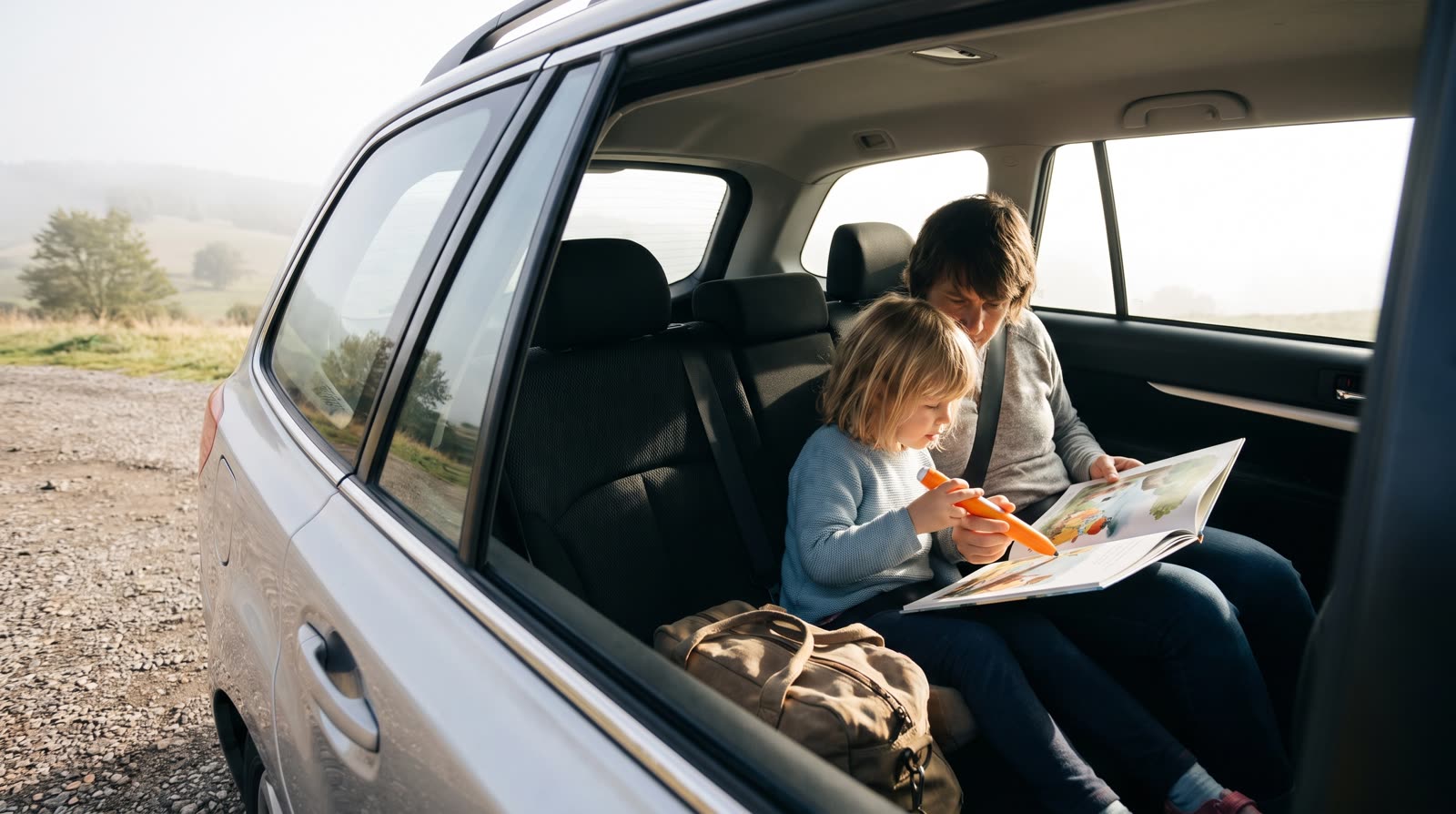
Car travel presents both a unique opportunity and a distinct challenge for family literacy routines. As young children spend time in transit—whether on daily commutes or extended road trips—parents frequently look for screen-free, constructive ways to maintain engagement and support language acquisition. For B2B partners, including educational publishers, toy distributors, and retail buyers, understanding how families integrate interactive talking pens and audio-enabled picture books inside vehicles is essential for product positioning, user manual design, and retail merchandising. When implemented thoughtfully, mobile reading pen activities can transform travel time into an immersive, multi-sensory literacy experience. However, using electronic learning aids in a moving vehicle requires careful attention to safety protocols, ergonomic comfort, and age-appropriate content management. According to guidance from the American Academy of Pediatrics (AAP) regarding early childhood development and literacy exposure, fostering rich verbal interaction and shared book reading lays a critical foundation for language skills, even when on the go [1]. Furthermore, aligning product design with rigorous safety standards, such as those outlined by the U.S. Consumer Product Safety Commission (CPSC), ensures that portable electronic learning tools remain safe during transit [2]. This comprehensive B2B guide examines the methodologies, safety considerations, structural best practices, and practical routines parents can adopt when using reading pen books during car travel, providing industry stakeholders with actionable insights for product development and customer education.
Understanding the Role of Portable Audio Literacy in Transit
The Value of Screen-Free Audio Engagement in Vehicles
Modern families increasingly seek alternatives to passive screen time during car journeys. While tablets and video screens can keep children occupied, they often isolate the child and reduce verbal interaction. In contrast, interactive talking pens combined with physical picture books offer a tactile, auditory learning environment that engages children without locking their gaze onto a digital display. Inside a car, where space is restricted and lighting conditions fluctuate, optical sensor-based reading pens allow children to tap book pages and trigger clear audio narration, sound effects, or foreign language vocabulary. For B2B distributors and educational suppliers, highlighting this screen-free advantage is crucial for marketing to modern, wellness-conscious parents. Studies in early literacy emphasize that auditory stimulation combined with tactile manipulation of physical pages strengthens cognitive mapping and vocabulary retention. When children listen to human-voice narration through a speaker or headphone set while turning pages in a secure car seat environment, they practice active listening and sequential comprehension. Manufacturers and publishers must therefore design talking pen kits specifically optimized for portable use, featuring robust outer casings, intuitive button layouts that are easy to operate in low light, and reliable volume management to prevent driver distraction.
Ergonomics and Usability Challenges in Moving Environments
Using educational toys inside a moving vehicle introduces unique ergonomic hurdles. Unlike a stable desk or a quiet home reading nook, a car cabin involves vibration, motion, and restricted lap space. Children strapped into car seats or booster seats have limited range of motion, making it difficult to balance large books and precise pointing tools simultaneously. To ensure a positive user experience, publishers developing travel-friendly reading pen sets frequently utilize spiral-bound or board-book formats with heavier, matte-laminated pages that resist bending and glare from vehicle windows. Additionally, optical reading pens require a steady hand to align the infrared or optical sensor with invisible dot-codes printed on the paper. In a moving car, minor vehicle vibrations can occasionally cause misreads if the pen tip is not held perpendicularly. B2B buyers should evaluate supplier specifications regarding optical read rates and tip durability, ensuring that products intended for travel include anti-slip grips, automatic sleep modes to preserve battery life during accidental drops between seats, and simplified single-point activation. Parental supervision and proper accessory organization—such as designated storage pouches attached to seatbacks—are essential to maintaining usability and preventing frustration during transit.
Establishing Safe and Structured Travel Reading Routines
Pre-Trip Preparation and Material Selection
Successful mobile literacy depends heavily on intentional preparation before the vehicle engine starts. Parents should avoid unorganized clutter in the back seat by selecting a compact, curated set of interactive books and a fully charged reading pen prior to departure. B2B product manuals and packaging inserts should encourage families to establish a 'travel book bag' containing no more than two or three favorite talking books that match the child's current developmental stage. Overloading a car trip with too many titles often leads to books slipping onto vehicle floors where they become unreachable and unsafe. Furthermore, parents should check device battery levels, volume settings, and headphone connections before leaving the driveway. Ensuring that volume levels are set moderately prevents cabin noise fatigue and avoids distracting the driver. Retailers and educators advising families can recommend pre-loading audio files onto the pen's internal memory or TF card while at home, eliminating the need for wireless pairing or mobile data connections inside the car. By streamlining the setup phase, parents create a calm, predictable transition from boarding the vehicle to engaging with educational content.
Structuring Engagement Intervals During Long Drives
Children's attention spans and physical comfort in car seats fluctuate significantly over the course of a journey. Expecting continuous, uninterrupted reading during a multi-hour road trip is developmentally unrealistic. Instead, parents should pace interactive reading sessions with natural breaks, matching transit milestones such as rest stops or changing scenery. Publishers and content creators can support this by designing modular story chapters or short thematic sound games within the picture books, allowing children to complete discrete learning tasks in 10-to-15 minute blocks. During travel, parents can act as co-narrators by asking open-ended questions about what the child hears through the reading pen—such as identifying animal sounds, repeating foreign vocabulary words, or predicting the next plot twist. When fatigue sets in or lighting dims at dusk, parents should transition the child away from reading to prevent eye strain and motion discomfort. Structured pacing transforms the talking pen from a passive distraction tool into an active, high-quality component of the family's travel routine.
ReadGlo project support
Explore B2B Catalog
Looking to source durable, safety-certified talking pens and interactive book sets for your market? Partner with ReadGlo for customized OEM and ODM solutions.
Safety Protocols, Hardware Maintenance, and Compliance Standards
Adhering to Child Safety and Product Handling Guidelines
Safety is paramount when electronic devices and young children are in a vehicle setting. Because cars experience extreme temperature fluctuations—ranging from freezing winter mornings to intense summer heat inside parked vehicles—parents must never leave lithium-ion battery-powered reading pens exposed to direct sunlight on dashboards or car seats. According to safety standards and educational outreach from the U.S. Consumer Product Safety Commission (CPSC), electronic toys and learning aids must be inspected regularly for physical integrity [2]. If a reading pen or its accompanying book set shows signs of damage, such as cracked casings, loose charging ports, exposed wiring, or unusual warmth, parents must immediately stop using the device and disconnect it from power sources. Under no circumstances should users attempt to disassemble or repair electronic reading pens independently. For B2B manufacturers and distributors, compliance with international toy safety regulations (such as ASTM F963, EN71, and CPSC guidelines) is non-negotiable. Clear warning labels regarding battery safety, choking hazard prevention for small detachable parts, and safe handling in transit must be permanently integrated into product packaging and user documentation.
When to Consult Educators, Specialists, or Manufacturers
While talking pens and interactive books are powerful supplementary tools for language exposure and early literacy, they are not diagnostic or therapeutic medical devices. Parents and educators utilizing these products during travel or in structured settings must maintain realistic expectations regarding learning outcomes. If a child exhibits persistent language delays, auditory processing difficulties, significant frustration with interactive media, or sensory sensitivities related to headphone use or audio output, parents should consult qualified educators, pediatricians, or speech-language pathologists. Similarly, B2B brand owners and educational suppliers should provide accessible customer support channels, transparent warranty terms, and clear troubleshooting guides rather than making exaggerated claims about accelerated learning guarantees. By establishing open communication channels between manufacturers, distributors, and end-users, the industry ensures that educational technology is deployed safely, ethically, and effectively across all environments.
Practical Next Steps
Use the Exact Product and Context
For the question “How can parents use reading pen books in the car during travel?,” start with the exact model, content set, age guidance, supervision context, and written supplier or retailer information. A general article can frame useful questions, but it cannot replace model-specific instructions or qualified advice where safety, health, learning, or commercial terms are involved.
Frequently Asked Questions
Can children use reading pens safely while secured in a car seat?
Yes, provided the child has sufficient range of motion and the books used are appropriately sized for lap use, such as board books or spiral-bound formats. Parents should ensure that accessories like headphones or charging cables do not pose entanglement risks and that volume levels remain moderate.
How can parents prevent the reading pen or books from sliding off the child's lap in a car?
Using a dedicated travel lap tray, a soft storage pouch attached to the back of the front seat, or selecting compact board books can significantly reduce the likelihood of items slipping onto the vehicle floor during transit.
Are reading pen audio files playable without an internet connection in the car?
Yes. Quality optical reading pens store audio files directly on built-in flash memory or an internal TF card, allowing full offline functionality without requiring mobile data or Wi-Fi connectivity during travel.
What should parents do if the reading pen becomes excessively warm or malfunctions in the car?
Immediately turn off the device, remove it from direct sunlight or charging ports, discontinue use, and contact the manufacturer or authorized service channel. Never attempt to disassemble the unit.
How long should children use interactive reading pens during a single car journey?
It is recommended to break travel reading into 10-to-15 minute interactive sessions, alternating with conversation, listening to music, or resting, to prevent eye strain and maintain child engagement.
Conclusion
Integrating talking pens and interactive picture books into car travel routines offers families a valuable, screen-free pathway to support early literacy and language development on the move. For B2B manufacturers, publishers, and distributors partnering with ReadGlo, designing robust, ergonomic, and safety-certified reading pen kits is essential to meeting the demands of modern parents and educational institutions. By adhering to established child safety standards, encouraging thoughtful pre-trip preparation, and promoting balanced engagement intervals, industry stakeholders can deliver exceptional learning experiences that bridge the gap between home and transit environments. Ultimately, mobile interactive literacy succeeds when safety, durability, and human-centered design work in seamless harmony.
Continue your research
Related reading pen buyer guides
Use these related guides to compare the next product, content, sourcing or channel decision in your project.
- Early LearningBridging Home and Classroom: Integrating Interactive Reading Pens into Kindergarten Morning RoutinesRead this guide
- Early LearningHow Can Parents Use Reading Pen Books in the Car for a 10-Minute Learning Break?Read this guide
- Early LearningBridging Home and Kindergarten: How Portable Reading Pen Systems Support Mobile Learning and TransitRead this guide
Continue with ReadGlo
See a DOT-code picture-book set designed for guided early-learning programs.
ReadGlo project support
Request Product Catalog & Samples
Connect with our team to discuss customized talking pen solutions, OEM/ODM manufacturing partnerships, and wholesale distribution opportunities.