Contents
Introduction
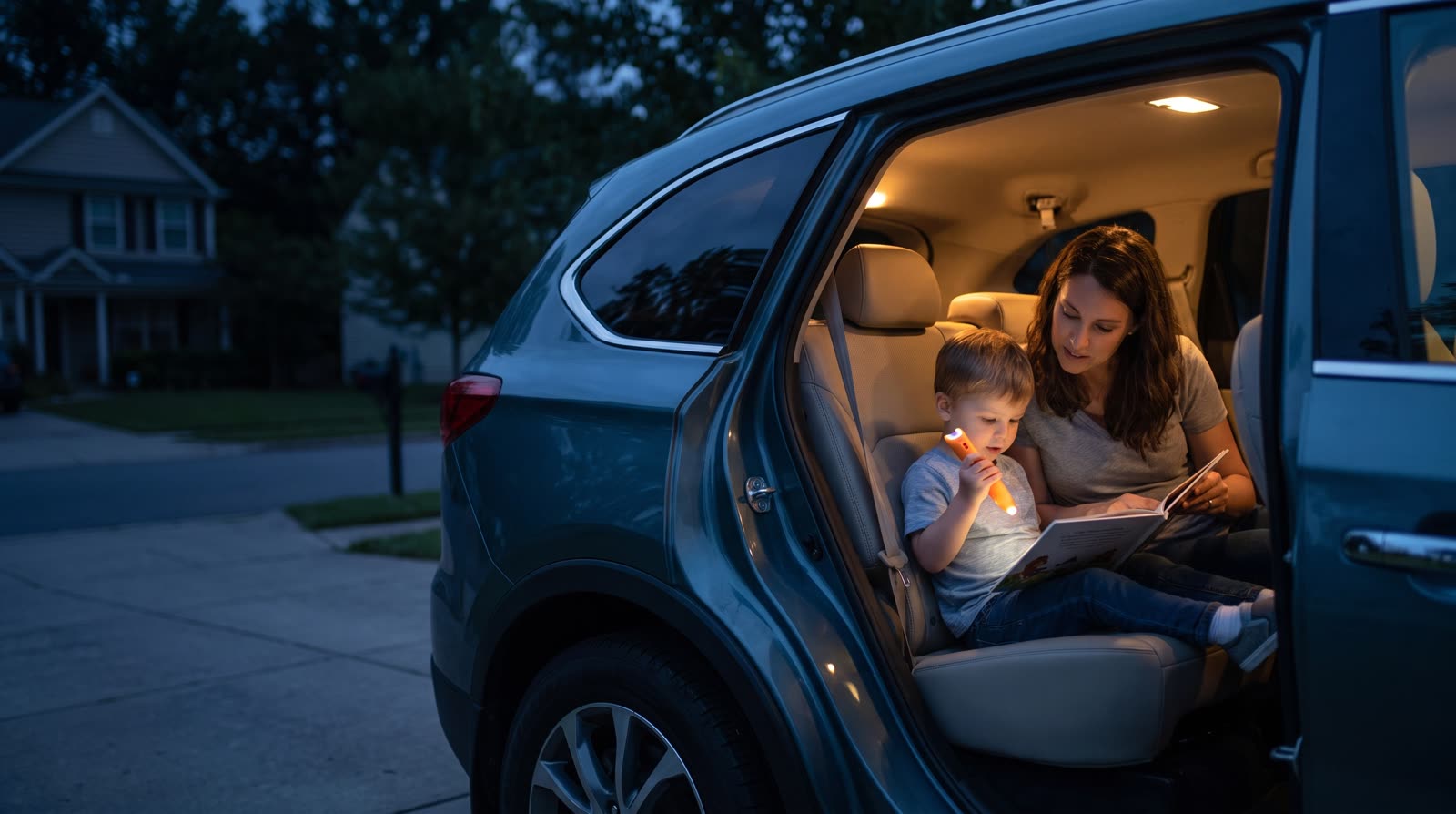
Using reading pen books in the car for a 10-minute learning break offers a structured, screen-free method to maintain cognitive engagement during daily transit. Directly answering the core inquiry, parents can successfully implement brief, highly focused listening and touch-activation sessions by utilizing pre-selected thematic picture books, secure lap desks, and robust optical-sensor talking pens. However, these in-car sessions operate under strict safety boundaries: drivers must never attempt to supervise or hand materials to children while operating a vehicle, materials must be securely stowed to prevent projectile hazards during sudden stops, and sessions should be kept brief to prevent sensory fatigue or motion discomfort. Grounded in early childhood development principles supported by organizations such as the American Academy of Pediatrics (AAP), intentional auditory engagement during transit bridges the gap between passive waiting time and active language exposure. For B2B distributors, educational toy brands, and school procurement specialists partnering with ReadGlo, understanding how families integrate portable talking book sets into mobile environments is essential for product design, packaging ergonomics, and safety compliance.
Structuring the 10-Minute In-Car Learning Break: Setting Realistic Expectations
Designing Micro-Learning Routines for Mobile Environments
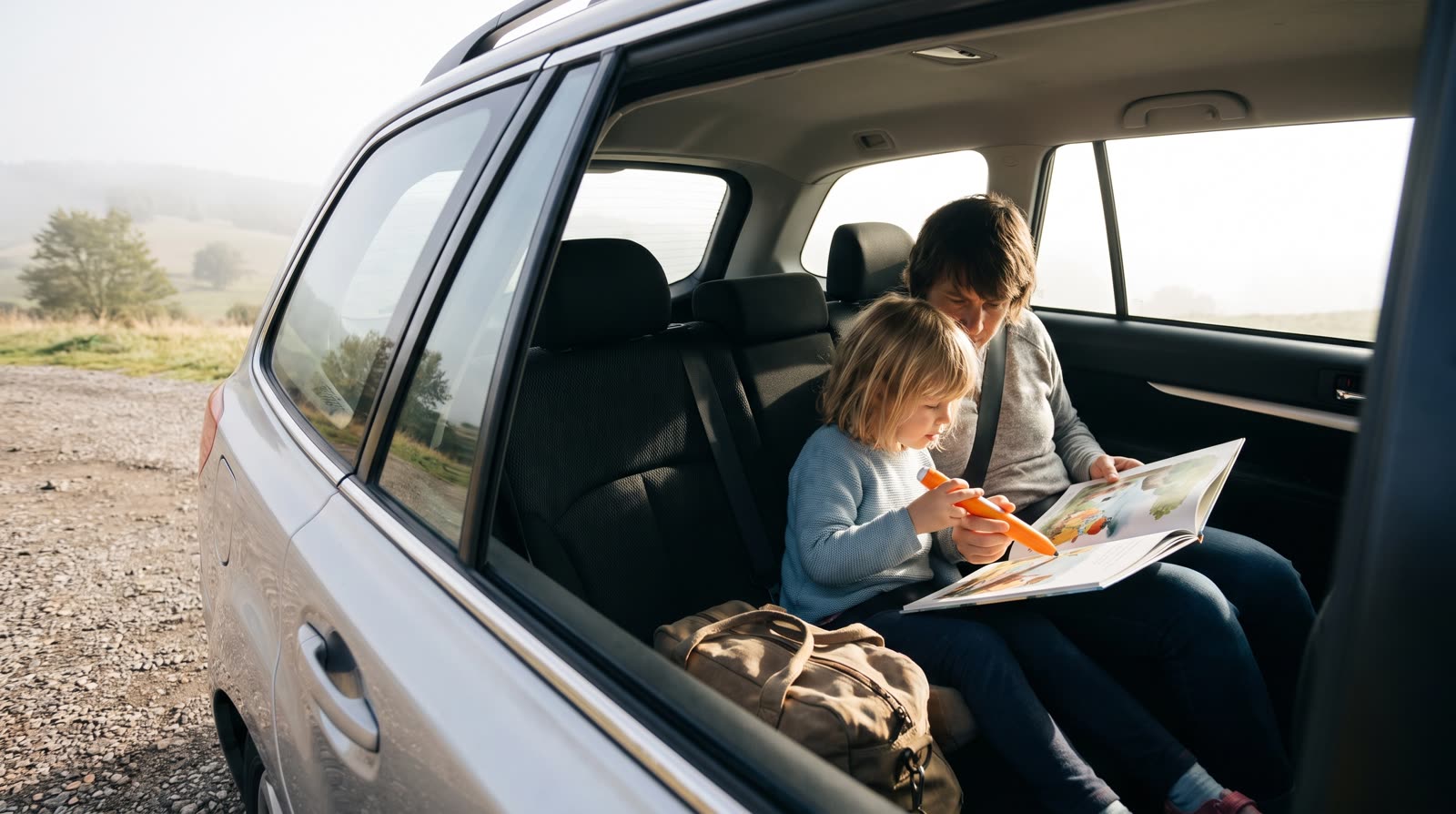
Vehicle interiors present unique acoustic and spatial challenges that require deliberate structuring. A successful 10-minute learning break in the car is not designed to replicate a formal classroom or a quiet home reading nook; rather, it functions as a portable micro-learning window. Parents and caregivers should establish predictable rituals, such as initiating the session only after the vehicle has safely departed or during scheduled stationary pauses like waiting in a parking queue. By selecting a single picture book or a specific activity card rather than an entire book library, children can focus on a manageable set of vocabulary words or phonics sounds. Educational distributors designing talking pen bundles for automotive use should emphasize lightweight book formats and spiral-bound layouts that lie flat on a child's lap, minimizing the risk of dropped pages or tangled cords in cramped car seats.
Balancing Independent Exploration with Parent-Child Guidance
While modern optical reading pens enable children to interact independently with encoded paper by tapping illustrations and text, in-car environments demand a balanced approach to supervision. When an adult in the passenger seat or back seat is available to co-engage, the 10-minute session transforms into a collaborative dialogue. Caregivers can ask open-ended questions about sounds heard through the pen's built-in speaker or encourage the child to repeat key phrases. When driving alone, parents must rely on pre-loaded audio content, volume-limiting safety settings, and intuitive touch controls that allow the child to operate the device safely without driver distraction. Retail buyers and wholesale importers must evaluate whether manufacturer firmware supports adjustable playback speeds and clear, distortion-free audio output capable of overcoming low-level vehicle engine noise without requiring unsafe volume levels.
Selecting and Preparing In-Car Talking Book Materials for B2B Retailers and Educators
Ergonomic Considerations for Vehicle-Based Book and Pen Sets
Product ergonomics play a vital role in determining whether a talking book set succeeds in mobile settings. During manufacturing specification reviews and sample evaluations, B2B procurement teams must assess the physical durability of both the pen housing and the accompanying paper stock. Car environments expose educational toys to temperature fluctuations, direct sunlight, and rough handling. Therefore, durable ABS plastic shells for the reading pen, matte-laminated pages that resist glare, and secure rechargeable battery systems are paramount. Furthermore, packaging design should include compact storage cases or mesh pockets that attach to vehicle seatbacks, preventing pens and books from scattering across vehicle floors where they could become safety hazards or sustain physical damage.
Content Curation: Short-Format Stories and Phonics Modules for Transit
Not all educational content is equally suited for short transit intervals. For a 10-minute in-car learning break, content curators and publishers should prioritize modular, bite-sized stories, rhyming games, and vocabulary-building songs rather than long narrative arcs that require sustained concentration over multiple chapters. Interactive books featuring sound effects, character dialogues, and repetitive phonetic patterns capture attention quickly and provide immediate auditory feedback. Wholesalers and school suppliers sourcing talking pen kits should verify that content libraries can be easily updated via secure manufacturer portals, allowing educators and parents to refresh in-car reading material according to the child's developmental stage and seasonal learning themes.
ReadGlo project support
Request Product Catalog
Explore ReadGlo's certified range of talking pens, interactive picture books, and customizable OEM/ODM educational kits for your retail or institutional market.
Safety, Battery Management, and Environmental Control in Automotive Settings
Thermal Management and CPSC Safety Guidelines for Portable Electronics
Vehicles parked in direct sunlight can experience extreme internal temperature spikes, posing risks to lithium-ion batteries housed inside electronic educational devices. B2B buyers must ensure that all supplied reading pens comply with rigorous safety standards established by regulatory bodies such as the Consumer Product Safety Commission (CPSC). Devices should incorporate overcharge protection, short-circuit prevention, and durable casing materials that maintain structural integrity under thermal stress. Parents and guardians must be instructed never to leave rechargeable talking pens in hot vehicles for extended periods. If a device exhibits signs of abnormal heating, swelling, casing cracking, or chemical leakage, users must immediately cease operation, avoid charging, and contact the manufacturer or authorized service channels for professional inspection and safe disposal guidance.
Safe Handling, Storage, and Pre-Trip Inspection Protocols
Establishing a routine pre-trip inspection protocol protects both the young user and the hardware investment. Before embarking on a journey, parents or educators should perform a low-risk external inspection of the reading pen and book binding. Check for cracked plastic, loose battery doors, frayed charging cables, or damp book pages resulting from previous liquid spills. Devices should never be disassembled by consumers or untrained personnel; any internal mechanical or acoustic failure must be escalated to the manufacturer or qualified retail supplier. Maintaining strict adherence to these safety protocols ensures that in-car learning remains a secure, beneficial, and stress-free component of daily family routines.
B2B Procurement, Quality Assurance, and Sample Evaluation for In-Car Educational Kits
Component Specification Review and Acoustic Clarity in Noisy Environments
For B2B importers, toy distributors, and educational institutions sourcing custom talking pen projects, rigorous specification review is the foundation of quality assurance. During the prototype and golden sample evaluation phase, engineers and product managers must test acoustic performance under simulated ambient noise conditions representative of moving vehicles. Optical recognition sensors must achieve high scanning accuracy across diverse printing stocks, including matte and semi-gloss finishes commonly used in children's board books. Manufacturers must provide comprehensive documentation verifying compliance with international toy safety regulations, electromagnetic compatibility (EMC), and restricted substance lists (such as RoHS and REACH), ensuring that products destined for global retail markets meet stringent safety and environmental standards.
Pre-Shipment Inspection (PSI) and Compliance Verification for Export Markets
Successfully scaling an educational toy brand requires robust supply chain oversight and transparent quality control checkpoints. Prior to final dispatch, independent or internal quality control teams should conduct thorough pre-shipment inspections (PSI) covering drop tests, button durability cycles, battery safety audits, and barcode scannability checks across sample batches. Importers should establish clear defect acceptance thresholds and detailed specification sheets outlining drop resistance, acoustic output decibel limits (ensuring volume stays within safe limits for young ears), and packaging drop-test resilience. Maintaining collaborative communication channels between brand owners and manufacturing partners ensures that any potential non-conformity is identified and resolved prior to mass production export.
Frequently Asked Questions
Can toddlers operate a reading pen independently while riding in a car seat?
Yes, provided the talking pen features ergonomic, simplified touch controls, chunky buttons, and high-accuracy optical sensors designed for young hands. However, parents should ensure that the child is securely buckled and that the book is placed on a stable lap desk to prevent accidental drops or frustration.
How long should an in-car learning break last for preschool-aged children?
A duration of 10 to 15 minutes is optimal for young children during transit. This timeframe matches typical preschool attention spans, maintains high engagement without causing cognitive fatigue, and prevents motion discomfort sometimes associated with reading in moving vehicles.
What safety precautions should be taken regarding rechargeable batteries in cars?
Automobiles can experience extreme temperature fluctuations. Rechargeable reading pens should never be left exposed to direct sunlight on vehicle dashboards. If a device shows signs of overheating, swelling, or unusual odor, stop use immediately, do not charge, and contact the manufacturer or authorized distributor.
How can B2B buyers verify the acoustic quality of talking pens for noisy mobile environments?
Buyers should request golden samples during the prototyping phase and conduct acoustic testing under simulated ambient noise conditions. Ensure that the integrated speaker delivers crisp voice narration without distortion at moderate volume levels, complying with child ear-safety standards.
Conclusion
Integrating interactive reading pen books into 10-minute in-car learning breaks represents a powerful convergence of portable technology, screen-free engagement, and early childhood literacy support. By adhering to rigorous safety boundaries, selecting ergonomically optimized hardware, and following structured micro-learning routines, parents and educators can transform routine transit time into enriching educational opportunities. For B2B partners, toy brand owners, and educational institutions collaborating with ReadGlo, delivering durable, certified, and acoustically reliable talking book sets ensures long-term customer trust and market success across global distribution channels.
Continue your research
Related reading pen buyer guides
Use these related guides to compare the next product, content, sourcing or channel decision in your project.
- Early LearningBridging Home and Classroom: Integrating Interactive Reading Pens into Kindergarten Morning RoutinesRead this guide
- Early LearningHow Can Parents Use Reading Pen Books in the Car for Bedtime Reading?Read this guide
- Early LearningBridging Home and Kindergarten: How Portable Reading Pen Systems Support Mobile Learning and TransitRead this guide
Continue with ReadGlo
See a DOT-code picture-book set designed for guided early-learning programs.
ReadGlo project support
Send Your Requirements
Ready to expand your catalog with premium interactive learning tools? Contact our B2B engineering and export team today to discuss your custom specifications.