Contents
Introduction
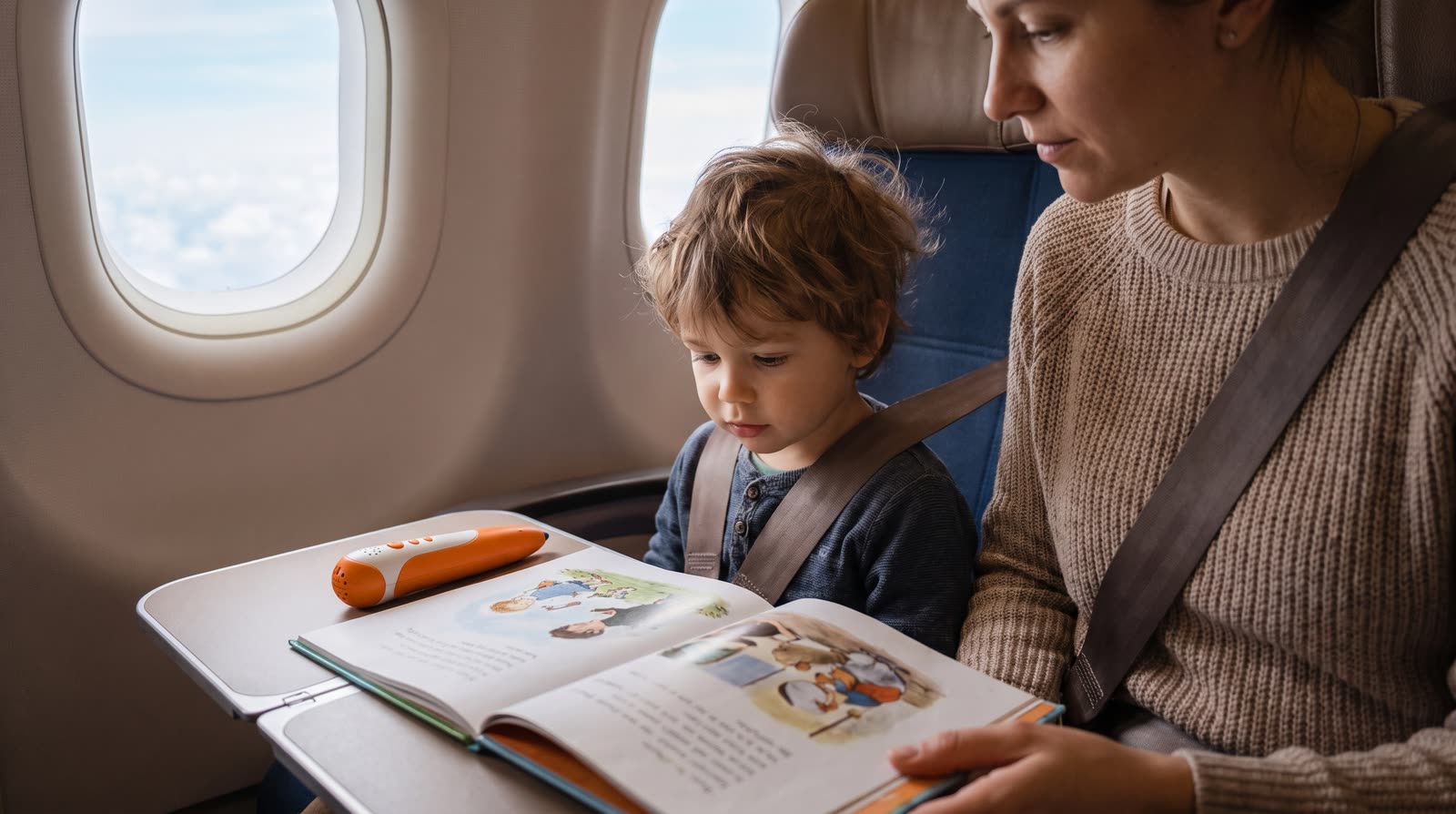
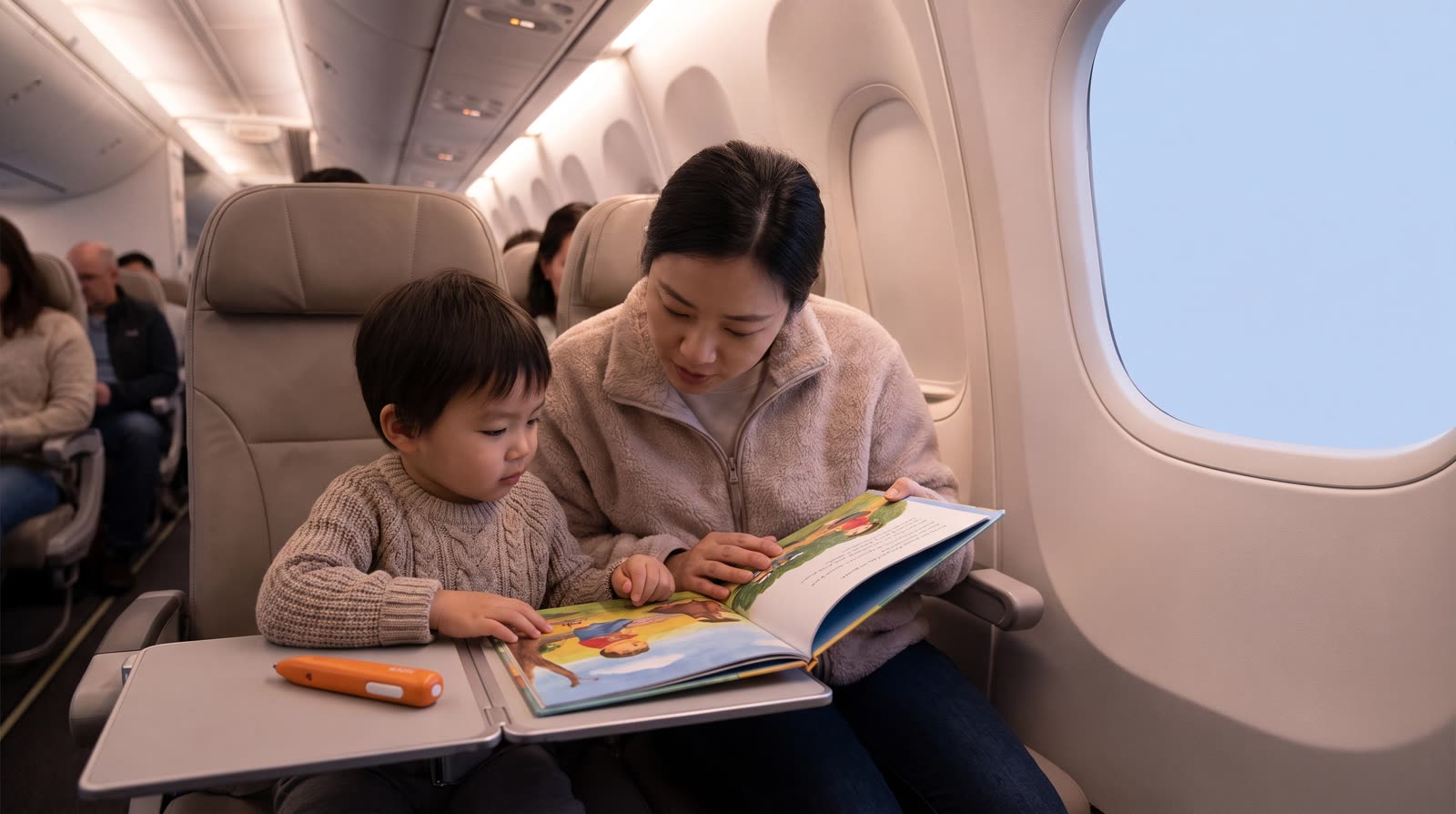
Air travel presents unique challenges for parents and educators seeking to maintain calm, productive routines during designated quiet hours. Confined seating, fluctuating cabin noise, and the need to respect fellow passengers make screen-free, tactile learning tools particularly valuable. Interactive reading pens paired with optical-coded children's books offer an engaging, self-paced learning medium that combines auditory reinforcement with physical book handling. This guide provides a comprehensive framework for parents, educators, and B2B wholesale partners examining how to effectively integrate reading pen systems into airplane quiet time. By focusing on acoustic management, ergonomic setup in restricted cabin spaces, pre-flight preparation, and adherence to established child product safety guidelines, stakeholders can ensure a seamless, enriching experience. In alignment with guidance from authoritative bodies such as the American Academy of Pediatrics (AAP) and the U.S. Consumer Product Safety Commission (CPSC), this article outlines practical, risk-free methodologies for portable literacy tools.
Understanding the Aviation Environment for Interactive Reading Tools
Managing Cabin Acoustics and Headphone Compatibility
Airplane cabins present a complex acoustic environment characterized by continuous low-frequency engine drone and ambient passenger noise. When children use interactive reading pens that emit audio through built-in speakers, sound propagation can easily disturb neighboring passengers, particularly during designated cabin quiet time or sleep periods. Therefore, integrating compatible headphones or volume-limited earbuds is an essential operational requirement. Manufacturers and B2B distributors should prioritize reading pen designs featuring standard 3.5mm audio jacks or stable Bluetooth pairing protocols that support pediatric volume-limiting standards (typically capped at 85 decibels). Furthermore, parents must verify headphone fit prior to boarding to ensure that children can hear audio prompts clearly without requiring excessive output levels that could strain young ears against background engine rumble.
Ergonomic Setup in Confined Airplane Seating
Airplane tray tables are notoriously compact, angled, and restricted in surface area. Standard picture books and lengthy reading materials can easily slide off or crowd the seating space, causing frustration for young learners. To optimize the reading pen experience during flight, parents and educators should select compact, spiral-bound or board-book formats with sturdy bindings that lie flat or fold back cleanly. The optical reading pen itself should feature an ergonomic, non-slip grip suited for smaller hands, minimizing accidental drops onto cabin floors. Establishing a stable lap desk or using a canvas book pouch secured to the seatback pocket can significantly enhance usability, ensuring that both the book and the sensor tip remain accessible and clean throughout the journey.
Pre-Flight Preparation and Book Selection Strategy
Curating Content for Low-Stimulation Quiet Hours
Quiet time on an airplane calls for deliberate content curation rather than high-energy interactive games or rapid-fire sound effects. Books selected for flight should focus on calming narratives, nature themes, soft lullabies, or guided read-aloud stories that encourage contemplative listening and gentle finger-pointing. Educators recommending travel kits to parents should emphasize pre-downloading audio files onto the reading pen's internal memory or TF card before departure, as in-flight Wi-Fi is frequently unreliable or restricted. Testing the optical sensor response across various lighting conditions—such as dim cabin reading lights or direct window glare—ensures that the OID (Optical Identification) codes print correctly and scan reliably without operational delays.
Verifying Optical Code Readability and Battery Readiness
Before embarking on air travel, thorough equipment checks prevent mid-flight malfunctions. Parents and institutional buyers should perform a systematic functional inspection: verifying that the pen's battery is fully charged, ensuring firmware is up to date, and testing code recognition on sample pages. Regarding power sources, lithium-ion rechargeable batteries must comply with airline safety regulations (typically carried in carry-on baggage rather than checked luggage). In accordance with U.S. Consumer Product Safety Commission (CPSC) guidelines regarding electronic children's products, users must strictly avoid tampering with internal battery compartments, charging units with unauthorized adapters, or exposing devices to moisture. If any anomaly such as unusual heat, swelling, or charging failure is observed, use must be discontinued immediately.
ReadGlo project support
Request Product Catalog
Explore ReadGlo's complete collection of travel-optimized interactive reading pens and durable children's books designed for global B2B markets.
Educator and Parent Co-Engagement Methodologies
Guided Listening vs. Independent Exploration
The effectiveness of reading pens during airplane quiet time depends heavily on the balance between guided adult facilitation and independent child exploration. During the initial takeoff or boarding excitement, parents can engage in collaborative reading—pointing together at illustrations, listening to character dialogue, and discussing vocabulary. As the cabin transitions into quiet time, children can transition to independent exploration using headphones, allowing parents to rest while the child reinforces literacy skills autonomously. According to early literacy frameworks highlighted by organizations like the American Academy of Pediatrics, adult mediation significantly enhances comprehension, turning digital audio output into meaningful conversational turns rather than passive consumption.
Managing Transitions Between Sleep and Quiet Reading
Air travel schedules often disrupt children's natural circadian rhythms, leading to overtiredness and resistance to rest. Reading pen books serve as an effective transitional bridge between active wakefulness and sleep. By dimming the overhead reading light, switching the pen to soft ambient music or bedtime storytelling modes, and utilizing comfortable over-ear headphones, parents can create a cocoon of focus that screens out cabin distractions. If a child shows signs of drowsiness, adults should gently guide the closing of the book and store the reading pen securely in its designated travel case, avoiding sudden interruptions that might cause distress in a confined public space.
B2B Sourcing and Quality Assurance Considerations for Travel-Ready Kits
Durable Bindings and Matte Paper Specifications
For B2B buyers, distributors, and educational institutions supplying travel-focused reading kits, product durability is paramount. Airplane environments expose books to rough handling, cramped storage, and variable lighting. Sourcing specifications should mandate high-grade matte laminated paper to eliminate glare from overhead cabin spotlights and reading lamps. Bindings must undergo rigorous pull and flex testing to withstand frequent bending on tray tables. Furthermore, interactive audio books intended for travel must feature robust OID dot printing that resists scratching and fading, ensuring long-term scanning accuracy across diverse publishing titles.
Compliance with Battery Safety and Portable Electronics Standards
Compliance and safety certification form the bedrock of trustworthy B2B distribution. When procuring reading pens and interactive electronic books for international markets, wholesale buyers must ensure adherence to key regulatory frameworks, including CE, RoHS, FCC, and EN71 standards. Battery safety protocols—aligned with CPSC recommendations—require secure, tamper-resistant enclosures that prevent children from accessing internal lithium cells. Manufacturers should provide comprehensive material safety data sheets (MSDS) and clear operational guidelines regarding charging safety, low-voltage operation, and safe disposal, safeguarding both brand reputation and end-user well-being.
Frequently Asked Questions
Are children's reading pens allowed through airport security checkpoints?
Yes, reading pens are electronic devices containing rechargeable batteries and are permitted in carry-on luggage through airport security. It is recommended to keep them accessible for inspection if requested by security personnel, and to pack spare power banks or charging cables in accordance with airline lithium battery guidelines.
How can parents prevent audio bleeding when using reading pens on quiet flights?
To prevent disturbing neighboring passengers, parents should equip children with volume-limited headphones or soft silicone earbuds compatible with the reading pen's audio jack or Bluetooth connection. Testing the volume level prior to boarding ensures sound remains contained within the listener's space.
What safety precautions apply to reading pen batteries during air travel?
Users must follow CPSC and airline safety guidelines by keeping electronic devices in carry-on baggage rather than checked bags. If a reading pen exhibits signs of physical damage, abnormal heating, swelling, or odor, users must immediately cease operation, avoid charging, and contact the manufacturer or authorized service provider.
How should B2B buyers specify books for portable travel learning kits?
B2B buyers should request compact book dimensions suitable for tray tables, durable spiral or heavy-duty board binding, anti-glare matte paper finishes, and high-precision OID dot codes that maintain optical scannability under dim lighting conditions.
Conclusion
Integrating reading pen books into airplane quiet time offers a sophisticated, screen-free approach to supporting children's literacy and emotional regulation during travel. By carefully managing cabin acoustics with compatible headphones, selecting ergonomically appropriate book formats, and adhering strictly to established safety guidelines from organizations like the AAP and CPSC, parents and educators can transform transit hours into productive learning opportunities. For B2B partners, distributors, and educational institutions, prioritizing durable manufacturing specifications, robust compliance certifications, and thoughtful content curation ensures long-term market success and customer satisfaction.
Continue your research
Related reading pen buyer guides
Use these related guides to compare the next product, content, sourcing or channel decision in your project.
- Early LearningBridging Home and Classroom: Integrating Interactive Reading Pens into Kindergarten Morning RoutinesRead this guide
- Early LearningHow Can Parents Use Reading Pen Books on an Airplane During Travel? A Comprehensive Guide for B2B Partners and EducatorsRead this guide
- Early LearningBridging Home and Kindergarten: How Portable Reading Pen Systems Support Mobile Learning and TransitRead this guide
Continue with ReadGlo
See a DOT-code picture-book set designed for guided early-learning programs.
ReadGlo project support
Send Your Requirements
Partner with ReadGlo for reliable OEM/ODM manufacturing, rigorous quality assurance, and customized interactive publishing solutions.