Contents
Introduction
Traveling with young children on commercial airplanes presents a distinct set of logistical, sensory, and emotional challenges for families. Enclosed cabin environments, restricted physical mobility, sudden altitude changes, ambient jet engine noise, and unpredictable departure delays require thoughtful preparation to keep children engaged, calm, and cognitively stimulated throughout the journey. For B2B toy and educational product distributors, brand partners, early childhood educators, and retail buyers, understanding how families utilize portable literacy tools—such as talking pens and interactive picture book sets—during air travel is essential for product curation, merchandising, and user guidance. This comprehensive guide explores the structural design, sensory benefits, practical routines, safety considerations, and operational evaluation criteria for incorporating reading pen systems into airline travel scenarios. By focusing on ergonomic design, reliable offline functionality, tactile-auditory engagement, and robust quality assurance, manufacturers and retail partners can deliver exceptional value to traveling parents while supporting foundational early literacy development during transit.
The Unique Sensory and Logistical Demands of Air Travel for Young Children
Navigating Cabin Acoustics and Sensory Overload
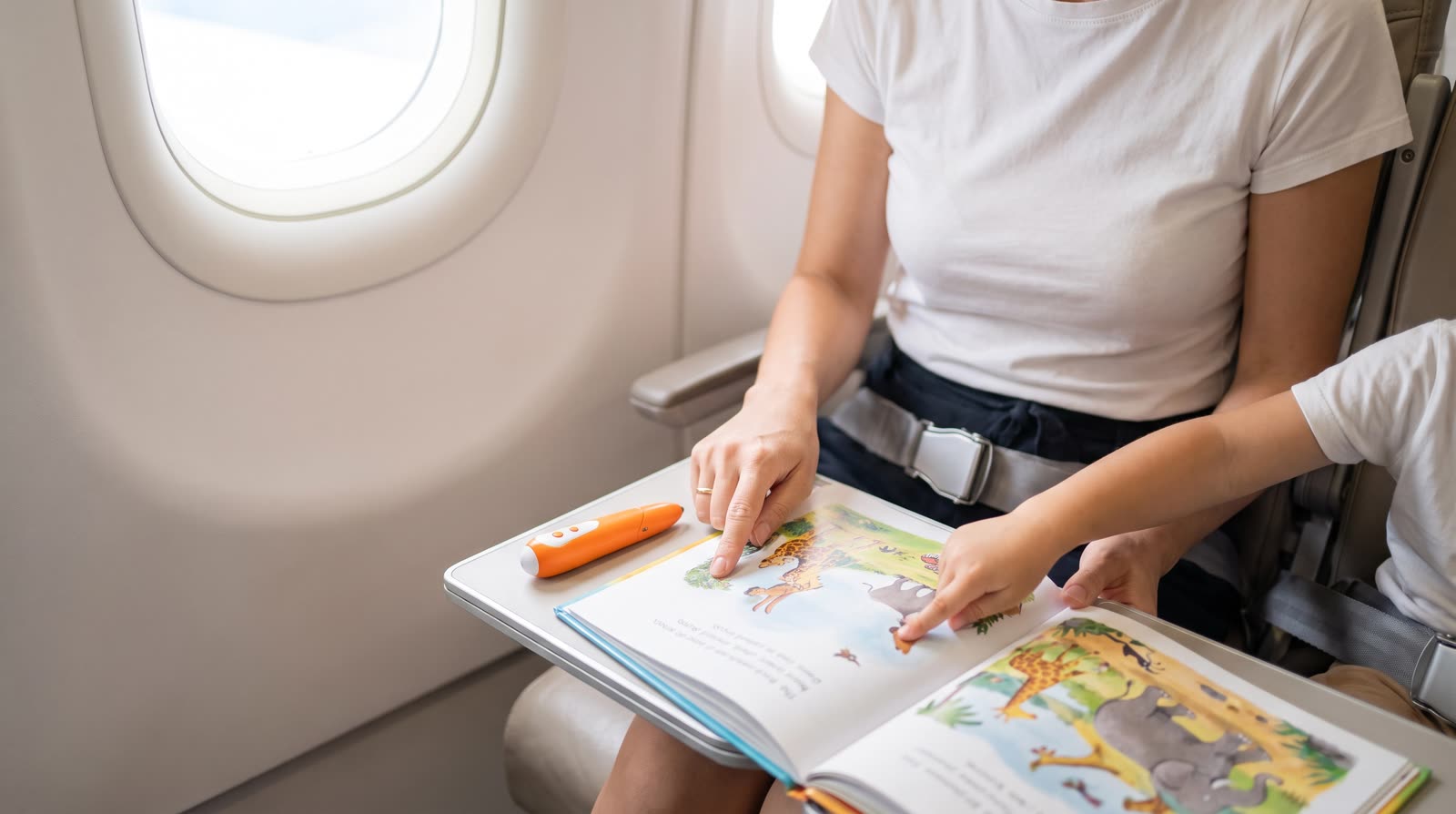
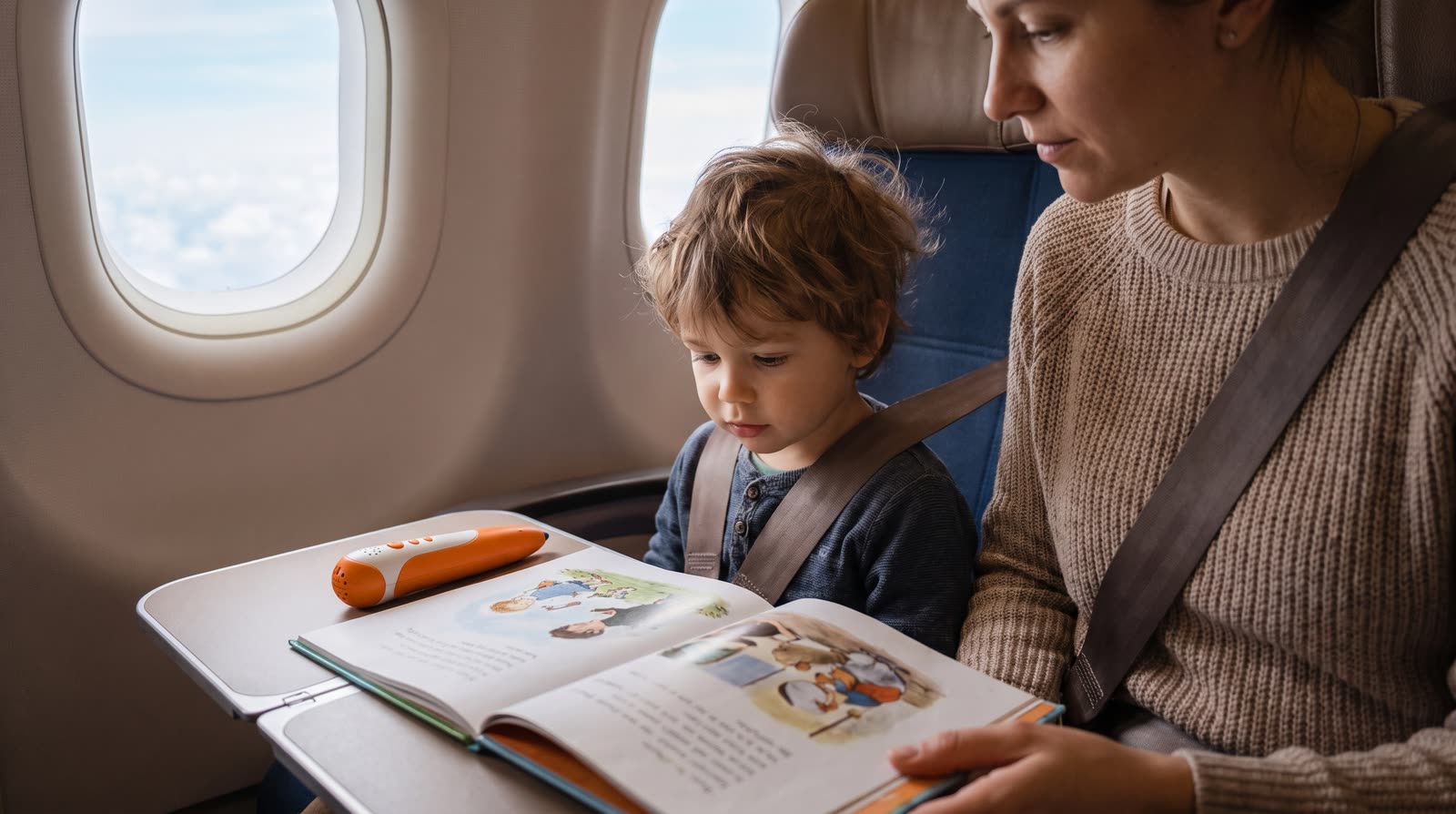
Airplane cabins combine constant white noise from jet engines, public address announcements, pressurization hums, and close proximity to fellow passengers. For toddlers and preschoolers, this unfamiliar sensory landscape can induce fatigue, anxiety, or restlessness. Traditional screen-based devices offer visual distraction but often contribute to cognitive overstimulation, eye strain, and passive consumption without fostering genuine linguistic interaction. In contrast, talking pen and interactive picture book sets rely on active tactile engagement and localized auditory feedback. Children touch coded paper surfaces with an optical sensor tip, triggering narration, sound effects, vocabulary prompts, or musical cues through lightweight headphones or low-volume built-in speakers. This multisensory engagement helps anchor children's attention within the physical book, mitigating cabin-induced distraction and supporting calm, focused exploration during long-haul or regional flights.
Space Constraints and Tactile Ergonomics in Seating Rows
Aircraft seating rows provide highly restricted lap and tray-table space, making bulky toys, multi-piece board games, or loose craft supplies impractical and stressful to manage in transit. Educational tool developers and retail buyers must evaluate the physical footprint and ergonomic design of reading pen sets. Optimal travel-friendly packaging features compact storage pouches, sturdy spiral-bound or lightweight saddle-stitched picture books that lie flat on narrow tray tables, and ergonomic pens with secure lanyards or magnetic clip-on storage slots. Retailers should advise manufacturing partners to prioritize drop-resistant housing materials, non-slip rubberized grips, and intuitive button layouts that children can operate independently even in dim cabin lighting or cramped seating conditions.
Offline Reliability and Battery Management During Transit
Modern air travel frequently involves strict security checkpoints, limited power outlet access at boarding gates, and inconsistent Wi-Fi availability. Unlike tablets or streaming devices that depend on continuous cloud connectivity and frequent recharging, optical reading pens operate entirely offline via pre-loaded micro-SD cards or internal flash storage. B2B partners sourcing talking pen systems for travel-focused retail segments must verify that hardware architectures support low power consumption, extended standby times, and standardized USB-C charging interfaces. Clear user guidelines regarding pre-flight battery charging, offline audio file verification, and secure storage of spare cables ensure that families experience uninterrupted usability from departure gate to final destination.
Practical Frameworks for Integrating Reading Pens into Airplane Routines
Pre-Flight Preparation and Book Selection Strategy
Effective in-flight literacy engagement begins well before boarding the aircraft. Parents and educators recommend curating a balanced selection of 3 to 5 interactive books tailored to the child's developmental stage, attention span, and current interests. Retailers can package these selections as curated travel bundles. Selection criteria should include familiar favorite stories for comforting reassurance during takeoff anxiety, new interactive vocabulary books for stimulating engagement during cruising altitude, and activity-based sticker or puzzle books that encourage problem-solving. Prior to departure, parents should verify that the talking pen's firmware is updated, audio files corresponding to the selected books are fully indexed on the device storage, and volume levels are calibrated for headphone or cabin use.
Managing Boarding, Taxing, and Takeoff Transitions
The boarding, taxiing, and takeoff phases often generate heightened anxiety and physical restlessness in young children due to mandated seatbelt restrictions, confinement, and changes in cabin pressure. During boarding and taxiing, when tray tables must remain stowed, parents can utilize lap-reading techniques. The child holds the lightweight book on their lap while operating the talking pen with simple tap gestures. Engaging stories with rhythmic refrains, character dialogues, or animal sound effects provide immediate grounding and tactile reassurance. Retailers highlighting these use cases in product manuals or digital marketing assets help parents visualize how tactile reading tools bridge stressful transitional moments without requiring screens or loose accessories.
In-Flight Cruising Altitude: Independent Exploration and Guided Interaction
Once the aircraft reaches cruising altitude and tray tables are lowered, structured independent exploration can commence. Interactive talking pens encourage autonomous learning as children touch illustrations, dialogue bubbles, or hidden icons to trigger dialogue, songs, or Q&A games. To prevent sensory fatigue, parents can alternate between independent pen-based exploration and collaborative storytelling—asking open-ended questions about the narrative, predicting plot turns, or connecting story themes to the travel experience. Educational institutions and retail curators should emphasize that while talking pens foster independence, adult scaffolding significantly enhances vocabulary acquisition and emotional bonding during travel.
ReadGlo project support
Request B2B Catalog & Samples
Explore our complete range of travel-friendly talking pens and interactive picture book sets designed for international retailers and educational distributors.
B2B Quality Assurance, Compliance, and Specification Standards for Travel-Ready Products
Evaluating Optical Sensor Accuracy and Paper Coding Integrity
The performance of an optical reading pen depends entirely on the precision of its infrared or optical CMOS sensor reading invisible OID (Object Identifier) dot codes printed on book pages. For travel environments characterized by vibration, dim cabin illumination, and rapid handling by young children, sensor reliability is paramount. Retail buyers, wholesale distributors, and institutional procurement teams must establish rigorous sample review protocols. During specification confirmation, partners should inspect sample batches for high recognition accuracy across diverse lighting conditions, resistance to surface glare, and seamless audio synchronization without latency or skipped audio segments.
Durability, Drop Testing, and Structural Integrity
Airplane cabin floors, tray tables, and luggage compartments subject toys to mechanical shocks, drops, and compressive loads. B2B quality assurance standards dictate that talking pen casings be manufactured from non-toxic, impact-resistant ABS or polycarbonate blends. Procurement specifications should require standardized drop-testing protocols (e.g., repeated drops from a height of 1 meter onto hard surfaces) to ensure housing joints remain intact and internal components do not dislodge. Furthermore, paper stock used in travel picture books should feature heavy-gauge cardstock with matte lamination to resist tearing, creasing, and glare from overhead reading lights.
Safety Compliance, Battery Management, and Regulatory Frameworks
Safety is non-negotiable in children's electronic products, particularly when transported across international borders and in pressurized aircraft cabins. Retailers and brand owners must ensure that all talking pen hardware complies with relevant international toy safety standards, such as ASTM F963 in North America, EN71 in Europe, and GB 6675 in China. Battery safety is especially critical for travel devices. Lithium-ion rechargeable batteries must include built-in overcharge, over-discharge, and short-circuit protection circuits. According to guidelines from regulatory bodies like the U.S. Consumer Product Safety Commission (CPSC), electronic toys must be clearly labeled regarding battery specifications, safe operating temperatures, and proper disposal methods. B2B partners should maintain complete documentation of material safety data sheets (MSDS), electronic certification reports (CE, FCC, RoHS), and supply chain traceability records.
Guiding Retailers, Educators, and Parents: Best Practices and Troubleshooting
Addressing Common In-Flight Operational Challenges
When deploying educational electronics during travel, users occasionally encounter minor technical hurdles. Retailers and customer support teams should provide clear, accessible troubleshooting guides. Common issues include audio playback failure due to unindexed books, unresponsive touch sensors caused by low battery voltage, or muffled sound resulting from headphone connection errors. Parents should be instructed to perform pre-trip device sync checks, carry a standard USB-C charging cable and portable power bank in their carry-on luggage, and verify that book audio files match the exact firmware version installed on the pen.
Supporting Diverse Learners and Multilingual Families During Transit
Air travel often spans linguistic and cultural boundaries, making multilingual talking pen sets exceptionally valuable for bilingual or expatriate families. By switching audio language packs on multi-language talking pens, children can listen to stories in their native language or practice second-language vocabulary in a low-stress, engaging format. Educators and specialists note that auditory-tactile learning tools support children with diverse learning needs by reducing visual clutter on pages and allowing self-paced repetition. Retailers can position these features prominently in B2B catalogs to highlight inclusivity and broad market appeal.
When to Upgrade or Consult Specialists for Enhanced Learning Support
While talking pens and interactive books provide excellent supplemental literacy support during travel and daily routines, they are designed as learning aids rather than clinical interventions. Educators, speech-language pathologists, and child development specialists emphasize that if a child exhibits persistent reading difficulties, auditory processing challenges, or significant language delays, parents should consult qualified educational professionals or pediatric specialists. Retailers and brand partners should maintain clear boundaries in product marketing, positioning talking pens as supportive engagement tools that complement—rather than replace—professional educational guidance and adult-child interaction.
Frequently Asked Questions
Are talking pens allowed through airport security checkpoints in carry-on luggage?
Yes. Talking pens containing rechargeable lithium-ion batteries or standard alkaline batteries are permitted in carry-on baggage through international security checkpoints. It is recommended to keep electronic devices easily accessible in exterior pockets of carry-on bags for routine security screening.
Do interactive talking pen books require Wi-Fi or internet connection during flight?
No. ReadGlo talking pens operate completely offline using pre-loaded audio files stored on internal flash memory or micro-SD cards. No internet connection or Wi-Fi is required during flight, ensuring reliable operation in airplane cabin environments.
How can parents manage headphone use and volume control on airplanes?
Parents should use child-safe headphones with built-in volume limitation features (typically capped at 85 decibels) to protect young ears against cabin ambient noise. Many talking pen models also feature direct volume adjustment buttons and built-in low-volume speakers suitable for quiet cabin listening.
What steps should be taken if a talking pen fails to recognize book pages during travel?
If recognition fails, check that the pen tip is clean and undamaged, verify that the book being read matches the pre-loaded audio file package on the device, and ensure the battery is sufficiently charged. Avoid disassembling the device; contact the manufacturer or retail supplier for technical support.
How should talking pens and books be packed to prevent damage in luggage?
Pack talking pens in dedicated padded storage pouches or hard-shell travel cases to prevent accidental button activation and screen or sensor damage. Store picture books flat in laptop compartments or rigid document folders to avoid creasing, folding, or moisture exposure.
Conclusion
Incorporating talking pens and interactive picture book sets into airplane travel transforms a potentially stressful logistical challenge into an enriching, calm, and engaging literacy opportunity. For B2B partners, toy distributors, and educational institutions, curating travel-ready reading pen systems involves rigorous adherence to ergonomic design, offline reliability, optical sensor precision, and strict safety compliance. By providing comprehensive guidance, durable hardware specifications, and clear operational frameworks, manufacturers and retailers can empower parents to foster lifelong reading habits while navigating air travel with confidence.
Continue your research
Related reading pen buyer guides
Use these related guides to compare the next product, content, sourcing or channel decision in your project.
- Early LearningBridging Home and Classroom: Integrating Interactive Reading Pens into Kindergarten Morning RoutinesRead this guide
- Early LearningHow Can Parents Use Reading Pen Books on an Airplane for a 10-minute Learning Break?Read this guide
- Early LearningBridging Home and Kindergarten: How Portable Reading Pen Systems Support Mobile Learning and TransitRead this guide
Sources used for further reading
Continue with ReadGlo
See a DOT-code picture-book set designed for guided early-learning programs.
ReadGlo project support
Partner With ReadGlo Today
Connect with our export and manufacturing team to discuss custom OEM/ODM specifications, compliance standards, and wholesale distribution opportunities.