Contents
Introduction
Air travel presents unique challenges for families with young children, balancing confined seating, ambient cabin noise, and the need for engaging, screen-free activities. When parents seek to maintain consistent literacy habits during transit, a targeted 10-minute learning break using a portable reading pen and talking picture book set offers an effective, structured solution. For B2B distributors, educational retailers, and mindful caregivers, understanding how to deploy optical reading systems in transit environments requires careful attention to ergonomic design, audio management, and tactile book organization. According to guidelines from the American Academy of Pediatrics (AAP) and literacy research frameworks, structured short-burst interactions help sustain young children's attention without overwhelming their sensory processing in unfamiliar environments [1]. This comprehensive guide examines how families and institutional buyers evaluate, prepare, and execute portable reading pen sessions during flights, ensuring safe, enriching, and frustration-free educational experiences.
Understanding the Travel Context: Portable Early Literacy on Airplanes
Managing Cabin Environments and Sensory Load
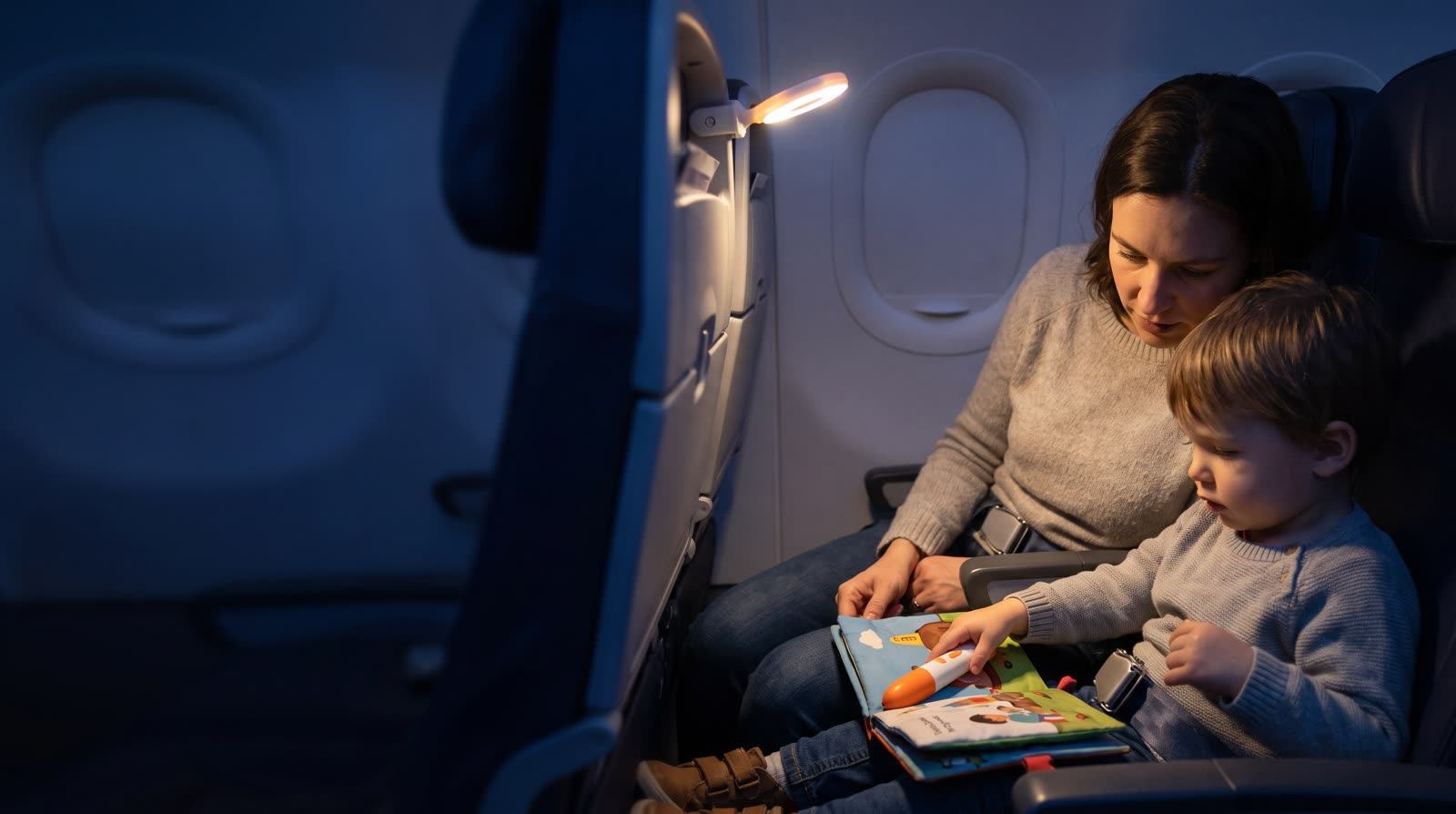
Airplanes combine low-frequency engine hums, pressurized cabins, and close-quarters seating, which can heighten sensory fatigue in toddlers and preschoolers. Introducing a familiar reading pen and talking book set during a flight provides a comforting, predictable cognitive anchor. Unlike glowing tablets or smartphones that emit blue light and encourage passive scrolling, optical reading pens operate entirely offline via embedded micro-codes on paper pages. This screen-free approach protects developing eyes from glare and prevents overstimulation, allowing young learners to focus on tactile page turns and auditory phonics reinforcement. Caregivers should introduce the materials prior to boarding so the child recognizes the tactile feedback of the optical sensor tapping paper dots before encountering altitude changes or takeoff transitions.
Structuring Short 10-Minute Learning Increments
Young children possess limited sustained attention spans, particularly in confined transit settings where physical movement is restricted. Establishing a deliberate 10-minute learning break rather than an open-ended reading marathon helps maintain enthusiasm and prevents fatigue. During a flight, caregivers can time these breaks around natural transition points, such as immediately after snack service or during cruising altitude. A structured 10-minute session typically involves three distinct phases: a two-minute tactile exploration where the child selects a favorite talking book and tests the pen sensor, a six-minute guided listening and repeating exercise focusing on vocabulary or rhyming words, and a two-minute quiet wrap-up where the pen is safely stored in its designated travel pouch. This predictable cadence transforms chaotic travel moments into structured, comforting micro-learning opportunities.
Ergonomic and Safety Considerations for Mobile Optical Reading Systems
Hardware Durability and Low-Light Optical Sensor Accuracy
Using educational electronics inside an aircraft cabin involves environmental variables such as dim overhead lighting, restricted tray tables, and potential accidental drops onto carpeted or hard cabin floors. Manufacturers of B2B reading pen systems, such as ReadGlo, engineer optical sensors with high-speed CMOS cameras capable of reading invisible dot-matrix codes under suboptimal ambient illumination. For wholesale buyers and retail partners, evaluating sample units for drop resistance, ABS housing integrity, and click-button tactility is a vital pre-shipment quality assurance step. Parents must ensure the pen tip remains clean and unobstructed by crumbs or dust, which can impair optical recognition when reading in dim cabin lighting.
Battery Safety and CPSC-Aligned Compliance Standards
Portable electronic devices used by children must adhere to rigorous electrical safety and material compliance frameworks. In alignment with Consumer Product Safety Commission (CPSC) guidelines for children's products, quality reading pens incorporate secure, internal lithium-ion batteries with overcharge protection or utilize standard, mechanically secured battery compartments that prevent toddler access [2]. When traveling by air, parents must verify device power states and comply with airline regulations regarding rechargeable electronics. If a device exhibits physical damage, abnormal heating during charging, or unusual odor, users must immediately cease operation, disconnect power sources, and contact authorized manufacturer support channels rather than attempting unauthorized disassembly.
ReadGlo project support
Request Wholesale Catalog
Explore ReadGlo's certified talking pen and interactive picture book collections designed for travel and early childhood education.
Practical Implementation Strategies for Parents and Caregivers
Volume Control and Child-Safe Headphone Integration
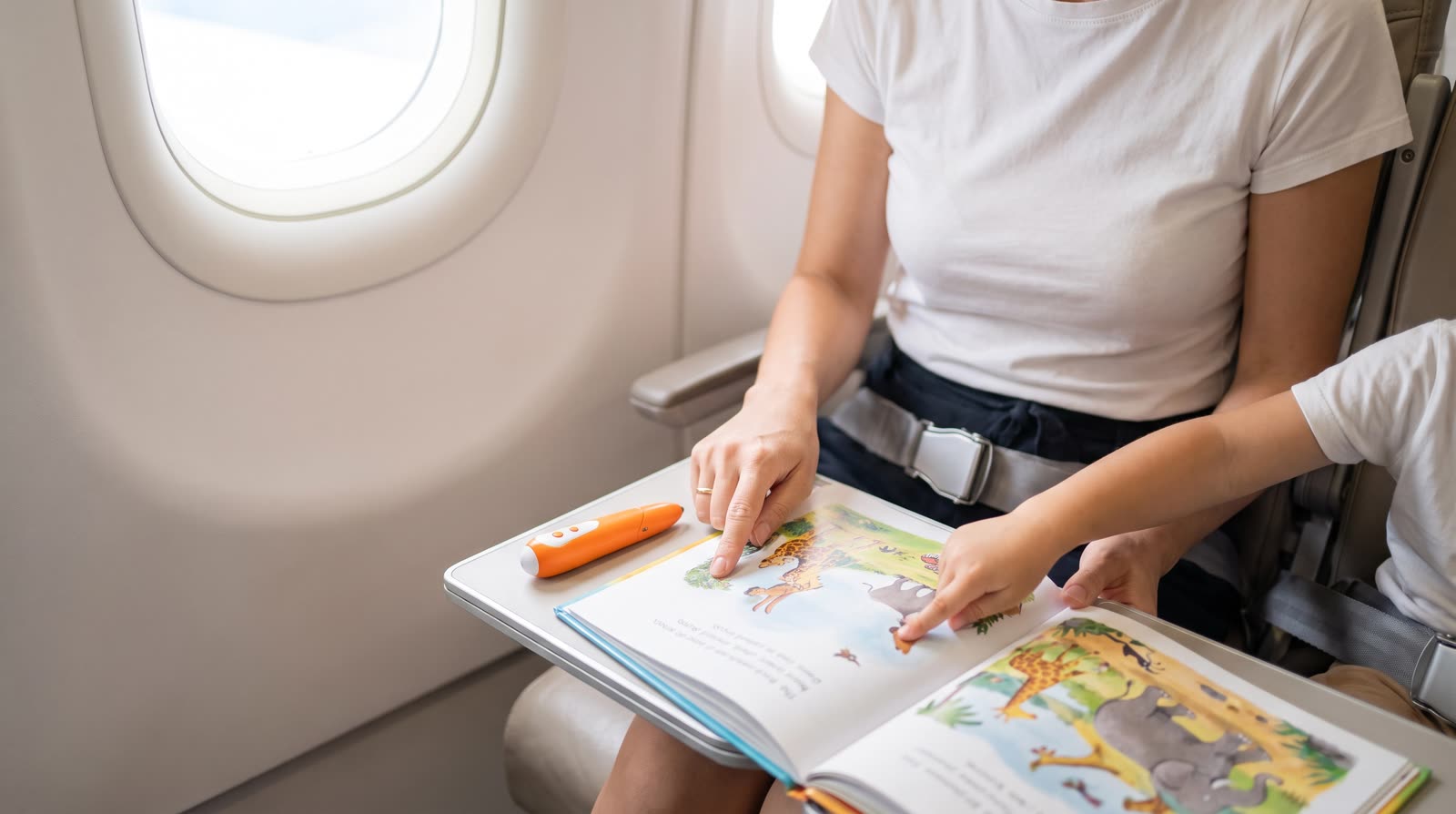
Cabin acoustics demand courteous audio management to ensure other passengers are not disturbed. Modern reading pens feature adjustable volume settings and standard 3.5mm headphone jacks or Bluetooth audio pairing for wireless child-safe headphones. Caregivers should pre-configure volume limits before boarding the aircraft. Using volume-limiting headphones protects young eardrums against sudden audio spikes while allowing the child to hear narration clearly over background engine noise. If headphones are unavailable, utilizing the pen's lowest functional speaker setting alongside close sharing on the tray table keeps audio contained within the immediate seating space.
Book Selection and Tactile Engagement in Confined Spaces
Tray tables on commercial flights are notoriously compact, limiting the physical spread of large picture books. When preparing an airplane travel kit, parents and educators should select spiral-bound or lightweight, saddle-stitched talking book titles measuring under standard dimensions. Spiral bindings allow books to fold back completely flat, occupying minimal tray space. Content should feature high-contrast illustrations, simple vocabulary, and short interactive prompts that encourage the child to tap specific characters or objects, maintaining active participation without requiring sprawling page turns.
B2B Procurement and Quality Evaluation for Retailers and Distributors
Evaluating Sample Kits and Pre-Shipment Inspection Protocols
For educational distributors, toy store chains, and institutional buyers, sourcing reliable talking pen sets requires a rigorous procurement workflow. B2B evaluation begins with requesting comprehensive sample kits to test optical sensor responsiveness, audio fidelity, and firmware stability across various ambient lighting conditions. During the factory specification review and pre-shipment inspection (PSI) phases, quality control teams must verify that book dot-codes align perfectly with audio file partitions (.ap4 or .bnk formats) loaded on the pen's internal memory. Ensuring strict adherence to international safety standards, non-toxic soy-based ink printing on pages, and robust packaging prevents post-sale returns and builds enduring brand trust.
Curating Portable Travel Bundles for Educational Markets
Retail markets increasingly demand specialized product bundles tailored for modern, mobile families. Distributors can maximize market penetration by partnering with manufacturers to curate travel-ready boxed sets that include a compact reading pen, a durable zippered storage case, headphone splitters, and three to five travel-themed interactive picture books. Product packaging must clearly communicate safety certifications, age-grading recommendations, and compatibility notes. By presenting these curated SKUs, B2B buyers provide retailers with high-value merchandise that addresses specific consumer pain points, such as travel entertainment and screen-free developmental support.
Frequently Asked Questions
Are reading pens allowed in airline carry-on luggage?
Yes, reading pens containing rechargeable lithium batteries are permitted in carry-on baggage under standard international aviation security guidelines. It is recommended to pack electronic devices where they are easily accessible for security screening.
How can parents manage audio in a quiet airplane cabin?
Parents can connect volume-limited, child-safe headphones directly to the reading pen's audio port or adjust the built-in speaker to its lowest functional level, ensuring clear listening without disturbing neighboring passengers.
What type of talking books work best on a cramped tray table?
Spiral-bound, compact interactive picture books work best because they can fold back completely flat, requiring minimal surface area on airplane tray tables while maintaining full optical sensor functionality.
How should wholesale buyers verify the audio compatibility of reading pen sets?
Wholesale buyers should conduct thorough sample testing during the procurement phase, verifying that the optical dot-codes printed on book pages precisely match the audio firmware files installed on the reading pen hardware.
What safety precautions should be taken if a reading pen overheats during travel?
If a device exhibits abnormal heating, unusual odors, or physical swelling, immediately discontinue use, power it down, keep it away from flammable materials, and contact the manufacturer or authorized service channel for guidance.
Conclusion
Using a reading pen and talking picture book set for a 10-minute learning break on an airplane offers a harmonious blend of screen-free engagement, tactile literacy practice, and portable convenience. By respecting cabin acoustic boundaries, selecting compact spiral-bound formats, and adhering to strict electronic safety standards, parents can transform stressful travel hours into valuable developmental milestones. For B2B distributors and educational retailers, curating durable, certified travel-friendly reading pen bundles addresses a growing consumer demand for thoughtful, mobile learning tools. As families continue to seek balanced educational solutions, manufacturers and suppliers committed to rigorous quality control, ergonomic innovation, and child safety will lead the evolving early literacy market.
Continue your research
Related reading pen buyer guides
Use these related guides to compare the next product, content, sourcing or channel decision in your project.
- Early LearningBridging Home and Classroom: Integrating Interactive Reading Pens into Kindergarten Morning RoutinesRead this guide
- Early LearningHow Can Parents Use Reading Pen Books on an Airplane for Bedtime Reading?Read this guide
- Early LearningBridging Home and Kindergarten: How Portable Reading Pen Systems Support Mobile Learning and TransitRead this guide
Continue with ReadGlo
See a DOT-code picture-book set designed for guided early-learning programs.
ReadGlo project support
Contact Our B2B Team
Partner with ReadGlo to source high-quality, safety-compliant reading pen systems for your retail or distribution network.