Contents
Introduction
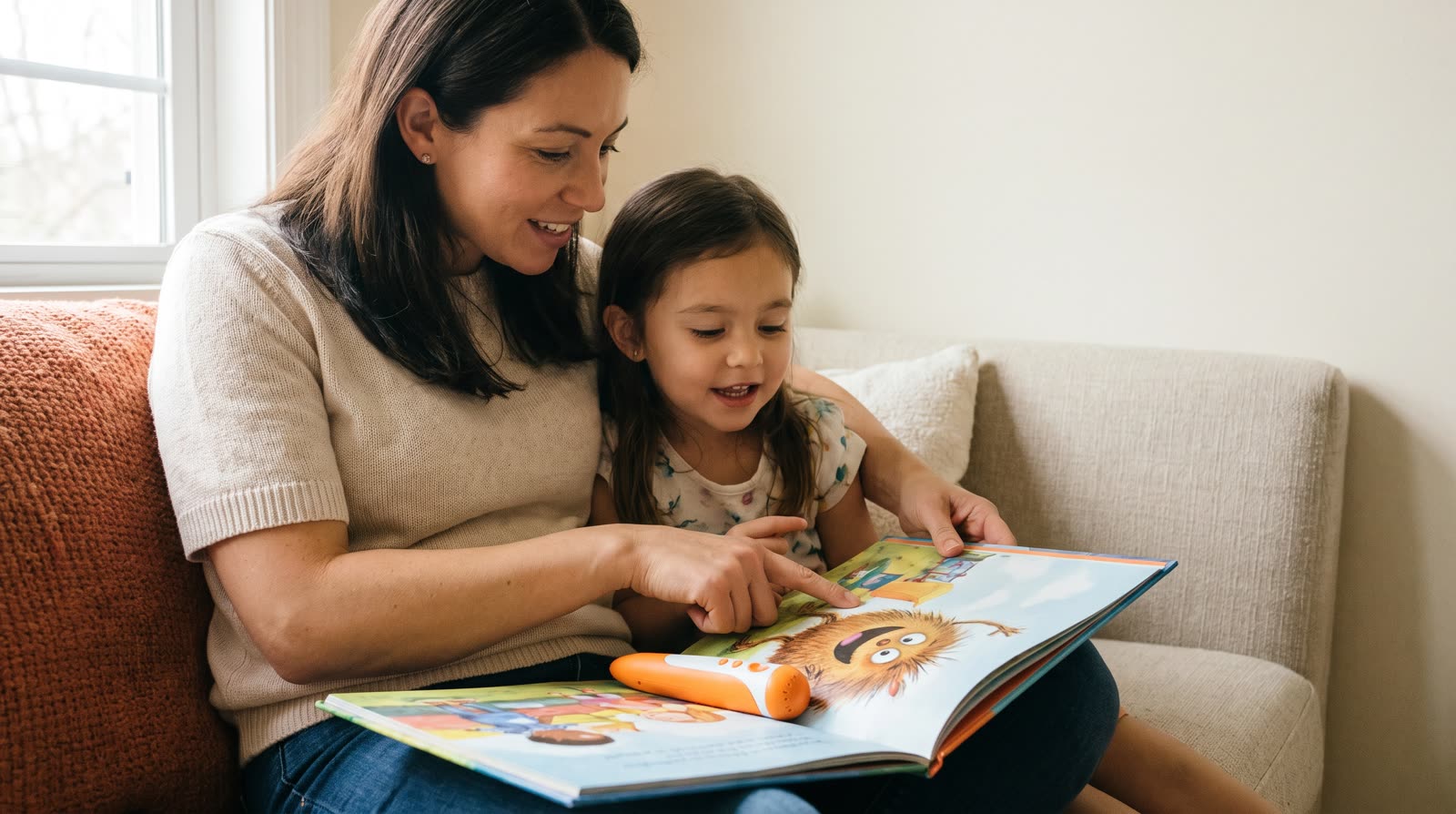
Air travel presents unique challenges for young children and their caregivers, particularly when shifting from high-stimulation airport terminals to enclosed aircraft cabins. Maintaining consistent bedtime routines while traveling across time zones is essential for emotional regulation, yet traditional bedtime rituals—such as dimming room lights, spreading out picture books on a rug, or engaging in quiet dialogue—are often constrained by cramped seating, dim cabin lighting, and ambient engine noise. For modern families seeking screen-free alternatives to digital tablets, children's reading pens and interactive book sets offer an engaging, tactile solution. By combining physical print books with optical sensor-enabled audio pens, children can explore stories independently or alongside parents without screen glare or blue light interference. This guide examines practical, human-centered strategies for utilizing reading pen sets during air travel, helping parents, educators, and B2B partners understand how portable literacy tools support bedtime routines at 30,000 feet.
Understanding the Travel Bedtime Challenge in Cabin Environments
Why Familiarity Matters During Air Travel
When children travel, changes in environment, schedule disruptions, and unfamiliar noises frequently trigger anxiety or sleep resistance. Bedtime is a critical anchor in a child's day, signaling safety, predictability, and wind-down time. Introducing familiar objects—such as a favorite talking picture book paired with a familiar reading pen—provides immediate psychological comfort. The tactile sensation of paper pages combined with recognizable human-voice narration helps bridge the gap between home routines and unfamiliar travel environments. According to guidance from the American Academy of Pediatrics (AAP Early Literacy Guidelines), consistent shared reading experiences reinforce language development and emotional security, even when routines are temporarily displaced.
Transitioning from High-Stimulation Airports to Quiet Cabin Settings
Airports are sensory overload zones filled with announcements, bright lights, and fast-paced crowds. By the time a child boards an aircraft, their nervous system may be overstimulated. Shifting directly from terminal commotion to sleep mode is difficult. Parents can use the boarding and taxiing phases as a gentle bridge by introducing low-stimulation tactile activities. Interactive reading books without screens allow children to refocus their attention inward, turning pages at their own pace. The gentle repetition of audio prompts from a reading pen acts as an auditory anchor, dampening cabin noise and signaling that the day's active phase is concluding.
Preparing Your Reading Pen and Interactive Books for Flight Travel
Pre-Flight Hardware Checks and Audio File Verification
Successful in-flight reading sessions depend on thorough pre-travel preparation. Before heading to the airport, caregivers should verify that the reading pen is fully charged or equipped with fresh batteries, following manufacturer guidelines. Ensuring that all necessary book audio files (.bnk or corresponding index files) are fully downloaded onto the device's internal memory or TF card prevents mid-flight frustrations caused by missing audio data. For B2B distributors and retailers, providing clear end-user instructions on pre-flight synchronization and offline audio storage is a vital aspect of product usability and customer satisfaction.
Managing Headphone Compatibility and Acoustic Safety for Young Ears
Aircraft cabins feature considerable ambient background noise, which can tempt users to turn up volume levels excessively. To protect young ears during in-flight listening, parents should utilize volume-limited child-safe headphones or earphones compatible with the reading pen's standard audio jack or Bluetooth pairing module. Ensuring that volume limits adhere to recommended decibel thresholds prevents auditory fatigue. Furthermore, using cushioned, lightweight headphones enhances comfort during extended sleep-onset routines in cramped airline seats.
Step-by-Step Guide for In-Flight Bedtime Routines
Setting the Scene: Lighting, Positioning, and Comfort
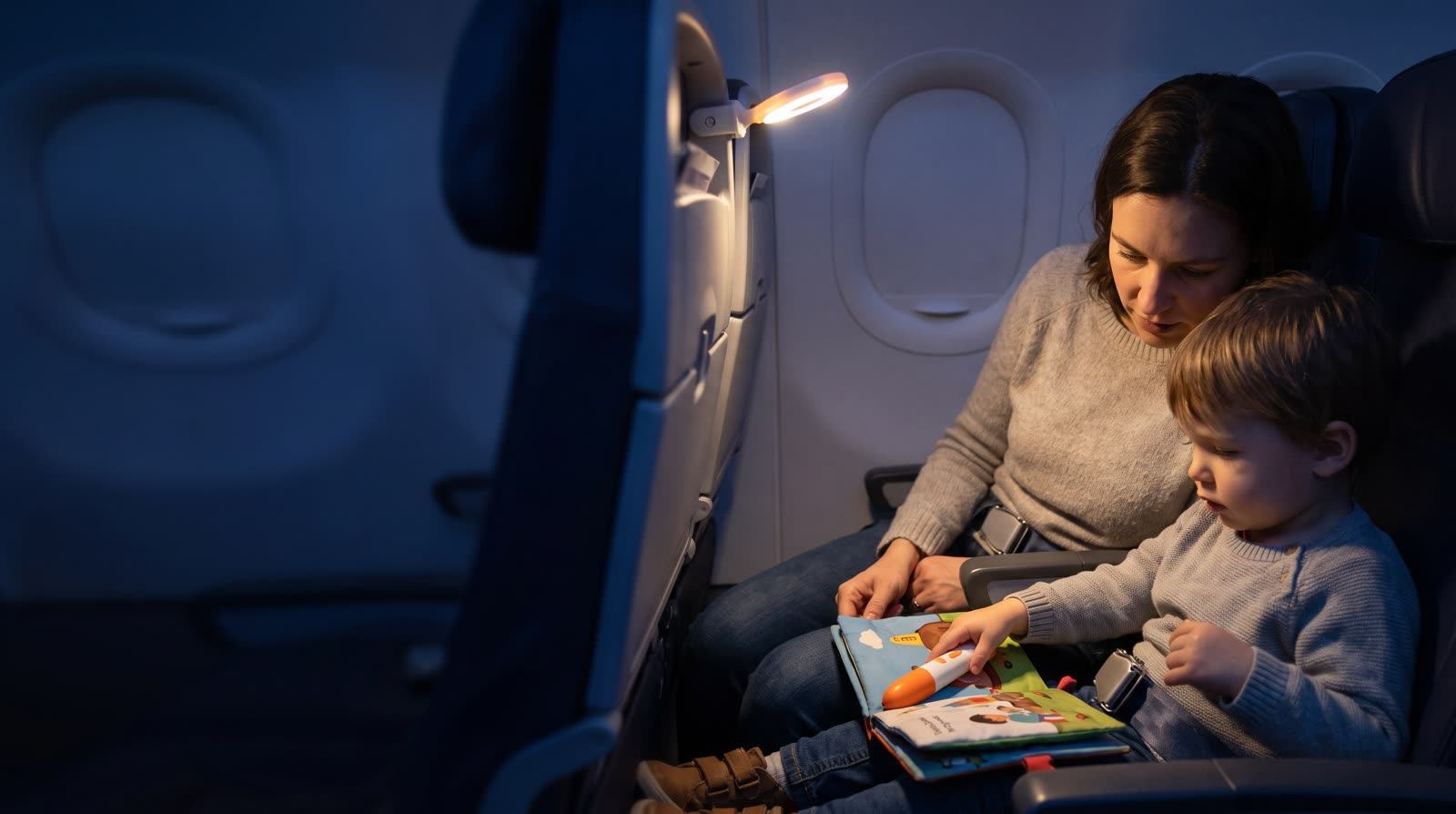
Once the aircraft reaches cruising altitude and cabin lights are dimmed for evening flight legs, physical space becomes the primary hurdle. Tray tables are often cramped, and overhead reading lights can disturb neighboring passengers. Parents can optimize space by placing a soft travel blanket or lap cushion across the child's knees to support the book. Utilizing an adjustable clip-on amber reading light or relying on the soft glow of the cabin allows the child to view illustrations clearly without harsh glare. Encouraging the child to settle back into the seat with the book resting comfortably establishes a relaxed physical posture conducive to sleep.
Guided Listening vs. Independent Tactile Exploration
Bedtime reading on a plane should progress from interactive engagement to calming passive listening. In the initial phase of the routine, parents can sit beside the child, pointing to illustrations and discussing the story elements together using soft, whispering tones. As eyelids grow heavy, the child can transition to independent tactile exploration, tapping individual picture elements with the reading pen to hear soothing narration or gentle background melodies. This gradual shift empowers the child while maintaining a calm, reassuring atmosphere.
Transitioning from Active Reading to Sleep Onset
The final stage of the in-flight bedtime routine involves closing the book and turning off external audio cues. Once the story concludes, parents should gently store the reading pen in a designated secure pouch within the travel bag. Transitioning to soft humming, back-rubbing, or cuddling helps complete the sleep cycle. According to educational research highlighted by Reading Rockets, predictable pre-sleep rituals cue the brain for melatonin production and restful sleep, even in dynamic environments like commercial aircraft.
ReadGlo project support
Explore ReadGlo Wholesale Catalog
Looking to stock travel-friendly interactive book sets and reading pens for your retail or distribution network? Partner with ReadGlo for premium OEM/ODM solutions.
Overcoming Common In-Flight Reading Hurdles
Handling Dim Cabin Lighting and Restrictive Tray Tables
Confined spaces and fluctuating cabin lighting require adaptable tools. When overhead lights are turned off for night flights, standard print books become unreadable. Interactive reading books paired with illuminated or high-contrast printed symbols help, but supplemental low-intensity lighting is often necessary. Caregivers should avoid devices with bright blue-spectrum backlights. Instead, soft amber book lights preserve melatonin production. Additionally, spiral-bound or board books with lay-flat bindings prevent pages from flipping awkwardly on small tray tables.
Managing Low Battery or Technical Glitches Safely
Technical anomalies during travel can cause stress. If a reading pen experiences low battery or freezes mid-story, parents should remain calm and avoid forcing mechanical parts or attempting unauthorized disassembly. Following product safety protocols outlined by the Consumer Product Safety Commission (CPSC) regarding children's electronic devices, users must never open device casings or expose units to moisture. Having a backup physical book without electronic components ensures the bedtime routine continues uninterrupted.
Avoiding Over-Excitement Before Sleep
Certain interactive book features—such as fast-paced games, sound effects, or high-volume songs—can stimulate rather than soothe a child. During pre-bedtime flights, parents should curate specific 'sleepy time' audio playlists on the reading pen, excluding high-energy tracks. Guiding the child toward gentle story narratives and calm vocal tones ensures that the reading activity promotes relaxation rather than playful agitation.
Retailer and Distributor Insights: Curating Travel-Friendly Reading Sets
Designing Compact Book Bundles for Portable Play
For B2B buyers, wholesale distributors, and educational toy brands, understanding family travel needs offers a valuable market differentiator. Travel-optimized reading pen sets should feature compact trim sizes, lightweight board book stock, and durable storage cases that fit easily into airline seatback pockets or carry-on backpacks. Bundling a multi-functional reading pen with a curated collection of bedtime storybooks creates a high-perceived-value SKU for family travel retail channels.
Enhancing Packaging Durability for Frequent Travelers
Travel gear endures significant mechanical stress inside luggage compartments. Ensuring that product packaging utilizes sturdy magnetic closures, reinforced slipcases, and impact-resistant molded EVA foam inserts protects both the reading pen and book sets during transit. Aligning product design with high-quality manufacturing standards ensures long-term durability, minimizing return rates and reinforcing brand reputation across global distribution markets.
Frequently Asked Questions
Can children use reading pens during airplane takeoff and landing?
Yes. Because children's reading pens operate offline and do not emit cellular transmissions when Bluetooth or Wi-Fi modules are disabled, they comply with FAA and international aviation regulations governing portable electronic devices during taxi, takeoff, and landing.
How can parents prevent the reading pen from making sudden loud noises in a quiet cabin?
Parents should pre-set the volume to a low level before boarding the aircraft or ensure that the child uses compatible volume-limiting headphones. Many reading pens also feature physical volume buttons or quick-mute functions accessible to caregivers.
What should I do if the reading pen battery runs out mid-flight?
If the rechargeable battery depletes during flight, caregivers can connect the pen to a portable power bank using a standard USB cable if permitted, or smoothly transition to traditional reading by discussing the picture book's illustrations without audio assistance.
Are interactive books suitable for children with sensory sensitivities during travel?
Interactive reading pens offer adjustable audio speeds and volume controls, which can benefit children who experience auditory sensitivity in noisy environments like airplanes. However, parents should monitor individual responses and pause if the child shows signs of sensory overload.
How do B2B partners ensure compliance with children's electronic safety standards?
Wholesale buyers and educational brands must source products from manufacturers that adhere strictly to international safety regulations, such as CPSC, CE, RoHS, and EN71 standards, ensuring non-toxic materials, secure battery compartments, and safe electrical output.
Conclusion
Maintaining a consistent bedtime routine while traveling by air is vital for children's emotional regulation and well-being. By combining tactile picture books with screen-free reading pens, parents can create a calming, familiar ritual that bridges the gap between bustling airports and quiet aircraft cabins. For B2B distributors, educational publishers, and toy retailers, offering thoughtfully curated, travel-friendly reading pen sets addresses a genuine consumer demand for portable, screen-free educational entertainment. Grounded in human-centered design and adherence to child safety standards, portable interactive reading solutions represent a sustainable growth category in the global early childhood literacy market.
Continue your research
Related reading pen buyer guides
Use these related guides to compare the next product, content, sourcing or channel decision in your project.
- Early LearningBridging Home and Classroom: Integrating Interactive Reading Pens into Kindergarten Morning RoutinesRead this guide
- Picture BooksHow Do I Choose New Talking Picture Books About Social-Emotional Learning to Expand Vocabulary?Read this guide
- Early LearningBridging Home and Kindergarten: How Portable Reading Pen Systems Support Mobile Learning and TransitRead this guide
Continue with ReadGlo
See a DOT-code picture-book set designed for guided early-learning programs.
ReadGlo project support
Request Product Catalog
Contact our B2B team today to discuss bulk orders, custom packaging, and sample kits for your educational brand.