
Contents
Introduction
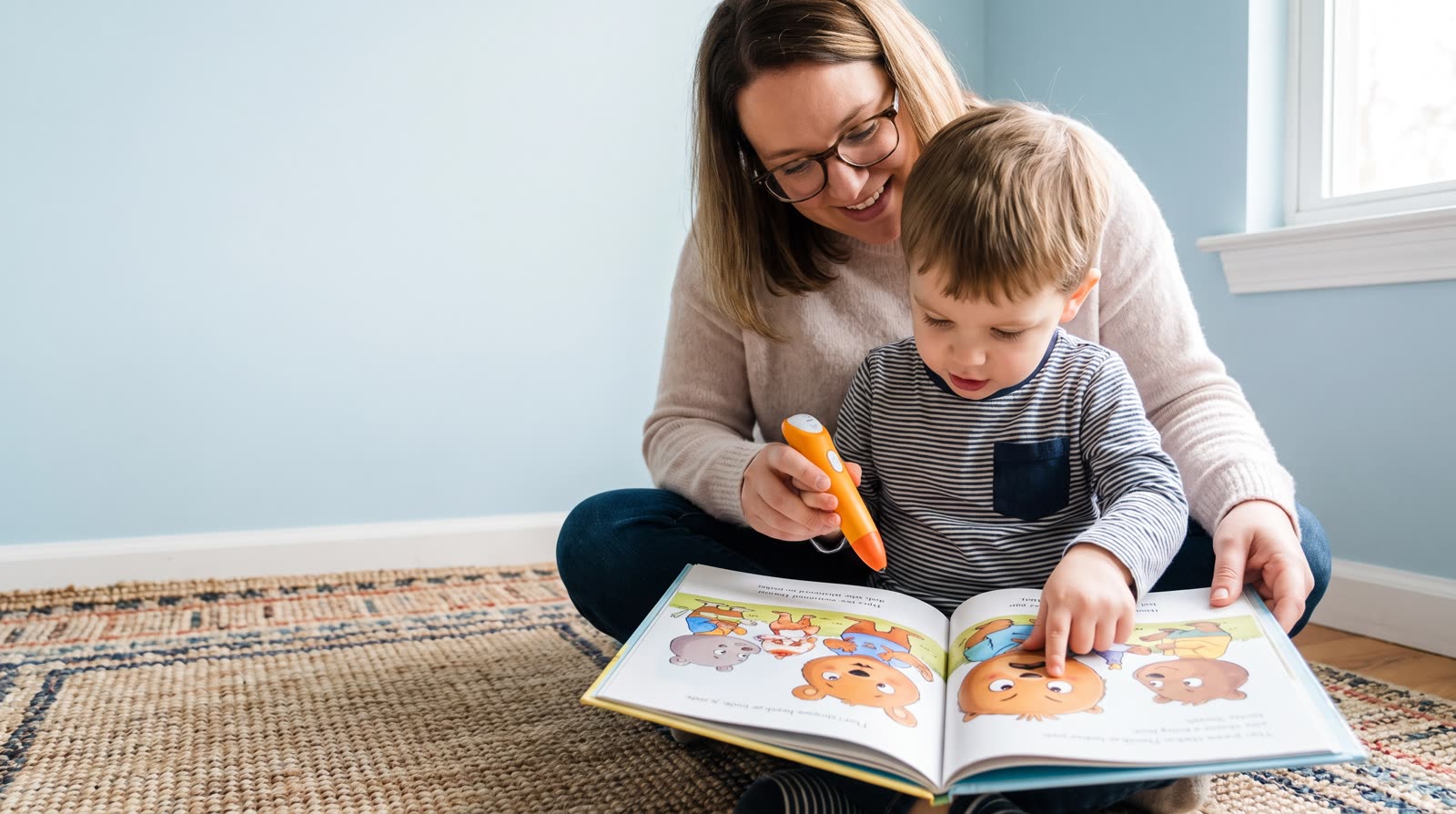
Choosing new social-emotional learning (SEL) talking picture books designed to encourage independent exploration requires a systematic, multi-layered evaluation of optical-audio code compatibility, narrative scaffolding, developmental appropriateness, and rigorous supply chain compliance. For B2B distributors, educational publishers, and institutional buyers, successful curation balances engaging interactive audio features with pedagogical soundness, ensuring children can navigate emotional regulation concepts autonomously without adult micromanagement. When evaluating new titles for reading pen ecosystems, procurement teams must verify optical dot code precision, durability of physical binding, alignment with established child development frameworks, and explicit compliance with international safety standards such as CPSC guidelines [1]. This guide outlines structured criteria for vetting SEL talking book collections, establishing sample review protocols, ensuring seamless integration with multi-lingual audio reading pens, and maintaining transparent commercial agreements that protect institutional buyers and downstream distributors alike. Through rigorous pre-production sample reviews, factory quality audits, and adherence to evidence-based developmental principles, publishers can deliver high-quality, reliable interactive learning tools for global educational markets.
1. Evaluating Pedagogical Alignment and Developmental Appropriateness in SEL Titles
Assessing Emotional Regulation Scaffolding and Narrative Depth in Early Childhood Literature
Social-emotional learning talking picture books must translate complex emotional concepts—such as frustration tolerance, empathy, self-awareness, social problem-solving, and emotional vocabulary—into developmentally accessible narratives. During sample reviews, procurement specialists and educational advisors must examine whether the storyline offers constructive coping strategies rather than oversimplified moral directives or abstract platitudes. In accordance with guidelines from organizations such as the Collaborative for Academic, Social, and Emotional Learning (CASEL) and Reading Rockets, effective SEL materials provide characters who experience realistic emotional challenges and work through them using guided reflection, peer collaboration, and self-regulation techniques. For B2B catalog curation, publishers must confirm that narrative text length, syntactic complexity, and vocabulary density match the target age bracket (typically 3 to 8 years), supporting autonomous page-turning, self-paced audio exploration, and sustained cognitive focus without causing cognitive overload. Furthermore, stories should encourage children to pause, reflect on character motivations, and connect narrative situations to their own daily experiences, fostering genuine self-discovery during independent reading sessions.
Collaborative Adult Participation and Professional Guidance Frameworks in Interactive Publishing
While independent exploration is a core objective of interactive talking picture books, contemporary educational frameworks emphasize that digital tools supplement rather than replace adult mentorship and educator guidance. According to policy statements from the American Academy of Pediatrics (AAP) and the Centers for Disease Control and Prevention (CDC), early childhood media engagement yields optimal developmental benefits when paired with responsive adult interactions, teacher-led discussions, and structured group activities. B2B buyers should look for publishing partners whose teacher guides, back-matter resources, and digital companion portals provide structured prompts for parents and educators. These supplementary materials ensure that independent audio engagement transitions smoothly into meaningful, guided conversations about feelings, social boundaries, and interpersonal relationships, without relying on clinical overpromises or unverified behavioral modification guarantees [2] [3]. Educators play a vital role in interpreting audio cues and helping children contextualize complex social interactions encountered in interactive stories.
Multicultural Representation, Inclusivity, and Universal Design in SEL Curation
Independent exploration in early childhood is significantly enhanced when children see diverse lived experiences, family structures, and cultural backgrounds authentically represented in literature. Institutional buyers and international distributors must evaluate whether upcoming SEL talking picture book series incorporate universal design principles and culturally responsive narratives. Characters should navigate emotional scenarios across diverse environments, ensuring that children from varied socioeconomic and linguistic backgrounds can identify with the protagonists. Furthermore, publishers must collaborate with qualified educators and cultural consultants during the pre-press review phase to eliminate implicit bias, stereotypical tropes, or exclusionary framing, thereby supporting inclusive learning ecosystems worldwide. Ensuring diverse representation not only broadens market appeal for international distributors but also promotes empathy and cross-cultural understanding among young readers.
2. Technical Specifications and Optical Code Integration for Reading Pen Ecosystems
OdiCode and Optical Dot Matrix (ODM) Precision Standards in Printing
The core functional differentiator of interactive talking picture books is the seamless integration of optical dot codes (often referred to as OdiCode or OID technology) beneath or alongside printed artwork. During the specification confirmation phase, procurement teams must verify that printing facilities utilize certified high-precision offset or digital presses capable of reproducing invisible infrared dot patterns without interfering with CMYK visual fidelity. Faulty dot printing results in optical sensor misreads, audio lag, or playback failure, which directly undermines a child's independent exploration experience and damages brand reputation. Factory quality assurance protocols must include sample auditing under standard reading pen sensor lenses to test recognition speed across varying ambient light conditions and paper surface reflections. In addition, ink density, dot contrast, and substrate absorption rates must be rigorously calibrated to prevent signal degradation over time.
Multi-Language Audio Encoding, Index Mapping, and Memory Allocation
Interactive publishing for global markets requires rigorous management of multi-language audio files (.WAV or compressed .MP3 formats) mapped to specific book codes. B2B publishers must inspect the audio script structuring, sound design quality, and voice actor articulation during pre-production reviews. Each book title must feature clean audio separation, correct index mapping, and compatibility with standard reading pen firmware versions. Furthermore, procurement teams should confirm audio file size optimization to ensure that expanding catalog selections fit comfortably within standard reading pen internal flash memory (typically 8GB to 32GB) or expandable TF card slots, facilitating effortless over-the-air or USB content synchronization for multilingual learners. Clear directory structures and firmware manifest files are essential for seamless deployment across educational networks.
Hardware and Software Interoperability Across Reading Pen Generations
As technology ecosystems evolve, educational institutions and retail distributors must safeguard their inventory against premature hardware obsolescence. B2B contracts should specify that interactive book series maintain backwards and forwards compatibility across multiple generations of reading pen hardware. Procurement teams need to review firmware update protocols, API documentation for companion software, and encryption standards protecting audio data packets. Ensuring robust interoperability prevents supply chain friction and guarantees that schools and families can integrate new book releases into existing hardware fleets without requiring costly system-wide replacements. Regular software audits and developer documentation reviews are key components of sustainable long-term publishing partnerships.
3. Supply Chain Verification, Sample Review Protocols, and Pre-Shipment Audits
Establishing Rigorous Factory Sample Review Checkpoints and Prototyping
Mitigating supply chain risks requires a disciplined, multi-stage sample review workflow before executing volume purchase orders. Procurement teams should mandate three distinct review phases: structural mockups (white dummies), pre-press digital proofs with embedded optical dot verification, and pilot production runs (golden samples). During function checks, quality control inspectors must test every interactive touchpoint using actual reading pen hardware to ensure audio triggers activate instantaneously. Additionally, verification of binding durability—such as reinforced board book spines, heavy-duty Smyth sewn bindings, or tear-resistant page lamination—is essential for products subjected to frequent, rigorous handling by young learners in classroom environments. Factory audits should also verify environmental compliance, worker safety standards, and sustainable material sourcing.
Pre-Shipment Data Checks, Packaging Compliance, and Quality Assurance Documentation
Before goods leave the manufacturing facility, comprehensive pre-shipment inspections must verify carton markings, barcoding, barcode scanner readability, and inclusion of required multilingual safety warnings and user manuals. Buyers must cross-reference Bill of Lading data, packing lists, and Certificate of Analysis (CoA) records against agreed-upon product specifications. It is vital to note that reliable B2B transactions rely strictly on verified manufacturing standards rather than unverified promises or exaggerated performance guarantees. Ensuring full transparency in supply chain documentation protects downstream distributors and institutional buyers from regulatory non-compliance, customs delays, and costly product recalls [1]. Independent third-party inspection agencies can provide additional objectivity during final batch sign-offs.
ReadGlo project support
Request B2B Sample Kit
Explore our certified SEL talking picture book collections and reading pen samples for your distribution network.
4. Product Safety, Low-Risk Inspection, and Regulatory Compliance Standards
Physical Safety Standards and Low-Risk External Inspection Procedures for Electronic Media
Children's interactive products must adhere to stringent physical and chemical safety regulations, including ASTM F963, EN71, and CPSC guidelines. When conducting incoming quality control or retail store audits, staff must perform low-risk external inspections only—checking for smooth rounded corners, non-toxic soy-based inks, tear-resistant lamination, and securely fastened battery compartments on companion reading pens. Retailers and educators must strictly avoid attempting unauthorized internal disassembly or mechanical repairs of electronic reading pens. External maintenance is limited to gentle cleaning with a dry or slightly damp lint-free cloth under adult supervision to prevent electrical short circuits. Compliance with heavy metal limits and phthalate restrictions is mandatory for all surface coatings and plastic components.
Handling Operational Anomalies, Charging Safety, and Consumer Incident Protocols
To maintain absolute user safety, operational safety protocols must be clearly communicated in product packaging and user manuals. In accordance with Consumer Product Safety Commission (CPSC) guidelines, if any reading pen or charging accessory exhibits signs of dampness, physical impact damage, abnormal surface heating, battery bulging, chemical leakage, or unusual smoke emission, users must immediately cease operation, disconnect from power sources, and avoid recharging. Consumers and institutional buyers must contact the manufacturer, authorized distributor, or qualified service channels for professional evaluation and replacement, rather than attempting makeshift fixes or unauthorized battery replacements [1]. Clear recall communication channels and warranty claim procedures safeguard both end-users and institutional purchasers.
5. Commercial Procurement Best Practices: Seller Verification, Warranties, and Market Analysis
Verifying Authorized Sellers, Exact Models, Age Ratings, and Book Code Compatibility
When procuring talking book series and reading pen bundles for educational institutions or retail distribution, buyers must rigorously verify the legal identity of the supplier, exact model numbers, published age ratings (e.g., ASTM/EN standard classifications), and optical code version compatibility. Mismatched book series and pen firmware frequently lead to functional failures, frustrating end-users and damaging distributor credibility. Procurement managers should demand official authorization certificates from publishers and manufacturers to prevent counterfeit audio coding distribution and ensure full access to official firmware updates and technical support. Direct verification through official publisher channels prevents unauthorized grey-market distribution.
Analyzing Written Warranty Terms, Defect Thresholds, and Commercial Liabilities
Commercial agreements must feature transparent, written warranty terms that outline clear defect thresholds, replacement procedures, and liability boundaries without relying on verbal assurances or vague service guarantees. B2B buyers should negotiate clear terms covering defective optical dot print batches, electronic hardware failure rates, and freight discrepancy resolutions. By anchoring purchasing decisions in verifiable contracts, precise technical specifications, and recognized educational frameworks, publishers and distributors can successfully scale high-quality SEL interactive book programs while minimizing legal and financial exposure. Comprehensive contract documentation ensures long-term operational stability and mutual trust across the supply chain.
Frequently Asked Questions
What criteria should B2B buyers use to evaluate SEL talking picture books?
B2B buyers should evaluate narrative pedagogical soundness (aligned with frameworks like CASEL and Reading Rockets), optical dot matrix (ODM) printing precision for reading pen compatibility, physical durability of bindings (such as board books or reinforced paper), multi-language audio script quality, and verified compliance with safety standards like CPSC and ASTM F963.
How do interactive reading pens support independent exploration in children?
Interactive reading pens allow children to independently tap illustrated icons and text to trigger audio narrations, character dialogue, and sound effects without requiring continuous adult intervention. This self-paced interaction fosters active engagement, curiosity, and autonomous problem-solving within structured developmental bounds.
What safety precautions must be followed regarding reading pen electronics?
Users must perform low-risk external inspections only and avoid internal disassembly. In accordance with CPSC guidelines, if a device shows signs of dampness, damage, abnormal heat, bulging, leakage, or smoke, users must immediately stop using it, refrain from charging, and contact the manufacturer or qualified service channels.
Why is supplier and model verification critical during procurement?
Rigorous verification of seller credentials, exact model numbers, age ratings, and book-code firmware compatibility ensures that optical codes match reading pen decoders properly, preventing functional breakdowns and ensuring compliance with written warranty and commercial terms.
Conclusion
Procuring social-emotional learning talking picture books that encourage independent exploration requires a meticulous synthesis of educational theory, optical engineering precision, and rigorous supply chain oversight. By partnering with verified manufacturers, adhering strictly to CPSC and educational development guidelines, and establishing robust sample review and pre-shipment protocols, B2B distributors and educational publishers can deliver exceptional interactive reading experiences. Emphasizing safety, transparent commercial terms, and scaffolded adult guidance ensures that children develop vital emotional regulation and cognitive autonomy in a secure, reliable learning environment, establishing a solid foundation for long-term educational success and commercial growth.
Continue your research
Related reading pen buyer guides
Use these related guides to compare the next product, content, sourcing or channel decision in your project.
- Picture BooksEvaluating and Selecting Science and Nature Talking Picture Books for Older Children: A Comprehensive B2B Buyer and Publisher GuideRead this guide
- Picture BooksHow Do I Choose New Talking Picture Books About Social-Emotional Learning to Prepare for Preschool?Read this guide
- Picture BooksHow Do I Choose New Talking Picture Books About Early Math to Expand Vocabulary?Read this guide
Continue with ReadGlo
See product specifications and request model-specific documentation.
ReadGlo project support
Partner with ReadGlo Today
Contact our institutional sales team to discuss custom OEM/ODM publishing and reliable supply chain partnerships.