
Contents
Introduction
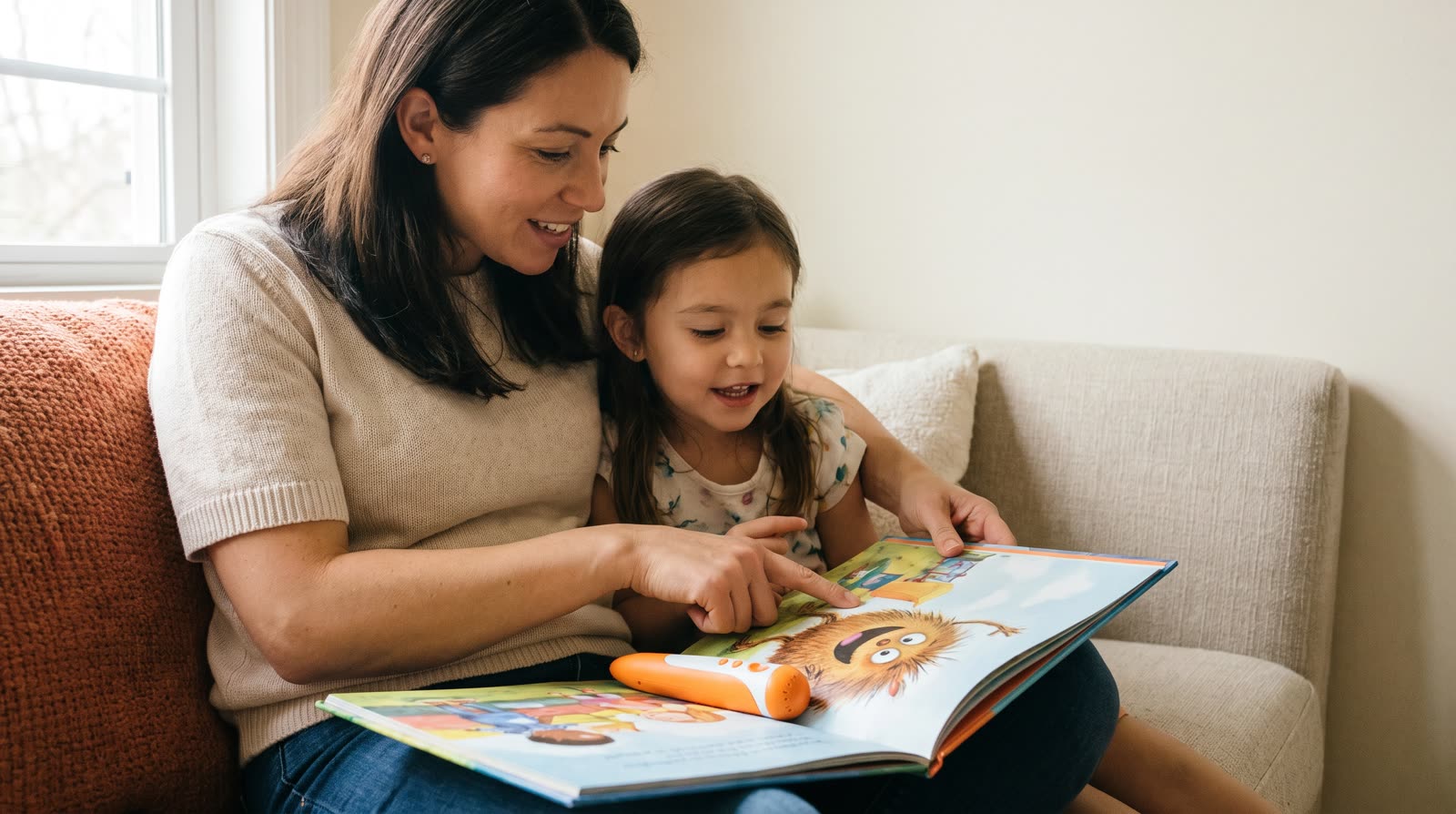
Sourcing and evaluating talking picture books that introduce world cultures and geography require a rigorous balancing act between engaging linguistic exposure and strict B2B compliance. Educational publishers, school distributors, and toy importers must navigate how optical reading pens and interactive audio components integrate with age-appropriate thematic content. Vocabulary expansion in early childhood is deeply anchored in contextualized, repeated exposure to rich linguistic stimuli, as supported by educational research from Reading Rockets and literacy frameworks. When selecting new titles covering global cultures, wholesale buyers must carefully review sample materials, verify optical OID dot code synchronization, ensure compliance with international toy safety standards such as those overseen by the U.S. Consumer Product Safety Commission (CPSC), and emphasize adult-mediated shared reading practices endorsed by the American Academy of Pediatrics (AAP). This guide outlines a structured, verifiable evaluation framework for B2B procurement professionals seeking to stock high-quality, safe, and educationally sound interactive books.
Evaluating Linguistic and Cultural Content in Global Geography Picture Books
Phonological Mapping and Authentic Vocabulary Integration
World geography and cultural themes offer an expansive canvas for introducing tier-two and tier-three vocabulary to young learners. When reviewing publisher catalogs or pre-production samples, B2B buyers must examine how target vocabulary words—such as geographical landforms, cultural landmarks, and traditional attire—are embedded within narrative contexts rather than isolated lists. Audio integration via optical reading pens enhances phonological awareness by providing immediate auditory feedback, correct native pronunciation, and sound effects that anchor word meanings. Educational standards emphasize that vocabulary acquisition is most effective when auditory stimuli match visual illustrations precisely. Buyers should verify that text and audio scripts undergo rigorous editorial review by qualified educators and linguists to ensure accurate phonetic representation and age-appropriate syntactic complexity.
Cultural Authenticity and Review Standards with Educator Guidance
Introducing world cultures requires strict adherence to cultural authenticity, respectful representation, and educational accuracy. Procurement teams must establish collaborative sample review protocols with cultural advisors and early childhood educators to evaluate how diverse traditions, languages, and geographic regions are depicted. Stereotypical portrayals must be systematically filtered out during the pre-production phase. Furthermore, special learning support materials and cultural awareness titles must never overpromise developmental outcomes or medical results. Instead, publishers and distributors should emphasize that interactive books serve as supplementary tools for adult-guided exploration. Citing guidelines from organizations like the CDC and educational authorities, the curriculum design must support social-emotional growth and multicultural appreciation through collaborative adult-child interactions rather than autonomous device usage.
Factory-Side Verification and Technical Specifications for Audio Books
Optical OID Code Compatibility and Reading Pen Synchronization
The technical backbone of any talking picture book line is the seamless synchronization between the printed page and the optical reading pen. During factory-side specification confirmation, wholesale buyers must inspect the OID (Optical Identification) dot code printing quality. OID micro-dots are embedded beneath or alongside CMYK color printing; if dot contrast is insufficient or ink bleeding occurs during mass production, reading pens will experience scanning latency or recognition failure. Buyers should request engineering test reports confirming dot matrix density, infrared sensor compatibility across different pen models, and audio file compression rates (such as WAV or high-bitrate MP3) stored within the pen's internal memory or TF card. Pre-shipment inspections must include functional checks across sample units to verify zero-lag audio playback and correct page-zone mapping.
Durability, Non-Toxic Materials, and Pre-Shipment Quality Inspections
Children's books designed for interactive audio components undergo rigorous physical handling. Procurement specifications must mandate heavy-weight board book stock or tear-resistant coated paper, rounded corners to prevent injury, and non-toxic, eco-friendly soy-based inks. Factory quality control must enforce strict physical-mechanical testing, including bite tests, drop tests, and hinge durability assessments for interactive flap elements. For electronic components such as rechargeable lithium batteries or speaker modules housed within accompanying companion boxes or smart covers, manufacturers must provide certified compliance reports verifying adherence to international safety directives like CE, RoHS, and EN71. Pre-shipment documentation review must confirm that batch testing aligns exactly with approved golden samples.
ReadGlo project support
Request Wholesale Catalog & Evaluation Samples
Partner with ReadGlo to source certified interactive talking picture books and optical reading pens. Access our wholesale catalog, request pre-production samples, and review compliance documentation for your distribution markets.
Safety Compliance, Care Instructions, and Regulatory Standards
External Inspection Protocols and CPSC Safety Guidelines
Safety compliance is paramount when importing children's educational toys and interactive books. B2B buyers must enforce strict adherence to safety standards established by the U.S. Consumer Product Safety Commission (CPSC) and equivalent international regulatory bodies. Maintenance and care instructions printed on packaging and manuals must specify low-risk external inspection protocols only. Users and purchasers must be explicitly instructed never to attempt teardown or internal modifications of electronic reading pens or embedded sound modules. Routine maintenance should be limited to gentle surface cleaning with a dry or slightly damp microfiber cloth, ensuring no moisture enters charging ports or speaker grilles.
Power Safety, Battery Handling, and Defect Management Procedures
Electronic components and rechargeable batteries require precise safety warnings to prevent hazards. Product documentation must clearly state that if moisture, physical damage, abnormal heat, battery swelling, fluid leakage, or smoke is detected, the device must be discontinued from use immediately, disconnected from power sources, and left uncharged. Users must be instructed to contact the manufacturer, authorized distributor, or qualified service channels for repair or replacement rather than attempting amateur remediation. Procurement contracts must require manufacturers to include comprehensive, multi-language safety inserts complying with UL and IEC standards for lithium-ion battery safety and small parts choking hazard warnings.
B2B Sourcing, Specification Confirmation, and Documentation Review
Sample Review Protocols and Specification Alignment
Establishing a robust B2B sourcing pipeline for talking picture books requires a standardized four-stage verification process: sample review, specification confirmation, functional check, and pre-shipment documentation check. During the sample review stage, procurement officers must inspect physical binding, paper weight, color accuracy, and audio clarity. Specification confirmation involves freezing the bill of materials (BOM), firmware versions for reading pens, and packaging dimensions. Functional checks ensure that every book coordinate matches the corresponding audio file identifier without cross-talk or missing triggers. Pre-shipment documentation review validates that bill of lading, test certificates, and commercial invoices match exact order parameters.
Verifying Seller Terms, Warranties, and Book Code Compatibility
To protect distribution investments, wholesale buyers must rigorously verify exact seller credentials, model numbers, targeted age grading, and book code compatibility. Because different reading pen manufacturers use proprietary OID encoding algorithms (such as Sonix or proprietary matrix codes), books sourced from one supplier may not function with reading pens from another. Procurement contracts must explicitly specify OID version compatibility, firmware update protocols, and written warranty terms covering audio module defects and binding integrity. Buyers should also verify return policies, minimum order quantities (MOQs), and compliance indemnification clauses to ensure complete supply chain transparency.
Frequently Asked Questions
How do talking picture books about world cultures specifically support vocabulary expansion in young children?
Talking picture books combine visual illustrations, printed text, and immediate audio feedback via optical reading pens. This multi-sensory exposure reinforces phonological awareness, provides correct native pronunciation of global terminology, and contextualizes tier-two and tier-three vocabulary within engaging cultural narratives, significantly enhancing retention compared to traditional static books.
What technical checks should B2B buyers perform on OID optical codes and reading pen compatibility?
Wholesale buyers must verify OID dot matrix printing contrast, sensor compatibility across target reading pen models, and audio file synchronization. Pre-shipment inspections should include functional checks to ensure zero scanning latency, correct coordinate mapping between page zones and audio files, and consistent playback quality across all production batches.
What safety and care protocols must be established for electronic reading pens and interactive books?
Documentation must specify low-risk external inspection and cleaning only, prohibiting internal teardowns. If moisture, physical damage, abnormal heat, swelling, leakage, or smoke occurs, users must discontinue use immediately, avoid charging, and contact qualified service channels. Products must comply with CPSC guidelines, EN71, and UL battery safety standards.
Conclusion
Sourcing and publishing talking picture books about world cultures and geography demands an uncompromising commitment to educational quality, technical precision, and safety compliance. By implementing a rigorous B2B evaluation framework—encompassing rigorous sample reviews, OID optical code verification, alignment with literacy frameworks from Reading Rockets and the AAP, and strict adherence to CPSC safety standards—educational distributors can deliver exceptional, enriching products to global markets. Partnering with experienced manufacturers like ReadGlo ensures full specification transparency, reliable audio synchronization, and comprehensive compliance documentation for wholesale success.
Continue your research
Related reading pen buyer guides
Use these related guides to compare the next product, content, sourcing or channel decision in your project.
- Picture BooksHow Do I Choose New Talking Picture Books About Social-Emotional Learning to Expand Vocabulary?Read this guide
- Picture BooksSourcing Talking Picture Books on World Cultures and Geography for Older Children: A B2B Evaluation and Procurement FrameworkRead this guide
- Picture BooksHow Do I Choose New Talking Picture Books About Early Math to Expand Vocabulary?Read this guide
Continue with ReadGlo
See a DOT-code picture-book set designed for guided early-learning programs.
ReadGlo project support
Connect with Our B2B Sourcing Team
Ready to expand your educational product line with high-quality talking picture books and reading pens? Contact ReadGlo today to discuss custom specifications, OEM/ODM services, and rigorous quality assurance protocols.