Contents
Introduction
Curating talking picture books that simultaneously integrate social-emotional learning (SEL) and bilingual development requires a rigorous evaluation framework for publishers, educational distributors, and B2B procurement teams. When paired with advanced optical reading pens, these multimedia resources empower young learners to navigate complex emotions while acquiring a second language. However, successful title selection demands careful alignment with developmental milestones, linguistic balance, audio encoding accuracy, and pedagogical safety standards. This guide provides international buyers, school suppliers, and retail curators with a systematic, professional methodology for assessing, sampling, and scaling SEL bilingual reading book programs without relying on unverified claims or generalized assumptions. As global demand for interactive educational media accelerates, decision-makers must balance creative narrative quality with strict manufacturing compliance and pedagogical soundness.
1. Establishing Procurement Criteria for SEL and Bilingual Integration
Evaluating Social-Emotional Competencies in Early Childhood Literature
Social-emotional learning in early childhood centers around core developmental domains: self-awareness, self-management, social awareness, relationship skills, and responsible decision-making. When selecting talking picture books for this domain, B2B procurement teams must review narrative structures to ensure emotional themes are concrete, relatable, and culturally adaptable across diverse international markets. Stories should depict recognizable childhood scenarios—such as sharing toys, managing frustration during group play, identifying facial expressions, or expressing empathy toward peers—using accessible visual and auditory cues. Procurement teams should work closely with educational advisors to verify that narrative pacing allows young readers to pause, reflect, and engage with interactive audio touchpoints without cognitive overload. Furthermore, books must treat emotional regulation as a gradual developmental process rather than presenting instant psychological fixes, ensuring alignment with professional standards.
Balancing Dual-Language Frameworks and Audio Encoding Precision
Bilingual talking books require meticulous synchronization between printed text and audio file delivery. Importers must examine whether the dual-language layout (such as English paired with a secondary target language like Spanish, French, or Mandarin) maintains clear typography, appropriate font sizing for early readers, and distinct visual hierarchy. Furthermore, audio encoding files—including OID (Optical Identification) dot codes or integrated sound chips—must support multi-language toggling, clean pronunciation from native voice actors, and seamless switching between primary and secondary languages. B2B sample evaluation must test optical code responsiveness across various matte and glossy page finishes, ensuring zero latency, high scanning durability, and zero misread triggers during active reading sessions in classrooms or homes.
Aligning Content with Recognized Early Childhood Frameworks
To maintain high editorial and educational standards, book collections should align with established developmental guidelines such as those outlined by the American Academy of Pediatrics (AAP) regarding early literacy, language exposure, and cognitive health. Buyers should verify that content avoids clinical or diagnostic overreach, presenting emotional regulation as a normal part of growth rather than a therapeutic cure. Documenting alignment with recognized educational milestones helps international distributors satisfy local curriculum requirements, institutional procurement standards, and parental expectations across global export markets.
2. Sample Evaluation, Specification Review, and Quality Inspection Protocols
Conducting Rigorous Pre-Production Sample Reviews
Before committing to bulk orders, educational distributors must institute a structured sample review protocol. This involves inspecting physical book dummies for paper weight, rounded corner safety, non-toxic soy-based ink printing, and durable binding capable of withstanding frequent classroom or home use. The accompanying reading pens must be evaluated for ergonomic grip suitable for small hands, battery safety compliance, speaker clarity, and memory storage capacity. Review teams should test sample books across multiple pen firmware versions to guarantee backward compatibility, stable audio playback, and smooth data transfer via USB or wireless synchronization.
Verifying Optical Dot Code Integrity and Printing Tolerances
The core functionality of interactive talking picture books relies on OID dot codes printed alongside illustrations and text. During pre-shipment data verification and factory inspection, quality control teams must test scanning accuracy under varying ambient lighting conditions, including low-light classroom environments. Printing tolerances must be strictly controlled to prevent dot distortion or ink bleed, which can cause reading pen recognition failures. Establishing clear quality acceptance thresholds protects both publishers and buyers from high return rates, ensuring that every printed book responds instantly and accurately to pen taps.
Establishing Protocols for Escalation and Technical Support
B2B partnerships require clear escalation channels for technical anomalies, firmware updates, or audio file corruption issues. Procurement contracts should define procedures for reporting software bugs in companion apps, resolving optical reading discrepancies, and handling defective units during warranty periods. Establishing transparent communication protocols with manufacturing partners ensures rapid troubleshooting, minimizes supply chain disruption, and maintains end-user trust across retail and institutional distribution channels.
ReadGlo project support
Get a Quote
Ready to expand your product catalog with premium SEL bilingual talking books and reading pens? Request custom wholesale specifications and sample kits today.
3. Pedagogical Considerations, Adult Guidance, and Inclusive Design
The Essential Role of Adult Scaffolding in Bilingual SEL
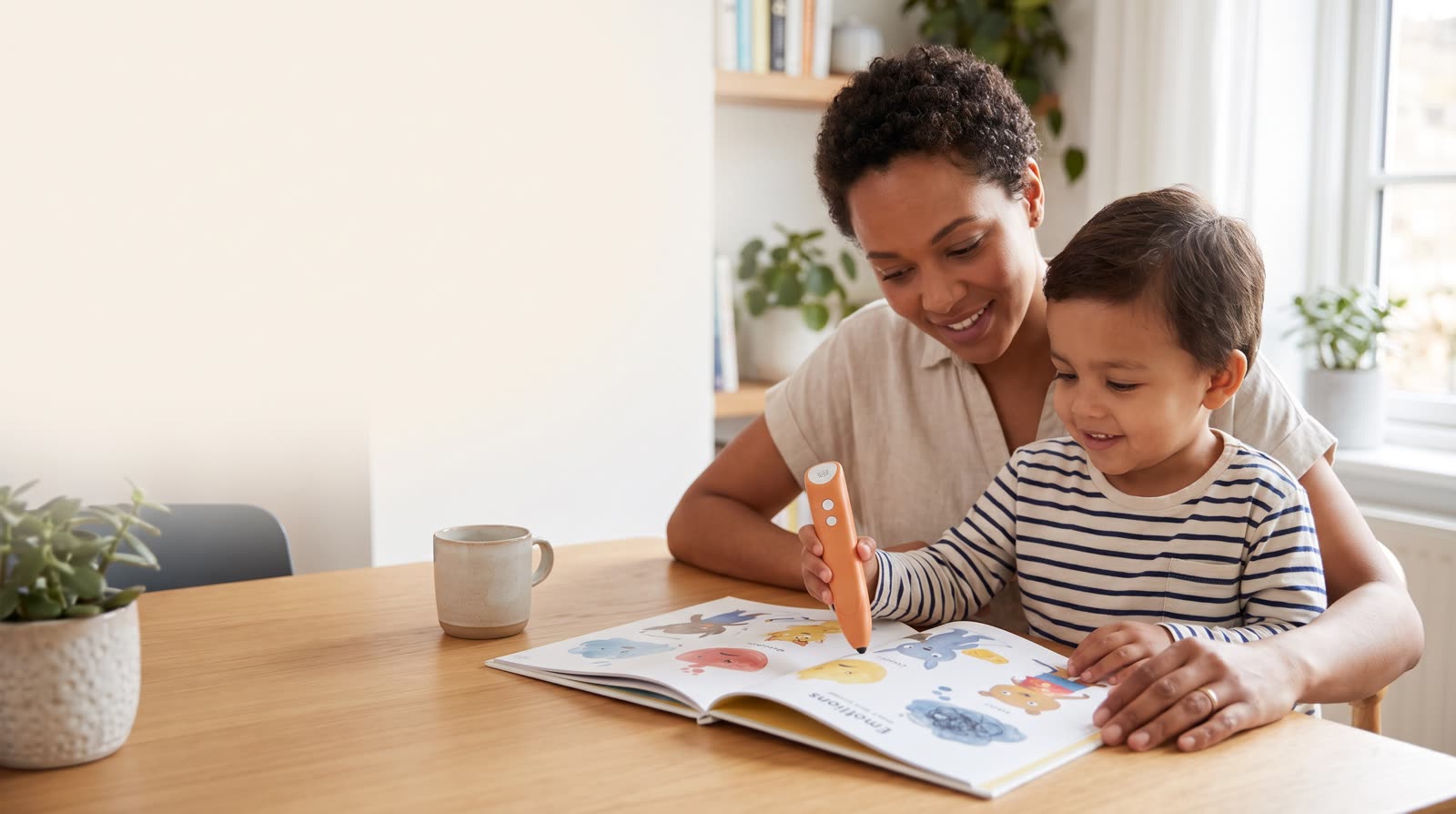
Talking picture books and reading pens serve as powerful supplementary tools, but they cannot replace human interaction. Educators and child development experts emphasize that optimal learning occurs when parents, teachers, or caregivers actively participate in shared reading sessions. Adults help contextualize emotional concepts introduced in stories and scaffold dual-language vocabulary acquisition by asking open-ended questions, encouraging discussion, and modeling empathetic behavior. B2B marketing materials and instructional guides should explicitly encourage adult engagement to maximize the educational value of the product and foster deeper interpersonal connections between children and caregivers.
Accommodating Diverse Learning Needs Without Clinical Claims
When designing or selecting content for children with diverse learning needs, publishers must exercise extreme caution. Materials should be inclusive, visually clear, and easy to navigate, but they must never make unverified medical, psychological, or therapeutic claims. For children experiencing language delays or reading difficulties, interactive audio support provides multi-sensory reinforcement, yet educators should be advised to consult qualified specialists for formal developmental assessments, referencing authoritative bodies like Reading Rockets or the International Dyslexia Association.
Ensuring Cultural Relevance and Linguistic Authenticity
Bilingual publishing requires rigorous localization to ensure cultural sensitivity and linguistic authenticity. Translations must move beyond literal conversion to capture idiomatic expressions, emotional nuances, and cultural contexts in both target languages. B2B buyers should request translator credentials, native speaker reviews, and linguistic audit reports to verify that story contexts resonate with the target demographic, avoiding cultural stereotypes or unnatural phrasing that could hinder language acquisition and emotional comprehension.
4. Product Safety, Regulatory Compliance, and Consumer Protection
Adhering to International Children's Product Safety Standards
Children's electronic toys, reading pens, and accompanying books must comply with stringent international safety regulations, such as CPSC guidelines in the United States and EN71 standards in Europe. Procurement teams must request up-to-date compliance test reports from accredited third-party laboratories covering mechanical hazards, small parts choking risks, flammability, and heavy metal limits in inks and plastics. Ensuring full regulatory compliance is non-negotiable for successful market entry and long-term brand reputation.
Battery Safety, Charging Protocols, and External Inspection
Electronic reading pens utilize internal rechargeable lithium-ion or standard replaceable batteries. Users and institutional buyers must follow strict safety guidelines: inspect devices regularly for external damage, never attempt unauthorized disassembly, and immediately cease use if swelling, leakage, abnormal heat generation, or smoke is detected. Devices should be charged using certified cables and compliant power adapters, adhering strictly to safety advisories published by the Consumer Product Safety Commission (CPSC).
Transparency in Commercial Terms, Warranties, and Compliance
When negotiating purchase agreements, wholesale buyers must carefully review warranty terms, software update policies, and intellectual property rights for audio files. Commercial terms should outline clear remedies for manufacturing defects, shipping discrepancies, and regulatory non-compliance. Transparency in contracts safeguards long-term business relationships and ensures sustainable product distribution across competitive international markets.
Frequently Asked Questions
What key factors should B2B buyers examine when evaluating bilingual talking picture books?
Buyers should evaluate print quality, OID dot code scanning accuracy, linguistic authenticity of translations, alignment with early childhood educational frameworks, and compliance with international safety standards such as CPSC and EN71.
How do reading pens enhance social-emotional learning in bilingual children?
Reading pens provide multi-sensory reinforcement by instantly playing native-speaker audio, sound effects, and character dialogues, allowing children to connect emotional vocabulary across two languages at their own pace with adult guidance.
Are reading pens and talking books suitable for children with special learning needs?
While multi-sensory audio features support engagement and auditory reinforcement, publishers and distributors must avoid making medical or therapeutic claims. Parents and educators should consult qualified specialists and refer to authoritative resources like Reading Rockets or the AAP for guidance.
What safety precautions are necessary for rechargeable electronic reading pens?
Users must inspect devices for external wear, avoid unauthorized disassembly, use certified charging equipment, and immediately stop using devices that show signs of damage, swelling, or overheating, following CPSC safety guidelines.
How can distributors verify audio file compatibility and sound quality before bulk ordering?
Distributors should request physical pre-production samples to test optical code recognition across different page finishes, evaluate speaker clarity, verify dual-language switching functionality, and check firmware stability.
Conclusion
Selecting talking picture books that combine social-emotional learning with bilingual support is a strategic opportunity for publishers, distributors, and educational suppliers. By implementing rigorous sample evaluation protocols, verifying optical code precision, maintaining strict adherence to international safety standards like CPSC, and emphasizing adult-guided scaffolding, B2B buyers can curate high-value, reliable product lines. As the global demand for interactive educational tools grows, maintaining uncompromising standards in content quality and technical reliability ensures long-term commercial success and positive developmental outcomes for young learners worldwide.
Continue your research
Related reading pen buyer guides
Use these related guides to compare the next product, content, sourcing or channel decision in your project.
- Picture BooksHow Do I Choose New Talking Picture Books About Early Math to Expand Vocabulary?Read this guide
- Picture BooksHow to Choose Talking Picture Books on Storytelling and Creative Thinking to Expand Vocabulary: A B2B Procurement and Selection GuideRead this guide
- Picture BooksHow Do I Choose New Talking Picture Books About Early Math to Support Bilingual Learning?Read this guide
Continue with ReadGlo
See product specifications and request model-specific documentation.
ReadGlo project support
Send Your Requirements
Partner with ReadGlo for reliable manufacturing, certified safety compliance, and custom interactive book development. Submit your project requirements to speak with our B2B team.