
Contents
Introduction
Evaluating holiday toy inventories for toddlers requires balancing engaging entertainment with genuine developmental value. As toy retailers, educational distributors, and early childhood centers prepare for the peak Christmas shopping season, interactive learning tools consistently emerge as top contenders. Among these, optical reading pens paired with talking picture books have gained immense popularity. For a two-year-old child, Christmas represents a crucial developmental milestone characterized by rapid vocabulary expansion, heightened curiosity, and a growing fascination with cause-and-effect relationships.
However, sourcing or gifting electronic learning toys for toddlers involves distinct considerations regarding ergonomics, acoustic safety, material durability, and adult mediation. Two-year-olds interact with objects physically through tapping, drooling, dropping, and enthusiastic page-turning. Therefore, evaluating whether a reading pen and talking book set serves as an appropriate holiday gift demands a thorough examination of toddler cognitive milestones, product safety engineering, and quality assurance standards. This comprehensive guide provides B2B buyers, educational institutions, and holiday gift curators with an objective framework to assess talking book sets for two-year-olds, ensuring products align with safety regulations and early childhood pedagogy without relying on unverified claims.
Cognitive and Linguistic Readiness in Two-Year-Olds
Understanding Toddler Developmental Milestones at Age Two
At two years of age, children undergo a remarkable transition in language acquisition and sensory processing. According to guidance from the American Academy of Pediatrics (AAP) on early childhood health and development (accessible via the AAP Early Literacy portal at https://www.aap.org/en/patient-care/early-childhood/early-childhood-health-and-development/early-literacy/), toddlers typically experience a vocabulary surge, moving from single words to simple two-word phrases. Their brains are exceptionally receptive to auditory-visual association, making multi-sensory tools particularly impactful when designed correctly. Interactive picture books that combine vibrant illustrations with corresponding audio stimuli help reinforce word-object mapping. However, attention spans at this age remain brief, usually lasting only a few minutes per activity. Consequently, holiday gift sets intended for two-year-olds must feature immediate audio feedback, engaging sound effects, and simple navigation that does not frustrate the child or require advanced fine motor coordination.
The Role of Joint Attention and Adult Mediation
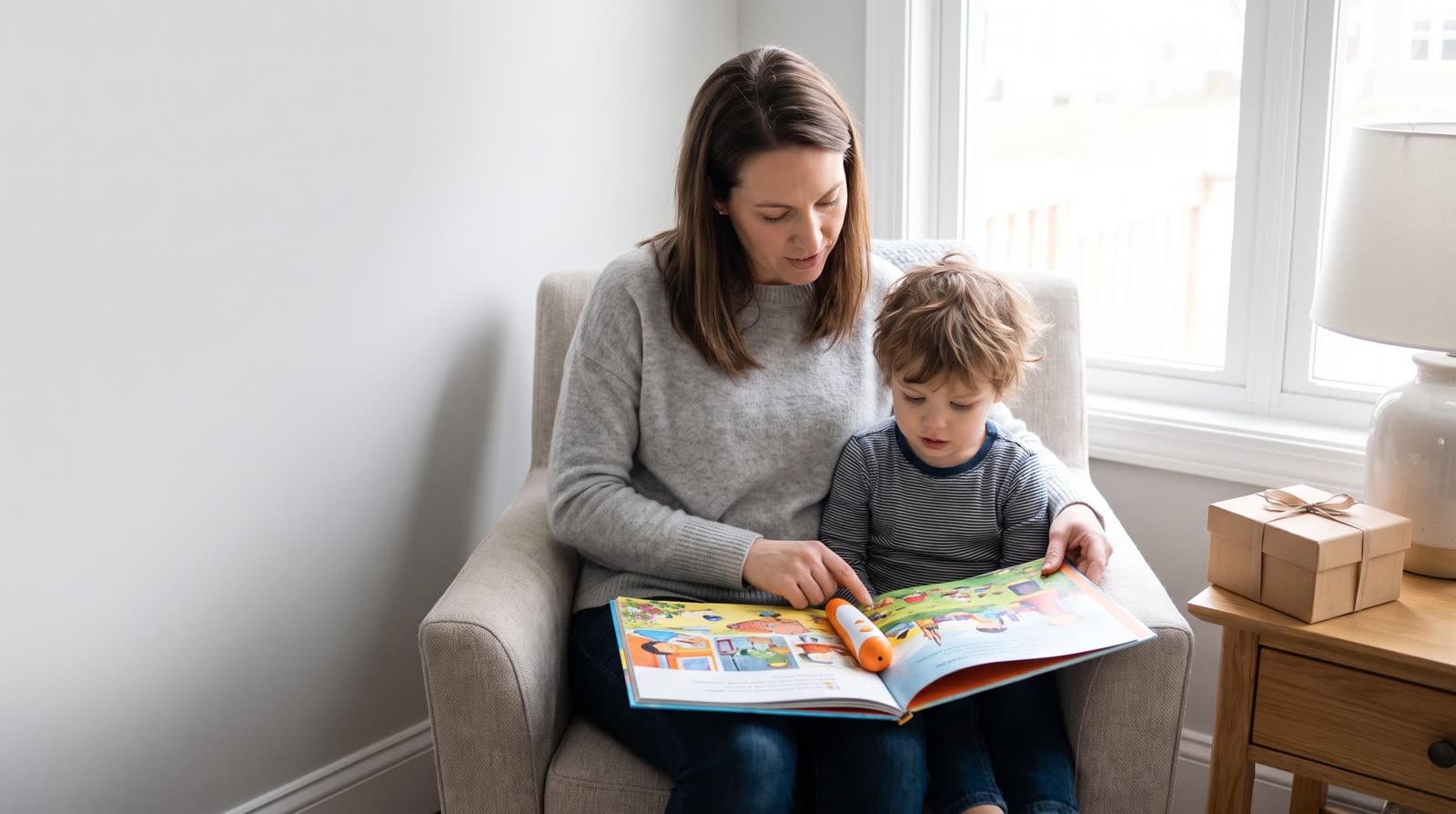
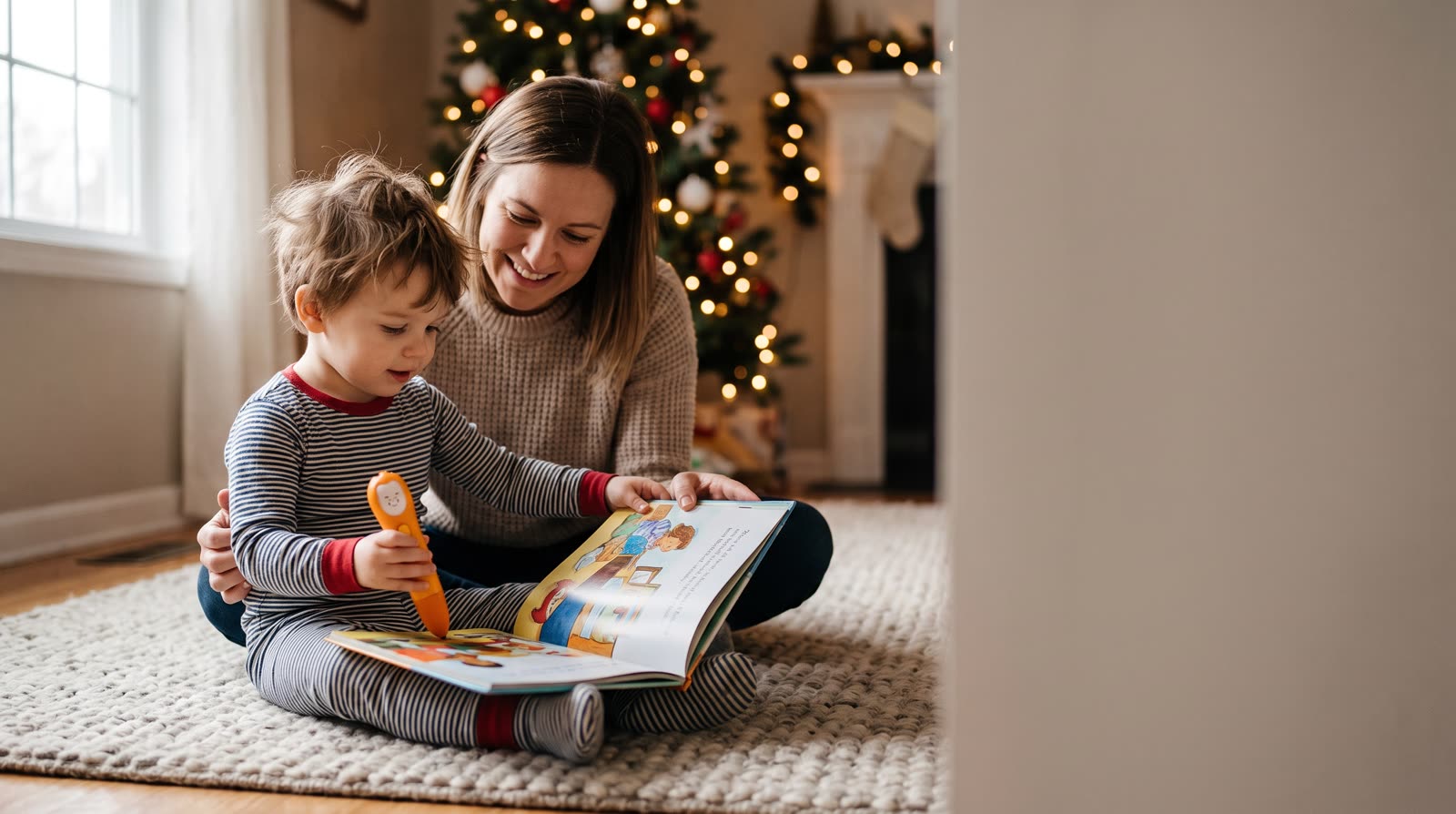
A critical factor in determining the effectiveness of a reading pen set for a two-year-old is the presence of adult mediation. Educational research emphasizes that digital and electronic toys yield the greatest developmental benefits when used collaboratively rather than independently. At age two, children learn language primarily through human interaction and shared reading experiences. A talking picture book set should not be viewed as an electronic babysitter, but rather as an interactive bridge that encourages parents, caregivers, or educators to sit alongside the child, point to pictures, mimic animal sounds, and ask simple questions. B2B buyers and educational distributors should look for book content and packaging guidance that encourages parent-child bonding, reinforcing that the reading pen acts as a catalyst for conversation rather than a replacement for human guidance.
Product Design and Engineering Standards for Toddler Reading Pens
Ergonomics, Grip Mechanics, and Physical Durability
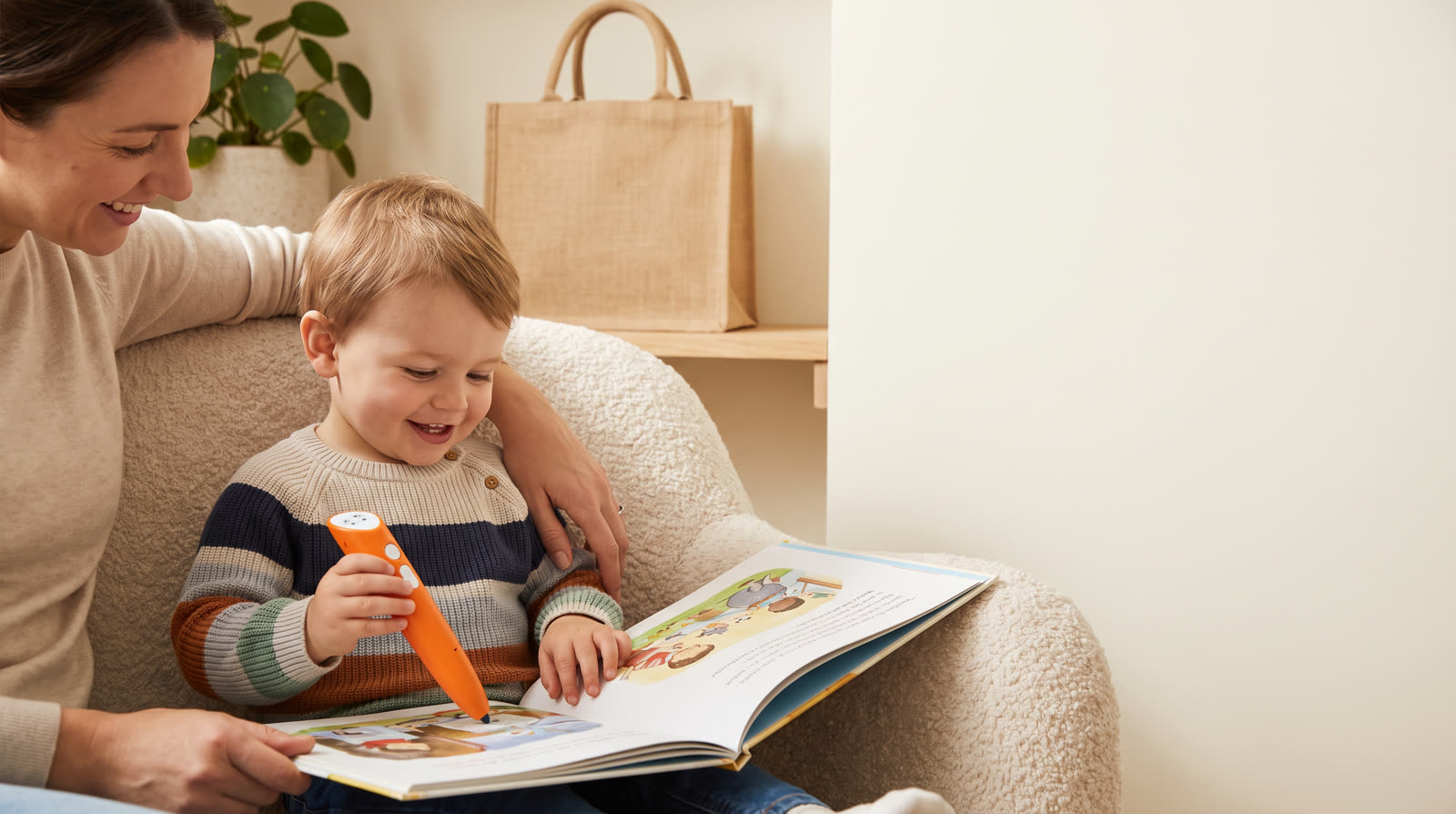
Designing an optical reading pen specifically for two-year-olds presents unique engineering challenges. Unlike older children who possess refined pincer grasps, two-year-olds typically grip objects with a full-hand palmar grasp. Therefore, commercial reading pens marketed for this age cohort must feature a thicker, shorter barrel diameter, textured anti-slip surfaces, and a lightweight body to prevent hand fatigue. Furthermore, physical durability is paramount. Toddlers frequently drop objects on hard floors, chew on pen tips, or subject toys to rough handling. Manufacturers must utilize high-impact, non-toxic ABS plastics and secure internal component mounting to withstand drops. B2B evaluation protocols should include rigorous drop-testing standards and mechanical integrity checks to ensure that outer casings do not crack or expose internal batteries under typical toddler use.
Acoustic Safety and Volume Limitation Compliance
Sound reproduction in electronic toys for toddlers requires strict adherence to acoustic safety standards. Young children's ears are highly sensitive to high sound pressure levels, and toy speakers placed close to the ear can pose hearing risks if volume controls are uncalibrated. Quality reading pen sets designed for two-year-olds must incorporate strict volume limitation mechanisms, capping maximum output at safe decibel levels (typically below 85 decibels). Additionally, audio clarity is essential; distorted or muffled speech synthesis hinders language comprehension. When evaluating sample shipments, wholesale buyers must test speaker fidelity across various ambient noise environments and verify that volume buttons are tamper-resistant, preventing toddlers from accidentally setting audio to uncomfortably loud levels.
Content Architecture and Visual-Auditory Design in Talking Picture Books
Board Book Durability and Safety Features
The physical media accompanying a reading pen—the talking picture books—must be engineered specifically for two-year-old users. Standard paper pages are entirely unsuitable for this demographic, as they tear easily and present paper-cut hazards. High-quality holiday gift sets utilize thick, laminated board books with rounded corners to prevent scratching. Inked surfaces must employ non-toxic, food-grade soy-based inks that withstand mouthing and saliva exposure without bleeding or fading. Optical dot-code (OID) printing must be seamlessly integrated into the illustrations without creating visual clutter or interfering with the aesthetic appeal of the artwork. Retail buyers should examine sample book bindings to ensure they lie flat and withstand repeated aggressive page-turning.
Content Simplicity and Developmental Relevance
The audio-visual content embedded within the book set must match the cognitive level of a two-year-old. Overly complex storytelling, multi-step instructions, or dense narrative texts cause cognitive overload and disengagement. Effective talking books for this age group focus on foundational concepts: everyday objects, farm animals, body parts, colors, shapes, and polite greetings. Audio feedback should consist of clear articulation, cheerful background music, and recognizable sound effects (such as a cow's moo or a train's whistle). B2B curators should review script outlines and audio file samples to ensure pacing is slow and pronunciation is crisp, supporting early phonological awareness without overwhelming the toddler.
ReadGlo project support
Request ReadGlo B2B Catalog
Explore our certified safety-compliant reading pens and interactive talking book sets designed for early childhood distributors and retailers.
Safety, Regulatory Compliance, and Consumer Guidance
Regulatory Frameworks and Child Safety Standards
When sourcing or gifting electronic children's products, regulatory compliance is non-negotiable. Toys distributed in major international markets must comply with stringent safety standards such as ASTM F963 in the United States, EN71 in Europe, and equivalent national directives. According to guidelines set by the U.S. Consumer Product Safety Commission (CPSC), accessible via the CPSC Business Education portal (https://www.cpsc.gov/Business--Manufacturing/Business-Education/Childrens-Products), children's products must undergo third-party testing for heavy metals, phthalates, structural integrity, and small parts hazards. For two-year-olds, removable components such as battery compartment doors must feature screw-locked mechanisms to prevent accidental swallowing or access to power sources.
Battery Safety, Maintenance, and Product Care
Electronic reading pens rely on internal power sources, making battery safety a primary consideration for holiday gifts. Whether utilizing rechargeable lithium-ion batteries or secured replaceable alkaline cells, safety circuits and thermal management are vital. Consumers and retail buyers must adhere to strict maintenance guidelines: never attempt to disassemble electronic pens, avoid exposing devices to moisture or extreme temperatures, and immediately cease use if a battery shows signs of swelling, leakage, unusual heat emission, or smoke. CPSC guidelines recommend consulting manufacturer support channels or authorized service centers for any hardware irregularities. Clear safety warnings in user manuals ensure that holiday gifts provide a secure and enjoyable experience.
Commercial Viability and Retail Positioning for the Holiday Season
Packaging Presentation and Gift-Worthy Appeal
During the Christmas shopping season, visual presentation and unboxing experiences heavily influence purchasing decisions. B2B buyers seeking to stock reading pen and talking book sets must evaluate outer packaging integrity and aesthetic appeal. Premium holiday packaging typically features sturdy corrugated outer boxes, custom-molded interior pulp trays or blister inserts that hold the pen and books securely in transit, and transparent window displays that showcase the product's tactile quality. Packaging should clearly indicate age-grading (2+), contents manifest, and operating instructions. Well-designed gift packaging reduces retail return rates caused by transit damage and elevates perceived product value on store shelves.
Evaluating Supplier Reliability and Quality Assurance Protocols
For toy importers, bookstore chains, and e-commerce brands, selecting the right manufacturing partner is crucial to commercial success. Quality assurance protocols must encompass raw material inspection, firmware stability testing, optical code readability checks across all printed pages, and drop-testing batches prior to final shipment. B2B partners should engage in comprehensive sample evaluation—checking audio synchronization, battery charge retention, and acoustic volume thresholds—before committing to volume orders. Aligning with manufacturers who adhere to international quality management standards ensures that holiday inventory meets consumer expectations and builds long-term brand loyalty.
Frequently Asked Questions
Are reading pen sets safe for a 2-year-old to use unsupervised?
No electronic toy for a two-year-old should be used entirely unsupervised. While quality reading pens feature durable, non-toxic construction and rounded board books, adult supervision ensures safe play, prevents misuse, and maximizes the educational benefit of joint reading interactions.
What safety certifications should B2B buyers look for when sourcing toddler reading pens?
Wholesale buyers should verify compliance with major international standards such as ASTM F963 (US), EN71 (Europe), and CPSC children's product safety regulations. Certifications should cover mechanical strength, heavy metal limits, phthalate restrictions, and battery compartment security.
How do reading pens help with early language development in two-year-olds?
Reading pens combine visual illustrations with immediate auditory feedback when pointed at OID dot-codes. This multi-sensory reinforcement helps toddlers connect written symbols with spoken words, supporting vocabulary expansion and phonological awareness during a crucial developmental stage.
What should I do if a reading pen overheats or exhibits battery swelling?
Immediately stop using and charging the device. Do not attempt to disassemble the casing. Store the device in a safe, non-flammable area away from children and contact the manufacturer or an authorized service channel immediately, following CPSC safety guidelines.
How should retailers evaluate talking book set samples before placing bulk holiday orders?
Retailers should conduct rigorous sample reviews, including checking book page durability, optical sensor responsiveness across all pages, speaker volume limitation (under 85dB), drop-resistance of the pen housing, and clarity of audio pronunciation.
Conclusion
In summary, a reading pen and talking picture book set can serve as an exceptionally thoughtful, engaging, and developmentally enriching Christmas gift for a two-year-old child, provided the product meets rigorous safety standards and is utilized within a supportive, interactive environment. For toddlers at age two, multi-sensory tools that bridge tactile board books with clear audio feedback support the natural vocabulary surge and foster a lifelong love for reading. However, success in both retail distribution and personal gifting hinges upon uncompromising attention to product engineering—such as secure battery compartments, non-toxic materials, calibrated acoustic volume limits, and robust drop-resistant construction.
By adhering to recognized safety frameworks established by organizations like the CPSC and incorporating expert developmental guidance from bodies like the AAP, B2B buyers, educational institutions, and holiday gift curators can source and provide high-quality interactive reading tools. Ultimately, when combined with warm adult mediation and shared storytelling moments, talking book sets transform holiday gifting into a meaningful foundation for early childhood literacy.
Continue your research
Related reading pen buyer guides
Use these related guides to compare the next product, content, sourcing or channel decision in your project.
- Gift GuideEvaluating Talking Pen and Interactive Picture Book Sets as 4-Year-Old Sibling Gifts for Baby Showers: A B2B Buyer and Retail Strategist GuideRead this guide
- Gift GuideIs a Reading Pen and Talking Picture Book Set a Good Christmas Gift for a 3-Year-Old?Read this guide
- Gift GuideIs a Reading Pen and Talking Picture Book Set a Good Baby Shower Gift for a Bilingual Family?Read this guide
Continue with ReadGlo
See product specifications and request model-specific documentation.
ReadGlo project support
Contact Our Product Specialists
Ready to expand your holiday inventory with premium interactive learning tools? Send your specifications and custom requirements to ReadGlo today.