
Contents
Introduction
In the landscape of early childhood education and bilingual literacy development, selecting the right interactive learning tools is a critical decision for educational publishers, school distributors, and toy importers. When young learners are exposed to two or more languages concurrently—whether in immigrant households, dual-language immersion preschools, or international family environments—auditory clarity, phonetic distinction, and pacing become paramount. A talking picture book system paired with an optical reading pen featuring slow repeat playback offers structured auditory scaffolding. However, its effectiveness depends heavily on pedagogical alignment, acoustic quality, and the nature of adult mediation. This comprehensive guide evaluates the mechanical, cognitive, and practical dimensions of incorporating slow repeat playback technology into bilingual publishing and distribution portfolios, adhering to evidence-based insights from organizations such as the American Academy of Pediatrics (AAP) and the International Dyslexia Association, while providing actionable evaluation frameworks for B2B partners.
Understanding Bilingual Language Exposure and Auditory Discrimination
The Role of Phonetic Distinction in Second-Language Acquisition
Bilingual language exposure requires young children to differentiate between distinct phonemic inventories across two or more linguistic systems. Unlike native monolingual speakers who attune primarily to a single phonemic matrix, dual-language learners must map unfamiliar sounds, stress patterns, and intonation contours. Research highlighted in early literacy frameworks indicates that auditory processing speed varies significantly among toddlers and preschoolers. When children encounter unfamiliar vocabulary or complex sentence structures in a second language, standard-speed audio playback can lead to cognitive overload. Phonemes merge together, and children miss critical morphological markers such as verb endings or plural suffixes. Slow repeat playback mitigates this barrier by extending duration without altering pitch distortion, allowing the ear and auditory cortex to process fine phonetic distinctions.
Cognitive Scaffolding and Dual-Language Working Memory
Working memory capacity in early childhood is finite. When processing bilingual audio content, children actively translate, compare, or store linguistic cues across their active languages. Slow repeat playback acts as an external cognitive buffer. By allowing a child—or an educator guiding a small group—to replay a specific sentence, phrase, or individual word at a reduced cadence, the system supports phonological loop retention. This repeated exposure reinforces neural pathways associated with vocabulary retrieval and syntactic comprehension. For B2B buyers seeking to supply international schools or bilingual nurseries, understanding how tactile optical sensors interact with programmable microcontrollers to deliver precise audio repetition is essential for product positioning.
Technical Mechanisms of Slow Repeat Playback in Talking Pens
Audio Encoding, Sampling Rates, and Pitch Preservation
The technical execution of slow repeat playback within a smart reading pen involves sophisticated digital signal processing (DSP). Traditional low-cost audio playback devices often distort voice pitches when slowing down audio files, resulting in unnatural, distorted, or robotic speech that hinders language modeling. High-quality reading pens utilized in professional educational publishing employ advanced time-stretching algorithms (such as WSOLA or phase vocoder techniques) encoded within the device's firmware or integrated microcontroller unit (MCU). These algorithms maintain natural vocal resonance, cadence, and tonality even when playback speed is reduced by 20% to 50%. For B2B procurement professionals, verifying that sample rates (typically 16kHz to 22.05kHz uncompressed PCM or high-bitrate ADPCM) support pristine human-voice narration is vital before committing to large-scale manufacturing runs.
Optical Sensor Precision and OID Code-Dot Integration
A talking pen's ability to instantly retrieve and repeat specific audio segments relies heavily on optical sensor accuracy. Modern interactive book sets utilize specialized Optical Identification (OID) dot-pattern printing technologies (such as Sonix or proprietary grid systems) embedded invisibly beneath the CMYK print layer of the paper. When the pen tip contacts a specific word or illustration, the high-speed optical CMOS camera captures the micro-dot matrix and translates it into coordinate data. The internal processor instantly maps these coordinates to the corresponding audio file stored in the flash memory. For slow repeat functions, tactile button interfaces on the pen body—such as a dedicated looping icon or a secondary playback button—allow users to command the processor to loop the last-read segment indefinitely until toggled off, ensuring seamless tactile interaction for young hands.
Practical Evaluation Guidelines for Importers, Publishers, and Educators
Assessing Audio Naturalness, Accent Authenticity, and Localization
When evaluating bilingual talking pen samples, publishers and distributors must scrutinize voice talent and audio engineering standards. Bilingual children depend heavily on native-speaker models to acquire accurate pronunciation, intonation, and pragmatic usage. A slow repeat function amplifies any unnatural intonation, synthetic artifacts, or regional accent discrepancies. B2B buyers should conduct rigorous audio audits, ensuring that voice recordings feature certified native speakers, professional studio acoustics, and balanced dynamic ranges. Furthermore, multi-language firmware must support seamless switching between language modes (e.g., English-Spanish, English-Mandarin, or English-French) via designated book cover codes or physical toggle buttons without requiring complex software re-flashing.
Ergonomics, Durability, and Child-Safe Hardware Design
Physical specifications dictate the commercial viability of educational hardware in schools and households. Children between the ages of two and seven possess developing fine motor skills, requiring pens that are lightweight (typically under 50 grams), ergonomically contoured with anti-roll grips, and constructed from impact-resistant ABS or food-grade polycarbonate materials. Buttons for volume control and slow repeat playback must feature tactile feedback while being recessed or stiff enough to prevent accidental activation. Importers should request compliance documentation verifying that materials are free from harmful phthalates, lead, and toxic heavy metals, aligning with international safety standards.
ReadGlo project support
Get a Quote
Looking to expand your bilingual book and talking pen product line? Partner with ReadGlo for custom OEM/ODM manufacturing solutions tailored to your market.
Structuring Parent-Child and Classroom Interactive Routines
Balancing Independent Exploration with Adult-Guided Scaffolding
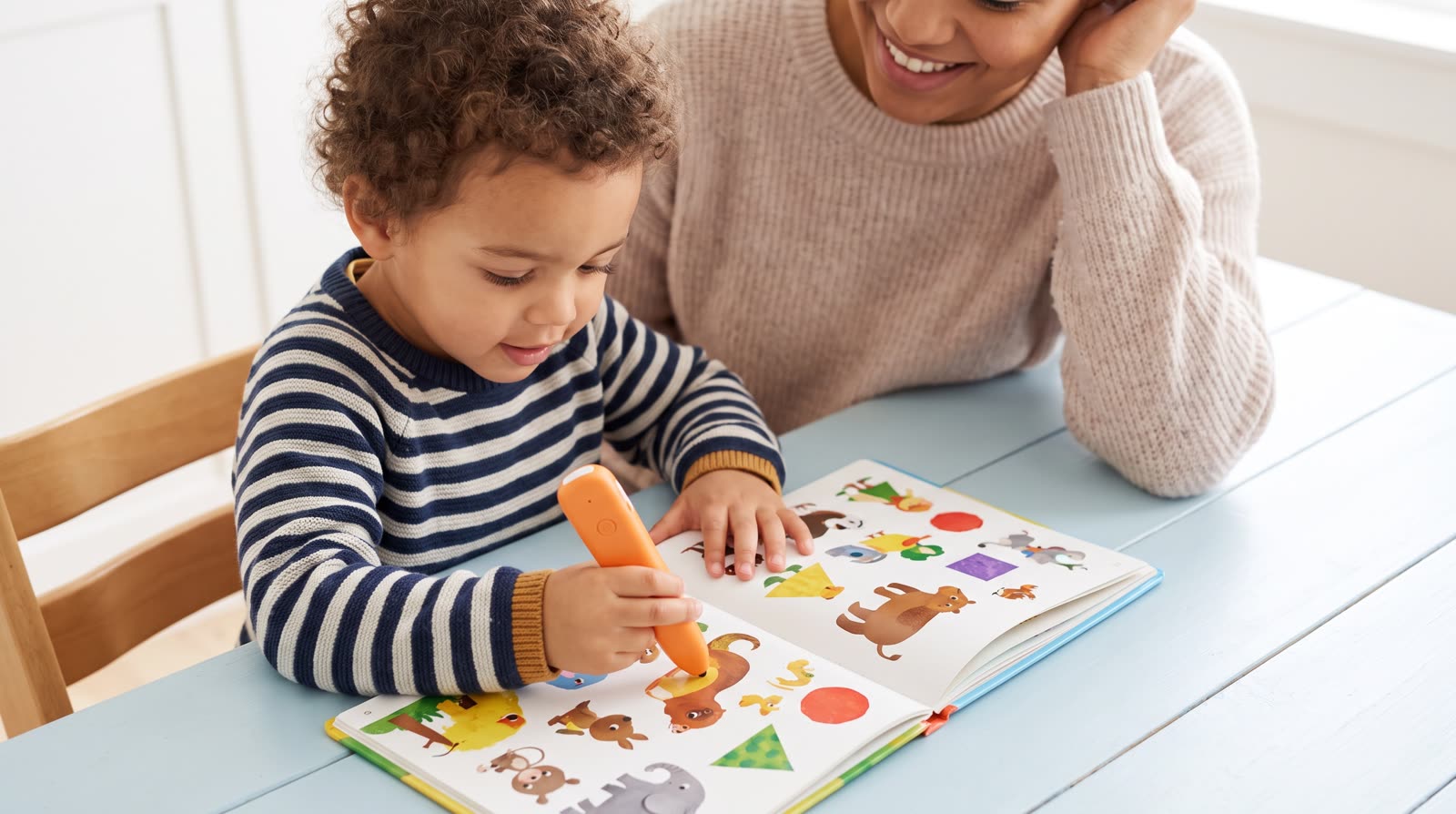
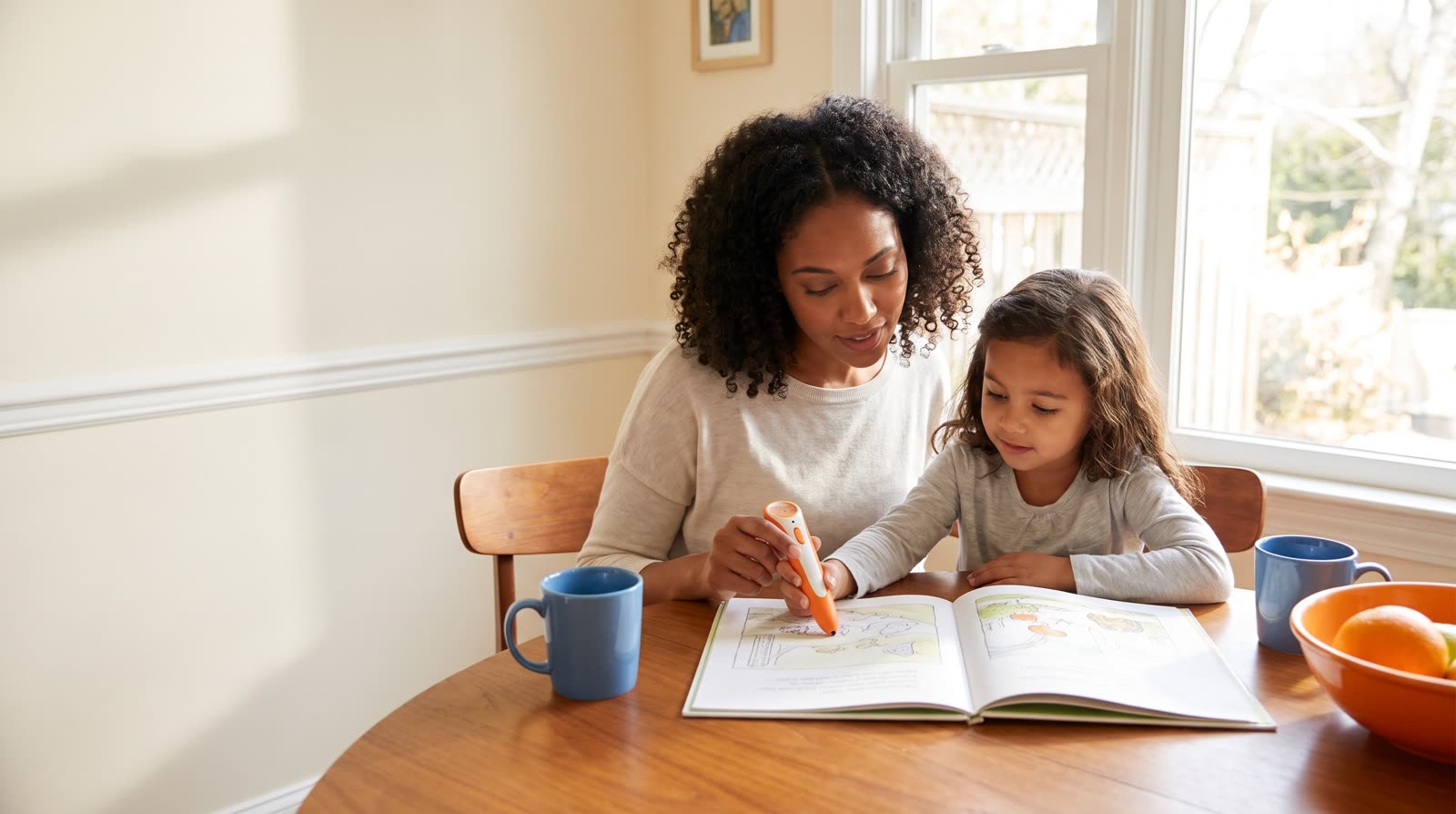
While reading pens with slow repeat playback empower children to explore bilingual storybooks independently, educational research emphasizes that technological tools yield optimal developmental outcomes when combined with adult mediation. Parents, teachers, and speech-language educators play a pivotal role in co-viewing and co-listening. Adults can model how to use the slow repeat function to pause on complex sentence structures, ask open-ended questions about the narrative, and connect story themes to real-world experiences. This dual approach prevents passive listening and fosters active cognitive engagement, ensuring that the tool serves as a bridge rather than a substitute for human interaction.
Avoiding Over-Reliance on Audio While Supporting Dual-Language Literacy
A common challenge in tech-enabled reading is audio over-reliance, where children memorize button locations and sounds rather than associating auditory output with visual print. Educators recommend structured routines where children first listen to the native narration using the slow repeat feature to grasp phonetics, followed by visual tracking where their finger follows the printed text. Publishers can support this pedagogical balance by designing books with clear typographic hierarchies, high-contrast text layouts, and distinct visual cues that encourage eye-to-page coordination alongside auditory reinforcement.
Safety, Regulatory Compliance, and Quality Assurance Protocols
Electrical Safety, Battery Management, and CPSC Standards
Children's electronic learning devices are subject to strict regulatory scrutiny regarding power management and structural integrity. Rechargeable lithium-ion batteries or replaceable AAA configurations must feature secure, tool-secured battery compartments to prevent accidental swallowing or exposure to short circuits. According to guidelines from the U.S. Consumer Product Safety Commission (CPSC) and international equivalents, electronic toys and learning aids must incorporate thermal protection circuits, overcharge prevention, and low-voltage operation. B2B partners must verify that manufacturing partners maintain rigorous electrical testing protocols, including drop tests, bite resistance assessments, and strict adherence to children's product safety regulations.
Pre-Shipment Quality Control and Specification Alignment
Maintaining product consistency across large manufacturing batches requires robust Quality Assurance (QA) and Quality Control (QC) frameworks. Importers and brand owners should establish detailed Acceptable Quality Limit (AQL) standards covering optical sensor read success rates (targeting above 99.5%), speaker distortion thresholds, battery life cycles, and firmware stability. Pre-shipment inspection protocols should include sample testing of OID dot readability across different paper finishes (matte vs. gloss anti-glare coatings) and verification that slow repeat playback functions flawlessly under continuous operation stress tests.
Frequently Asked Questions
How does slow repeat playback assist children with bilingual language exposure?
Slow repeat playback reduces audio speed by 20% to 50% without altering vocal pitch or causing distortion. This extra processing window allows dual-language learners to parse unfamiliar phonemes, grasp complex syntactic structures, and build working memory retention.
Can reading pens with slow repeat playback replace human teachers or parents in bilingual education?
No. Educational research emphasizes that reading pens are supportive scaffolding tools. They are most effective when used alongside active adult mediation, where parents or educators guide comprehension, ask open-ended questions, and model conversational interaction.
What technical features should B2B buyers look for in bilingual reading pens?
B2B buyers should prioritize high-resolution optical CMOS sensors for reliable OID dot recognition, advanced time-stretching DSP algorithms for pitch-preserved audio slowing, high-bitrate uncompressed audio storage, and robust, child-safe ergonomic construction.
Are talking pen systems safe for toddlers and young children?
Yes, provided they comply with international toy and children's product safety standards such as CPSC guidelines. Devices must feature secure, tool-locked battery compartments, non-toxic food-grade plastics, and low-voltage internal circuitry to prevent electrical hazards.
How can publishers ensure OID dot-printed books maintain high readability?
Publishers should work with specialized printing partners who use high-precision offset or digital presses capable of accurate OID dot overlay without interfering with CMYK text and illustrations, paired with anti-glare matte paper finishes to optimize optical sensor capture.
Conclusion
Incorporating slow repeat playback technology into bilingual talking pen and interactive picture book portfolios represents a significant value addition for educational publishers, distributors, and school suppliers. By bridging the gap between rapid auditory output and developing cognitive processing speeds, these devices offer invaluable scaffolding for dual-language learners. Success in this market requires uncompromising adherence to acoustic fidelity, pedagogical alignment, and rigorous safety compliance. ReadGlo remains committed to partnering with global educational leaders to deliver reliable, high-quality interactive learning solutions that foster lifelong literacy and language acquisition.
Continue your research
Related reading pen buyer guides
Use these related guides to compare the next product, content, sourcing or channel decision in your project.
- Learning SupportEvaluating Simple Touch Controls in Bilingual Children's Reading Pens: A Comprehensive B2B Buyer and Educator GuideRead this guide
- Learning SupportEvaluating Slow Repeat Playback in Talking Pens for Children with Dyslexia and Early Reading DifficultiesRead this guide
- Learning SupportIs a Reading Pen with Adjustable Volume Suitable for Bilingual Language Exposure?Read this guide
Sources used for further reading
- Google Search Central: Creating Helpful, Reliable, People-First Content
- American Academy of Pediatrics (AAP): Early Childhood Health, Development, and Literacy
- U.S. Consumer Product Safety Commission (CPSC): Children's Products Business Education
- International Dyslexia Association: Perspectives on Language and Literacy Development
- Reading Rockets: Early Literacy Development and Bilingual Learning Strategies
Continue with ReadGlo
See a DOT-code picture-book set designed for guided early-learning programs.
ReadGlo project support
Send Your Requirements
Connect with our technical and product development teams today to discuss your specifications, sample requests, and distribution partnerships.