
Contents
Market Overview: The Islamic EdTech Opportunity
The global Muslim population of approximately 1.9 billion represents one of the fastest-growing consumer segments in the educational technology market. Within this segment, Quran learning technology — encompassing digital Quran devices, reading pens, and interactive learning apps — has emerged as a high-growth category driven by strong cultural and religious motivations for Quran memorization and recitation.
The Quran reading pen market is estimated at $400–600 million annually, with the broader Islamic educational technology market approaching $2 billion. Growth is driven by increasing smartphone penetration enabling digital content distribution, rising disposable incomes in Gulf Cooperation Council (GCC) countries, and growing diaspora communities in Europe and North America seeking Arabic language and Quran learning tools.
Key Markets and Distribution Channels
Saudi Arabia The largest single market for Quran reading pens, driven by high per-capita income, strong religious education infrastructure, and government initiatives promoting Quran literacy. The market is dominated by local distributors with strong relationships with Islamic bookstores and educational institutions. E-commerce penetration is growing rapidly through platforms including Noon, Amazon.sa, and Jarir Bookstore's online channel.
United Arab Emirates A hub market with sophisticated retail infrastructure and high consumer spending. The UAE serves as a distribution gateway for the broader GCC region. Key retail channels include Carrefour, Lulu Hypermarket, and specialized Islamic bookstores in Dubai and Abu Dhabi.
Malaysia and Indonesia Southeast Asia's Muslim-majority markets represent the highest volume opportunity. Malaysia has a well-developed Islamic education system with strong government support for Arabic language learning. Indonesia, with the world's largest Muslim population, is a high-growth market with rapidly expanding middle-class consumer spending.
European Diaspora Markets Muslim communities in France, Germany, the UK, and the Netherlands represent a significant and underserved market. These communities have high educational aspirations for their children and limited access to quality Quran learning materials in local languages. Distribution through Islamic cultural centers, online channels, and specialist retailers is the primary route to market.
Product Requirements for the Quran Reading Pen
Quran reading pens have specific technical and content requirements that differ significantly from standard educational reading pens:
Audio Content The core content requirement is a complete recitation of the Quran (114 surahs, approximately 77,000 words) by one or more recognized reciters. The most commercially successful products include recitations by Sheikh Mishary Rashid Alafasy, Sheikh Abdul Rahman Al-Sudais, and Sheikh Maher Al-Muaiqly — all of whom require licensing agreements. Translation audio in local languages (English, French, Malay, Indonesian, Urdu) significantly expands market reach.
Tajweed Support Tajweed — the rules of Quranic recitation — is a critical feature for serious learners. Products that highlight tajweed rules through color-coded text or audio explanations command premium pricing and strong word-of-mouth in the Muslim educator community.
Arabic Language Interface The device interface, including button labels and on-screen text (for models with displays), must support right-to-left Arabic text. This requires specific firmware development that many standard reading pen manufacturers cannot provide.
Halal Certification While not universally required, halal certification for the manufacturing process is a strong trust signal in GCC markets and is increasingly requested by institutional buyers including Islamic schools and mosques.
OEM Considerations for Distributors
For distributors entering the Quran reading pen market, the OEM approach offers significant advantages over reselling established brands:
Brand Control A private label Quran reading pen allows distributors to build brand equity, control pricing, and differentiate through content selection and packaging. The Quran reading pen market has relatively low brand loyalty at the device level — consumers primarily choose based on content quality and price.
Content Licensing Strategy The most important OEM decision is content licensing. Securing non-exclusive licenses for multiple reciters provides flexibility, while exclusive arrangements for specific regional markets can create competitive barriers. Budget $5,000–$20,000 for content licensing depending on the scope of reciters and languages included.
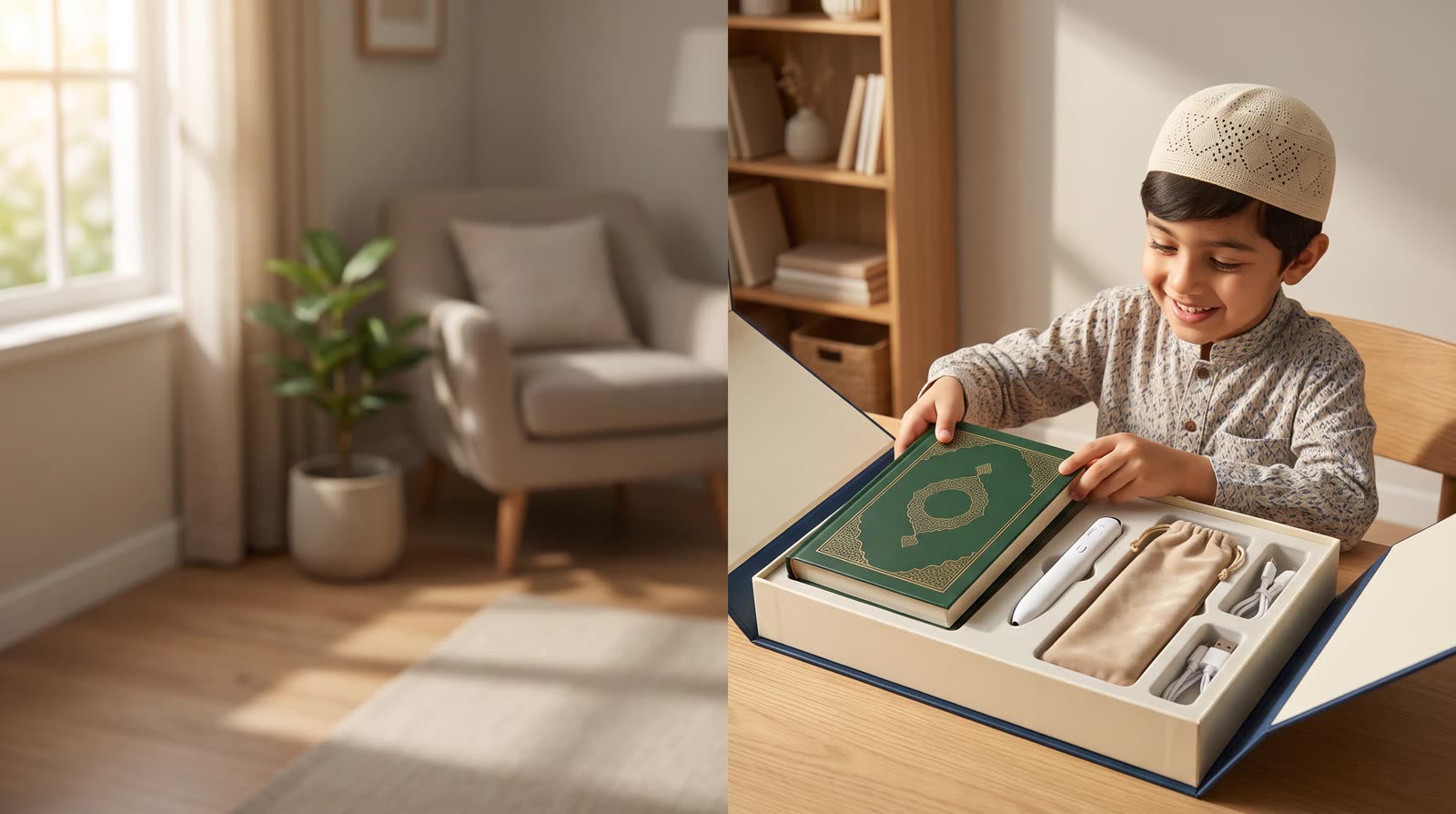
Packaging for Muslim Markets Packaging design should incorporate appropriate Islamic geometric patterns and calligraphy. Avoid imagery of humans or animals on packaging intended for conservative markets. Arabic text should be reviewed by a native speaker for accuracy and cultural appropriateness.
ReadGlo's Quran Pen Capabilities ReadGlo has developed dedicated Quran reading pen solutions for distributors in the Middle East, Southeast Asia, and European diaspora markets. Our Quran pen supports up to 8 reciters, 6 translation languages, and full tajweed highlighting. Contact info@readglo.com for product specifications and OEM pricing.
Continue your research
Related reading pen buyer guides
Use these related guides to compare the next product, content, sourcing or channel decision in your project.
- OEM GuideWhere Can Publishers Find a Reliable Children’s Talking Pen Supplier and OID Coding Service?Read this guide
- OEM GuideQuran Reading Pen OEM Packaging, Branding and Gift-Set Planning GuideRead this guide
- Market InsightsChildren's Educational Toy Market Trends 2026: What B2B Buyers Should WatchRead this guide
Continue with ReadGlo
Review the Arabic-content reading-pen platform for market-specific programs.