

Quran Reading Pen OEM Packaging, Branding and Gift-Set Planning Guide
OEM Guide11 min read

Quran Reading Pen OEM Packaging, Branding and Gift-Set Planning Guide

ReadGlo Editorial Team·September 2, 2026
HomeBlogQuran Reading Pen OEM Packaging, Branding and Gift-Set Planning Guide

Direct Answer

A child opening a neatly arranged reading pen and book learning set at a bright table
A clear bundle specification keeps branding, book edition and included components aligned.

Plan a Quran Reading Pen gift set by defining the sellable bundle first: each device, book, cable, accessory, insert and outer carton should appear in one buyer-approved component list. Branding and packaging should communicate only what the final content package, destination-market file and user instructions can support.

Start with a Written Project Scope

Gift-set projects can look simple in a product photo but become complex when components are supplied or approved by different parties. A brand may approve the outer box, a publisher may control book artwork, an importer may need local markings and a distributor may request a retail insert. One controlled bundle specification helps prevent omissions, mismatched editions and incorrect package claims.

Start with the retail moment. Define who opens the set, what they see first, which components are included, how the product is protected and which instructions must be presented. Then use that specification to build artwork and packing proofs.

Build the Bundle Specification Before Creating Packaging Artwork

A bundle specification should list every physical and digital-facing element. For each item, record the part name, owner, version, quantity per set, language, artwork status and inspection point. Include any book edition or insert that changes between territories.

Branding controls that prevent rework

- Use buyer-approved logo files, colour references and copy blocks only.

  • Identify the exact retail language and product name for each market.
  • Keep unverified claims, awards, religious endorsements and certification marks off artwork unless the buyer can document their permitted use.
  • Confirm any content attribution, rights notice or care statement with the responsible owner.
  • Approve the packaging proof and component checklist together, not as separate informal files.

This creates a packaging path that supports both brand consistency and accurate consumer information.

Confirm Content Rights and Approval Responsibility

A Quran reading pen project can combine hardware with printed pages, page layout, translations, recitation recordings, explanatory material, illustrations and digital files. Those elements can carry separate permissions and territorial limits. A buyer should create a content-rights register before release: identify the rightsholder for every supplied asset, record permitted territories and languages, confirm whether hardware playback and print use are covered, and retain the written approval with the project file.

Do not treat a supplier’s statement that content is “included” as a substitute for a buyer’s content review. Ask who supplied each asset, whether the supplier can document permission for the intended use, and how approved files will be version-controlled. Where a buyer supplies its own material, a signed release package and an approved master help prevent accidental substitutions during production or later content updates.

Respectful content review

For a Quran-focused product, build a defined review gate for the approved print proof and the approved audio/content sample. The buyer, its authorised content reviewer and the production team should agree who can sign off each stage. The purpose is accuracy, traceability and respectful handling—not a claim that a factory, distributor or device itself grants religious approval.

Keep Evidence Useful and Project-Specific

A useful evidence file answers a practical question: which decision does this document support, for which final configuration, and who reviewed it? Store documents by the actual release version—not only by document type. For example, an approved book proof, an audio manifest, a packaging proof and a transport file should be linked to the same product-and-edition reference where they belong to one programme.

Use a simple decision register alongside the file folder. For each open point, record the question, owner, target date, source evidence and final outcome. This prevents a verbal indication, a dated sample photograph or a historic document from being misread as approval for a changed product. It also allows a new distributor, publishing partner or logistics contact to understand the project without reconstructing decisions from emails.

Evidence is not a marketing claim

Retain documents for responsible internal review. Do not turn a document into a public statement that is broader than its scope. Claims about rights, product performance, safety status, country availability or endorsement should be made only when the responsible party can support the exact wording for the exact product and territory.

Review Gift-Set Presentation Against the Final Product File

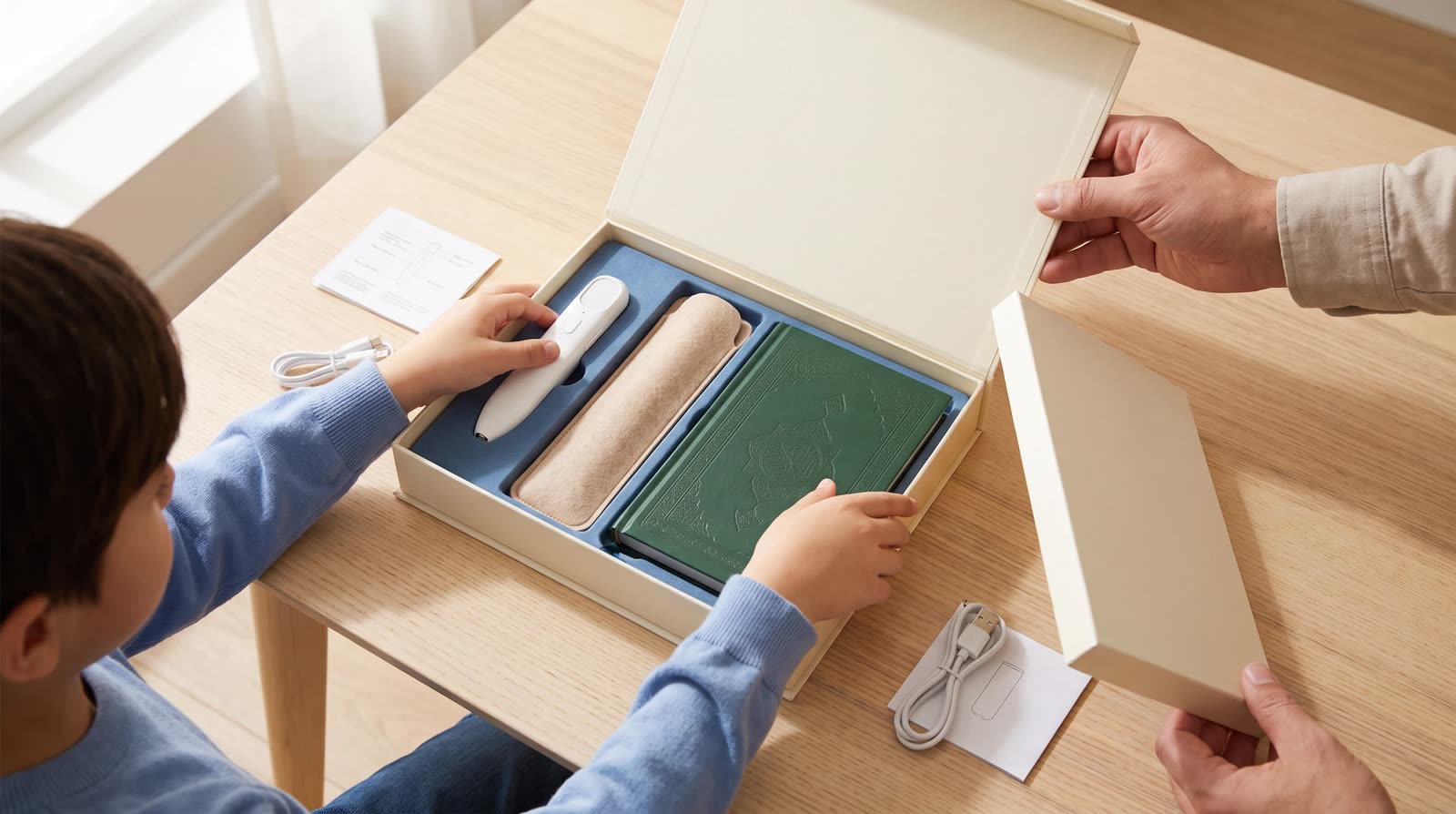
A child selecting a reading pen and book from a carefully organised learning gift set
The final pack should represent the approved contents clearly and respectfully.
Bundle elementWhat to defineFinal review point
DeviceModel, colour, included cable and approved brandingProduct sample and artwork proof
BookEdition, language, rights status and pack quantitySigned book proof
InsertSetup, care and market-appropriate support copyCopy approval record
Outer boxProduct name, bundle contents and permitted marksPackaging proof
CartonPacking count and shipment identificationPacking list and carton proof

Use this as a project briefing tool. The evidence needed will vary by final product, content package and destination market.

The gift set should make the final offer easy to understand without overstating what it contains. Match the cover artwork, insert copy, language icons, component list and product images to the actual device and book edition. If a feature is optional or varies by market, do not present it as universally included.

Before the final packing release, review the physical sample or detailed proof as a customer would: are all items present, is the package language correct, are the instructions accessible and does the imagery represent the final product? Record approval against the same bundle specification used for the purchase order.

Use Packaging Proofs as an Approval Gate

Packaging should not be treated as a final cosmetic step. It is a communication layer with product, content and market implications. Hold a formal proof review after the final components are known, then keep that signed version beside the content and product approval records.

If the buyer plans seasonal, school, retail or gift-channel variants, define the differences as controlled variants of the same master specification. This allows teams to compare what changed without accidentally moving an old book, claim or image into a new bundle.

ReadGlo project support

Send Your Requirements

Share your target market, product scope, expected quantity and launch timing. Our team can prepare a relevant product, content or quality-control discussion.

Assign Responsibilities Across the Programme

Assign a named owner to the decisions that cannot be safely left implicit. The publisher or content owner should control editorial master files and rights approvals. The brand owner should control product descriptions and packaging claims. The importer should confirm the market-facing responsibilities that apply to its destination. The logistics owner should coordinate the final shipment information with the carrier or forwarder. The manufacturing contact should receive only the latest authorised production package and flag material changes.

Hold a concise release meeting before production and again before dispatch. Compare the current purchase-order configuration, approved master files, packaging proof, document index and any outstanding deviations. A short written release note, signed or acknowledged by the responsible buyer representative, creates a durable handoff. It does not remove the need for professional advice where appropriate, but it makes the programme’s decisions traceable and easier to manage.

Control Changes and the Final Release

Change control is where many interactive book projects succeed or fail. Changes to a book page, audio asset, accessory, packaging claim or language list can affect more than one release file. Define a single route for changes before production starts. The request should identify the affected item, reason for the change, commercial impact, owner, reviewer and whether a new proof or product sample is required.

Do not allow final files to be updated by informal message or by replacing an item inside an unlabelled folder. When an approved master is revised, give the new release a clear version name and distribute a release note to the named stakeholders. Withdraw obsolete files from the production folder. If the change affects the book-to-device experience, the buyer should decide whether another interaction review is needed before the revised version is released.

A practical release sequence

- Confirm the written product-and-content scope.

  • Issue the buyer-approved source package and artwork brief.
  • Review print, packaging and content proofs against the source register.
  • Verify the agreed sample or pre-production review points.
  • Resolve deviations in writing and create the final release note.
  • Authorise shipment only after the final configuration and required file set are reconciled.

This discipline does not require a complex system. It requires a dependable record that distinguishes draft material, approved masters and the specific configuration that was authorised for production.

Plan Safety Evidence and Shipment Documents Early

Compliance and shipping evidence should be planned around the final product, intended age group, target market, battery configuration and how the product is marketed. In the United States, CPSC guidance explains that applicability is product-specific and that children’s electronic and battery-operated toys can involve additional requirements. In the EU, toys placed on the market must meet applicable safety requirements and carry CE marking. These are procurement prompts, not blanket certification statements about any individual model.

For air freight, the responsible shipper and freight forwarder should confirm the battery classification, packing instruction, watt-hour information, marking, label and document set for the actual shipment. IATA publishes current battery guidance because requirements depend on configuration and rating. Keep the final transport file linked to the purchase order and carton configuration rather than relying on a generic document from an earlier project.

Practical record set

Keep the approved specification, age grading, market list, bill of materials where appropriate, content-rights register, safety evidence relevant to the target market, shipment documents, inspection records and final packing list in one controlled project folder. This makes handover between publisher, importer, forwarder and retailer far easier to audit.

Prepare an Accurate Market Handoff

The final handoff should equip the buyer’s downstream team to describe and support the product accurately. Prepare a concise buyer handbook or launch sheet that identifies the final product name, included components, approved book edition, content languages, packaging version, care or setup material supplied for the product, batch reference and escalation contact. Give sales teams, resellers and customer-service colleagues the approved wording rather than asking them to infer it from a sample or supplier brochure.

For schools, publishers and distributors, a small internal training session can be more effective than extra marketing copy. Demonstrate the approved user journey, explain what is included and show how to escalate a content, packaging or technical query. If the product will be sold in several territories, retain a market-specific version of the launch sheet. This protects the customer experience while keeping the brand’s public claims within the scope of the evidence and permissions actually held.

Frequently Asked Questions

Can packaging be customised without changing the device?

A packaging-only variant may be possible depending on the proposed programme, but the buyer should document the exact components, artwork, language and product claims for that version.

Can a gift set include different book editions by country?

It can be planned as market-specific variants, provided each edition, rights record, proof and packaging description is controlled separately.

Should logos or certification marks be placed on the box?

Only use marks that the responsible party is entitled to use for the final product and market. Keep documentary support with the artwork approval.

What is the most important packaging review?

Review the final proof and the real component list together, from the end user’s perspective and from the buyer’s documented scope.

Which details should be locked before the first packaging proof?

Confirm the final product name, component list, device and book editions, market language, permitted artwork, required user information, rights notices and any buyer-approved claims. A proof is more useful when it is reviewed against a controlled bundle specification.

How should a buyer manage retail, school and gift-channel variants?

Use one master bundle specification and identify each variation by its components, artwork, language, market and approval record. This makes it easier to see what changed and prevents a legacy insert, book or claim from moving into the wrong version.

What makes a packaging inquiry more actionable?

Provide the target channel, expected customer, proposed bundle, markets, buyer-supplied brand files, required languages and any non-negotiable packing needs. This allows a supplier to discuss scope, sample steps and open information requests with less rework.

Conclusion

A robust Quran Reading Pen programme is managed as a documented content-and-product project, rather than a simple hardware order. Define the user group, content permissions, book format, language scope, approval gates and target-market evidence before committing the final files. If you are comparing product configurations or planning a branded programme, review the Quran Reading Pen product route and send your project requirements for a scope discussion. For related sourcing checklists, visit the ReadGlo Blog Hub.

Further Reading

For market-specific compliance and transport decisions, verify current requirements with the responsible professional and the official source. Useful starting points include CPSC Toy Safety Business Guidance, European Commission Toy Safety guidance, and IATA battery guidance.

ReadGlo project support

Get a Project Quote

Request product specifications, sample guidance or a tailored proposal for your reading pen, interactive book or distributor program.

Related Articles

Email ReadGlo at info@readglo.com