
Contents
Introduction
When educational publishers, toy distributors, and brand owners evaluate interactive audio hardware for early childhood education, two distinct technologies frequently emerge: brand-specific optical identification (OID) reading pens and universal optical character recognition (OCR) scanning pens. While both devices deliver spoken audio from printed materials, their operational principles, ergonomic demands, and screen-free integrity differ fundamentally. Brand-specific reading pens utilize invisible dot-code grids printed alongside illustrations, enabling toddlers and preschoolers to tap anywhere on a page to trigger localized audio playback without any electronic display or visual distraction. In contrast, universal scanning pens rely on linear optical sensors and character recognition algorithms, frequently incorporating LCD or OLED screens, menus, and text-translation displays designed for older students and adult language learners. For B2B procurement partners collaborating with manufacturing innovators like ReadGlo, understanding these structural differences is essential for matching product portfolios to the developmental needs of young children while complying with international safety and educational guidelines.
Core Technological Mechanisms: Optical Dot Code vs. Optical Character Recognition
How Brand-Specific Optical ID (OID) Reading Pens Work
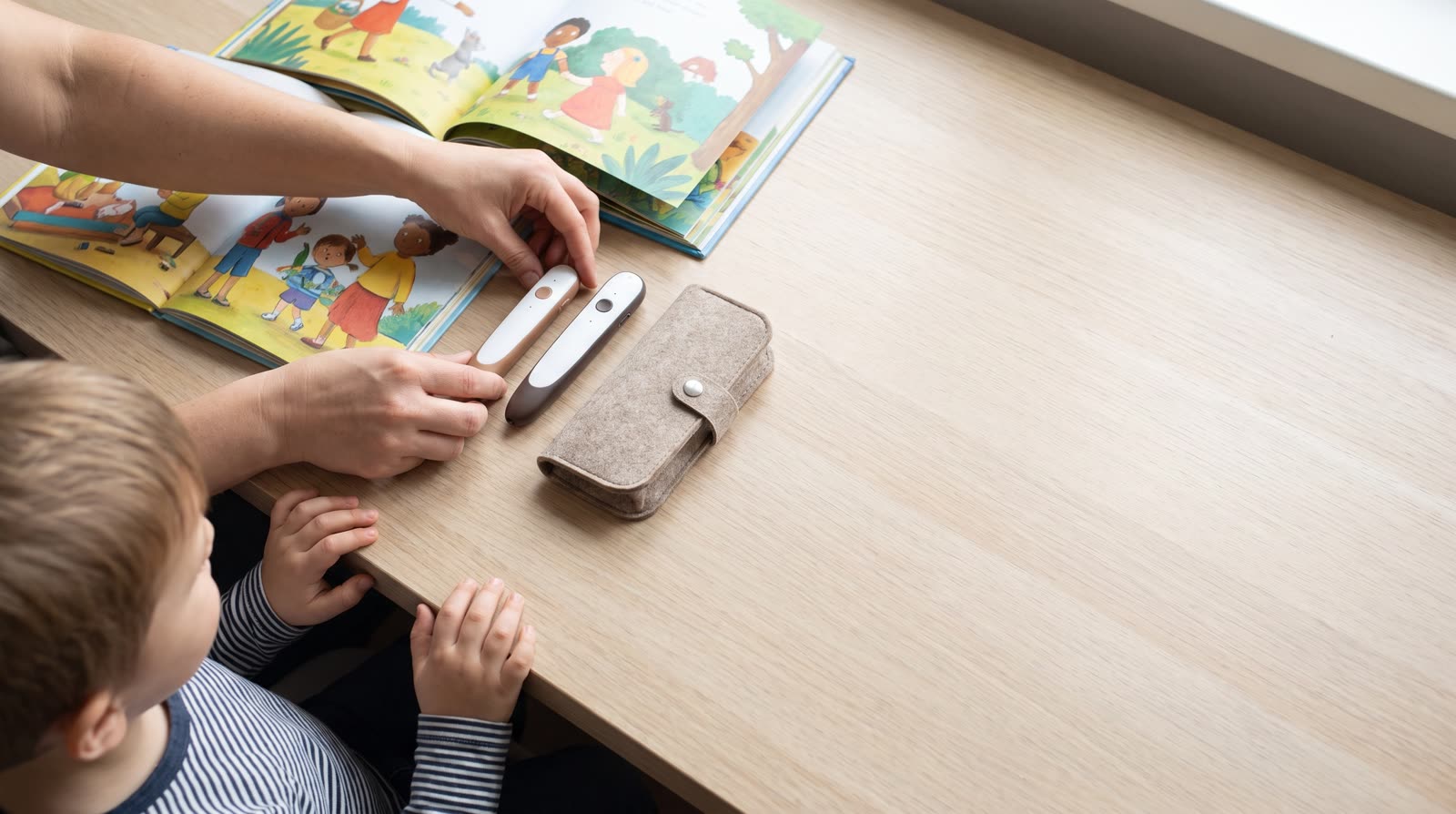
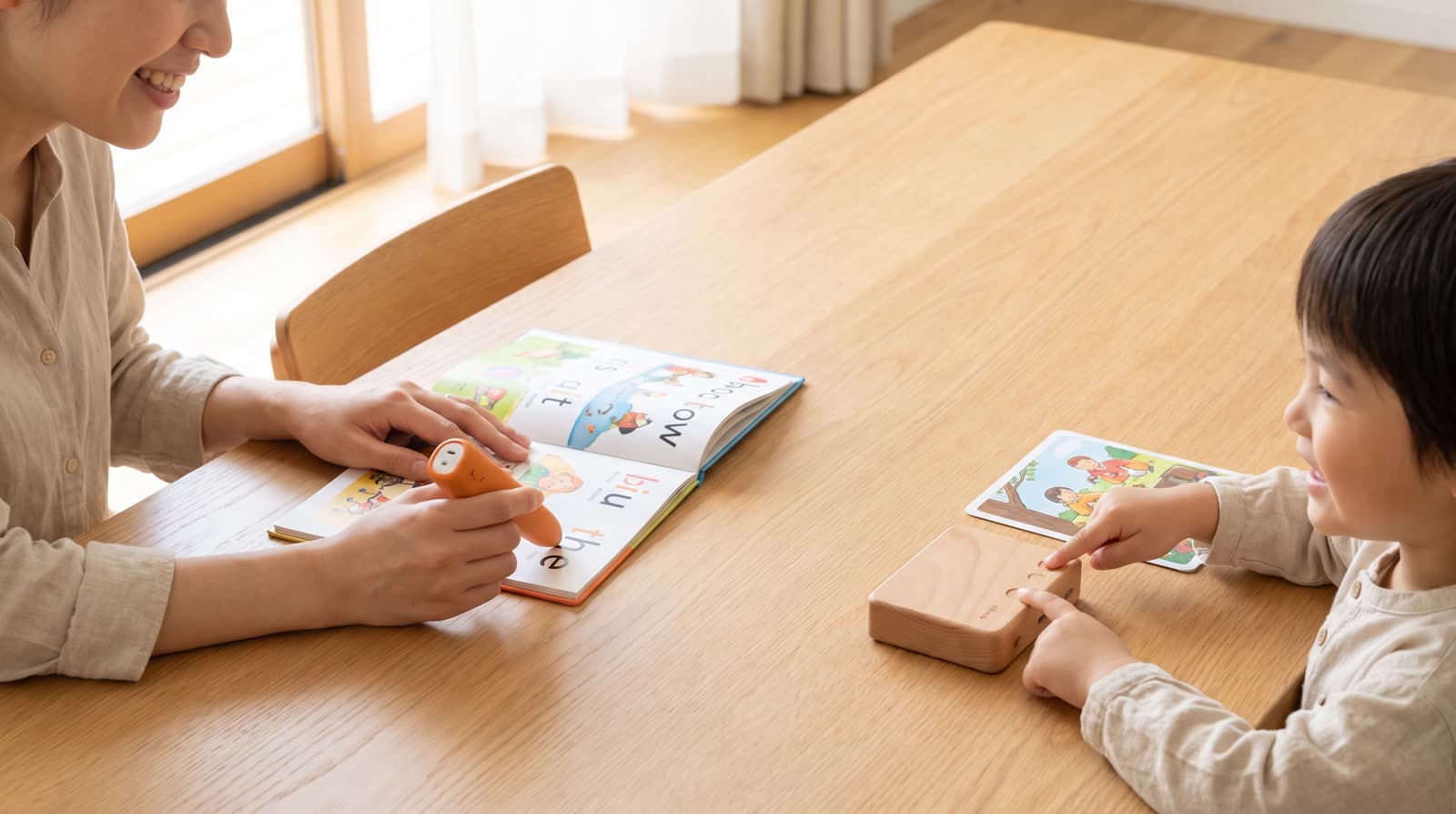
Brand-specific reading pens operate on proprietary optical identification (OID) technology, commonly utilizing embedded dot-code patterns such as Anoto or customized matrix grids printed beneath or within book illustrations. An optical sensor embedded in the pen tip captures micro-coordinates when a child presses the tip against the paper surface. The internal processor instantly decodes these coordinates and triggers the corresponding audio file stored in internal flash memory or an expandable micro-SD card. Because the code is seamlessly integrated into the printing plates during publishing, the entire process occurs in milliseconds without requiring text scanning or character parsing. This ensures that every millimeter of an interactive picture book—including characters, background objects, and text blocks—can become an active audio trigger, supporting holistic, multisensory exploration for children who are not yet reading conventionally.
How Universal Scanning OCR Pens Function
Universal scanning pens, conversely, are built around optical character recognition (OCR) and linear image sensors. Instead of interacting with pre-encoded dot patterns, the user must manually slide or scan the pen tip across printed lines of text. The pen captures an image of the text strip, processes the image through embedded character recognition software, converts the pixels into digital text, and either synthesizes text-to-speech audio or translates the text across languages. Because universal scanning pens must interpret arbitrary printed fonts, point sizes, and layouts, they invariably require processing power that is best managed through accompanying interface menus, operational status indicators, and visual display screens. This technical architecture makes universal scanners exceptionally powerful for high school students, college learners, and professionals translating foreign languages, but introduces significant friction when applied to early childhood settings.
Technical Implications for Young Child Interaction and Safety
The divergence in underlying technology dictates how children physically interact with the device. Brand-specific OID pens require only a simple vertical tapping motion, which aligns naturally with the motor skills of two- to five-year-olds. There are no exposed glass sensor windows, moving mechanical covers, or sharp scanning slits. Universal scanning pens, however, require a steady, horizontal wiping motion across a straight line of text. If a child tilts the pen or lifts it mid-word, the OCR engine fails to capture the complete character string, resulting in incomplete audio output or error messages that frustrate young users. Furthermore, the inclusion of display screens and navigational buttons on universal scanners increases electronic complexity, battery consumption, and the risk of accidental drop damage or moisture ingress during rigorous everyday use by toddlers.
Screen-Free Integrity and Cognitive Immersion in Early Literacy
Zero-Screen Architecture of Dedicated Talking Book Ecosystems
A defining hallmark of high-quality early childhood educational tools is absolute screen-free integrity. According to pediatric guidance from organizations such as the American Academy of Pediatrics (AAP), minimizing passive screen exposure during early developmental years supports sustained attention span, imaginative play, and healthy visual development. Brand-specific reading pens embody this zero-screen philosophy. By eliminating LCD panels, touch interfaces, and digital notifications, the physical book remains the absolute center of focus. The child looks at paper pages, turns tactile leaves, and listens to human-voice narration while maintaining eye contact with physical illustrations. This tactile-auditory loop reinforces print awareness and book-handling skills without introducing digital blue light or electronic fatigue.
Avoiding Digital Distractions and Cognitive Overload
Universal scanning pens often compromise screen-free environments by incorporating operational displays to show battery percentages, Wi-Fi connectivity status, folder selections, and scanned text translations. Even monochrome or small color screens invite children to glance away from the storybook to look at the hardware interface. In early literacy development, cognitive load theory emphasizes that minimizing extraneous visual stimuli helps children focus on core linguistic and narrative structures. When a device operates entirely screen-free, the child's cognitive energy is directed solely toward associating spoken words with printed illustrations, fostering deeper comprehension and vocabulary retention. For publishers and distributors developing curriculum-aligned product lines, maintaining a strict screen-free boundary is a major selling point for discerning parents and educators.
Alignment with Early Childhood Development Guidelines
Professional educational resources, including guidelines published by Reading Rockets and early literacy frameworks, stress that early language acquisition thrives on interactive, responsive adult-child dialog and tactile manipulation of physical objects. Brand-specific reading pens serve as a collaborative bridge rather than an isolating digital tutor. Because the audio output emanates from the shared book environment, parents, educators, and children can share the listening experience, pause to discuss illustrations, and ask open-ended questions. Universal scanning pens, optimized for independent foreign language lookup or text translation, function more like solitary electronic dictionaries, lacking the narrative immersion and story-driven engagement inherent in dedicated talking picture book sets.
Usability and Ergonomic Matching for Toddlers and Preschoolers
Motor Skills and Tactile Coordination (Tapping vs. Scanning Lines)
Ergonomic design must correspond directly to the fine motor development stages of the target user base. Toddlers aged two to four are refining their pincer grasps and hand-eye coordination. Tapping a chunky, ergonomically contoured OID reading pen against a specific picture or word requires gross-to-fine motor control that is achievable and satisfying for young hands. In contrast, scanning a line of text requires maintaining a precise horizontal angle, uniform speed, and steady downward pressure across multiple words. Developmental pediatricians note that formal line-scanning mechanics demand wrist and finger control typically not consolidated until early elementary school (around age seven or older). Consequently, deploying universal scanning pens for toddlers often leads to physical frustration and device abandonment.
Error Rates and Frustration Management in Early Independent Reading
Independent exploration is crucial for building children's self-efficacy and reading confidence. Brand-specific reading pens boast exceptionally high recognition accuracy because every active zone on the page is pre-mapped to precise digital audio tracks. When a child taps an illustration of an animal, the corresponding sound plays immediately and reliably. Universal scanning pens, dependent on variable ambient lighting, paper reflectivity, and steady manual sweeping speed, experience higher error rates when used by young children. Misread characters or failed scans produce error tones or garbled output, which disrupts the narrative flow and diminishes the child's intrinsic motivation to explore stories independently.
Acoustic Feedback and Natural Auditory Reinforcement
The auditory experience delivered by brand-specific reading pens is tailored specifically for early language immersion. Sound files are recorded by professional voice actors using warm, engaging tones, proper pacing, and age-appropriate inflections, accompanied by sound effects and musical cues that enrich storytelling. Universal scanning pens typically rely on synthetic text-to-speech (TTS) engines or compressed dictionary audio clips designed for fast information retrieval rather than emotional storytelling. For early childhood literacy, where emotional connection, intonation, and phonetic modeling are paramount, natural human-voice narration embedded in brand-specific book sets provides superior linguistic modeling.
ReadGlo project support
Request ReadGlo B2B Catalog
Explore our comprehensive range of OEM/ODM interactive reading pens and customizable talking book sets for educational publishers and distributors.
B2B Procurement and Content Publishing Considerations
Printing Specifications and OID Dot-Matrix Integration for Publishers
For B2B publishers and brand owners partnering with OEM/ODM manufacturers like ReadGlo, integrating brand-specific reading pen technology involves specific pre-press and printing protocols. OID dot-code patterns must be printed as a specialized fifth color channel (typically using carbon-based invisible infrared ink or high-precision black screening) layered over standard CMYK artwork. Publishers must coordinate closely with prepress technicians to ensure that dot contrast and paper stock opacity meet optical sensor thresholds. Unlike universal scanning pens—which require no modification to existing books because they read standard printed letters—brand-specific systems require proprietary publishing workflows, locking the hardware and software ecosystem together to guarantee flawless interactive performance.
Content Licensing, Firmware Flexibility, and Brand Control
The proprietary nature of brand-specific reading pen ecosystems offers distinct strategic advantages for educational publishers and distributors. By controlling both the physical books and the encoded audio firmware, brand owners establish strong proprietary moats, ensuring that end-users purchase expansion book sets directly from authorized channels. Manufacturers provide customizable firmware frameworks, allowing partner brands to configure startup greetings, volume limits, multi-language switching modes, and parental control features. Universal scanning pens operate on open or standardized software platforms (often running localized Android builds or generic OCR dictionaries), leaving publishers with zero control over book-specific audio content or brand presentation.
Safety Standards, Toy Compliance, and Quality Assurance
Children's electronic learning devices are subject to stringent international safety regulations, including toy safety directives, electrical safety standards, and chemical restrictions (such as EN71, ASTM F963, and RoHS). When sourcing interactive audio hardware, B2B buyers must ensure that manufacturers adhere to rigorous quality control protocols. Official regulatory bodies like the Consumer Product Safety Commission (CPSC) emphasize the importance of robust mechanical construction, non-toxic food-grade plastics, secure battery compartments, and absence of choking hazards in children's products. Brand-specific reading pens designed exclusively for young children typically feature sealed, rechargeable battery enclosures or screw-secured battery doors, smooth rounded contours, and durable drop-resistant shells, whereas universal scanning pens often feature exposed glass scanning windows and delicate micro-USB or USB-C ports susceptible to dust and liquid damage.
Evaluating Product Portfolios for Distributors and Retailers
Market Segmentation: Early Childhood vs. K-12 Student Tools
Distributors and retail buyers must clearly segment their product offerings based on end-user age brackets and educational use cases. Brand-specific reading pens and talking picture book sets target toddlers, preschoolers, and early elementary children (ages 2 to 7), focusing on vocabulary building, phonics awareness, storytelling, and interactive play. Universal scanning pens target older students, middle/high school learners, and adult professionals focusing on text translation, vocabulary lookup, and study note-taking. Attempting to market universal scanning tools to early childhood segments or vice versa leads to high return rates and poor user satisfaction. Aligning hardware specifications with developmental realities ensures long-term commercial success.
Evaluating Sample Kits, Specification Sheets, and Supplier Capabilities
When establishing OEM/ODM partnerships, procurement teams should systematically evaluate supplier sample kits and technical documentation. Key evaluation parameters include optical recognition latency, speaker audio clarity and decibel capping (to protect sensitive young ears), battery capacity and charging safety circuits, drop-test durability, and OID printing compatibility. Manufacturers with proven expertise in early childhood audio hardware provide comprehensive developer toolkits, multi-language audio compilation software, and customized tooling options, enabling publishing partners to bring unique interactive book collections to market efficiently.
Structuring Long-Term OEM/ODM Partnerships
Successful B2B collaboration in the educational technology sector relies on transparent communication regarding engineering specifications, firmware updates, and quality assurance standards. Partnering with established innovators like ReadGlo allows brands to leverage turnkey manufacturing capabilities—ranging from industrial design and acoustic tuning to OID encoding and custom packaging. Distributors should establish clear quality agreements, sample approval protocols, and compliance documentation verification before scaling production runs, ensuring sustainable brand growth and uncompromised product safety.
Frequently Asked Questions
Why are brand-specific reading pens preferred over universal scanning pens for toddlers?
Brand-specific reading pens utilize invisible OID dot codes that respond instantly to a simple vertical tapping motion, requiring no fine motor control or screen navigation. This matches the developmental motor skills of toddlers and preserves a 100% screen-free environment, whereas universal scanning pens require precise horizontal sweeping across text lines and often include distracting LCD screens.
Can universal scanning pens be used with children's picture books?
While universal scanning pens can technically scan printed text lines, they struggle with large picture book fonts, artistic typography, and non-linear text layouts common in children's books. Furthermore, they lack the ability to trigger audio from illustrations, graphics, or background elements, which is a core feature of interactive picture book sets.
What safety standards apply to children's interactive reading pens?
Children's electronic learning devices must comply with international toy and electrical safety standards such as ASTM F963, EN71, RoHS, and CPSC guidelines. Procurement teams should verify that pens feature non-toxic materials, secure battery compartments, volume-limiting audio circuits, and robust drop-resistant construction.
How do publishers integrate OID technology into books for brand-specific reading pens?
Publishers work with specialized prepress workflows to embed invisible optical dot-code grids (OID) into the printing plates alongside standard CMYK artwork. This allows the reading pen's optical sensor to recognize exact coordinates on the page and play the corresponding audio file.
What is the typical target age group for brand-specific talking pens versus universal translation pens?
Brand-specific talking pens and interactive picture books are specifically engineered for early childhood learners aged 2 to 7, focusing on storytelling, phonics, and vocabulary. Universal scanning pens are designed for older students and adults requiring text translation and language study tools.
Conclusion
In summary, the choice between a brand-specific optical reading pen and a universal scanning pen hinges on the developmental stage of the user and the pedagogical goals of the product line. For early childhood education, publishers and distributors prioritizing screen-free immersion, intuitive motor ergonomics, and rich auditory storytelling will find brand-specific OID reading pens to be the optimal technological foundation. By partnering with experienced manufacturers like ReadGlo, B2B brands can deliver safe, engaging, and highly effective interactive book ecosystems that delight young learners and build lasting market leadership.
Continue your research
Related reading pen buyer guides
Use these related guides to compare the next product, content, sourcing or channel decision in your project.
- Product ComparisonBrand-Specific Reading Pen vs. Universal Scanning Pen: Evaluating Long-Term Costs for B2B Educational BuyersRead this guide
- Product ComparisonPhonics Reading Pen Sets vs. Kids' Audio Players: Evaluating Content Compatibility for B2B Sourcing and Educational PublishingRead this guide
- Product ComparisonBrand-Specific Reading Pens vs. Universal Scanning Pens for Toddlers: Evaluating Independent Usability for B2B ProcurementRead this guide
Continue with ReadGlo
See product specifications and request model-specific documentation.
ReadGlo project support
Send Your B2B Requirements
Partner with ReadGlo to develop custom screen-free audio learning ecosystems tailored to your target markets.