Contents
Introduction
When evaluating early childhood educational hardware for distribution, retail, or classroom integration, B2B buyers, educational publishers, and institutional procurement officers frequently analyze the distinct functional advantages of phonics reading pen sets versus standalone children's audio players. While both device categories serve to foster auditory engagement and language exposure in young learners, their underlying mechanical architectures, user interaction models, and developmental impacts on toddlers differ significantly. Phonics reading pens rely on optical sensor technology to translate printed book codes into targeted audio output upon direct tactile contact, promoting active hand-eye coordination, spatial mapping of print to speech, and self-paced phonetic decoding. In contrast, children's audio players typically operate via linear playlist selection, physical figurine placement, or button-driven track navigation, emphasizing passive listening comprehension, storytelling immersion, and group or individual audio streaming without direct page interaction. Understanding the nuanced differences in independent toddler usability requires examining fine motor skill development, cognitive processing of print, hardware durability, and content interoperability. This guide provides a comprehensive B2B analysis of both technologies, offering structured evaluation criteria for manufacturers, retailers, and educators, while incorporating evidence-based developmental perspectives and essential safety standards from recognized authorities such as the American Academy of Pediatrics (AAP), the Centers for Disease Control and Prevention (CDC), and the Consumer Product Safety Commission (CPSC).
Core Functional Architecture: Phonics Reading Pens vs. Audio Players
Optical Sensor Recognition and Interactive Point-and-Read Mechanics in Phonics Pens
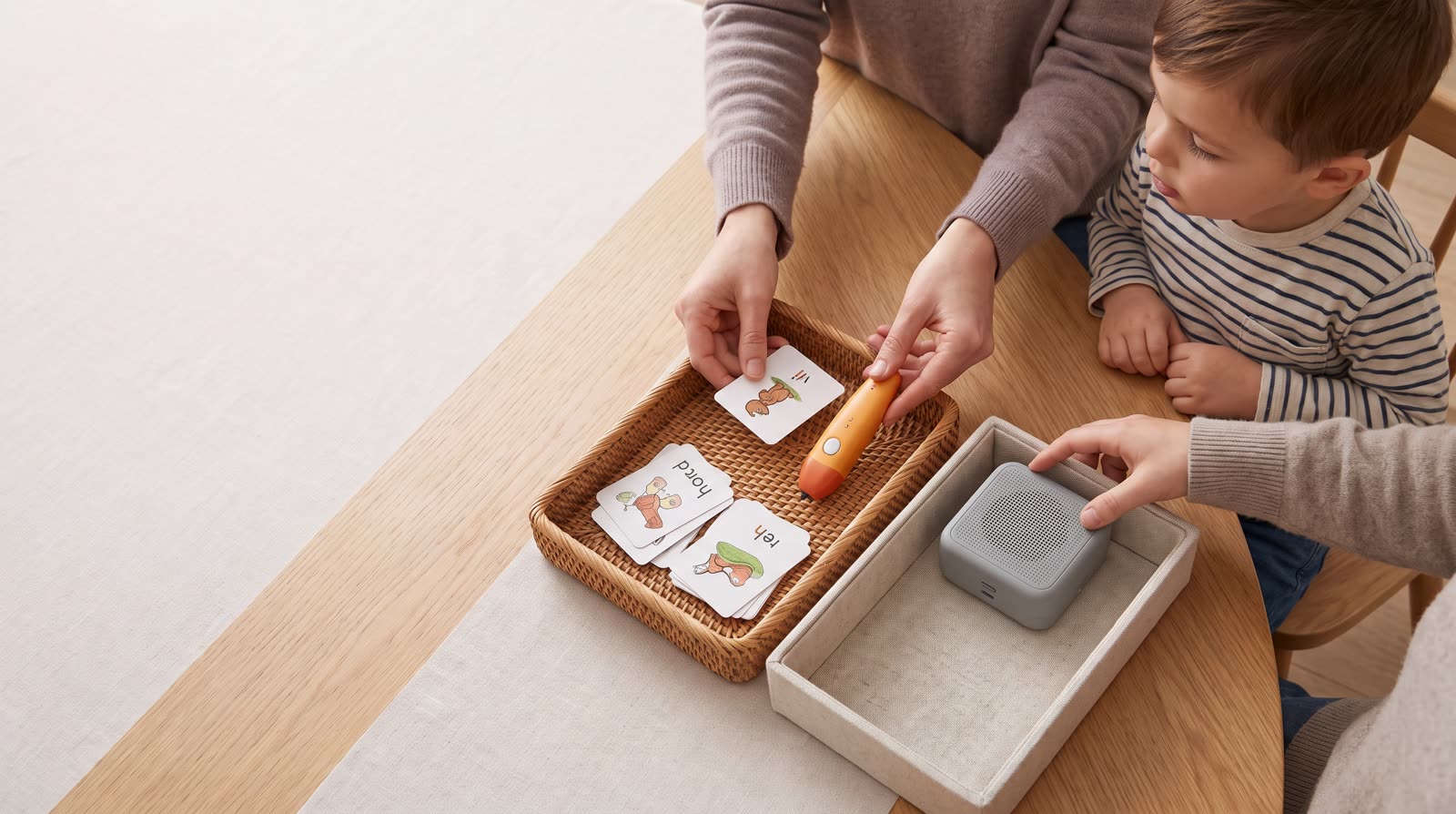
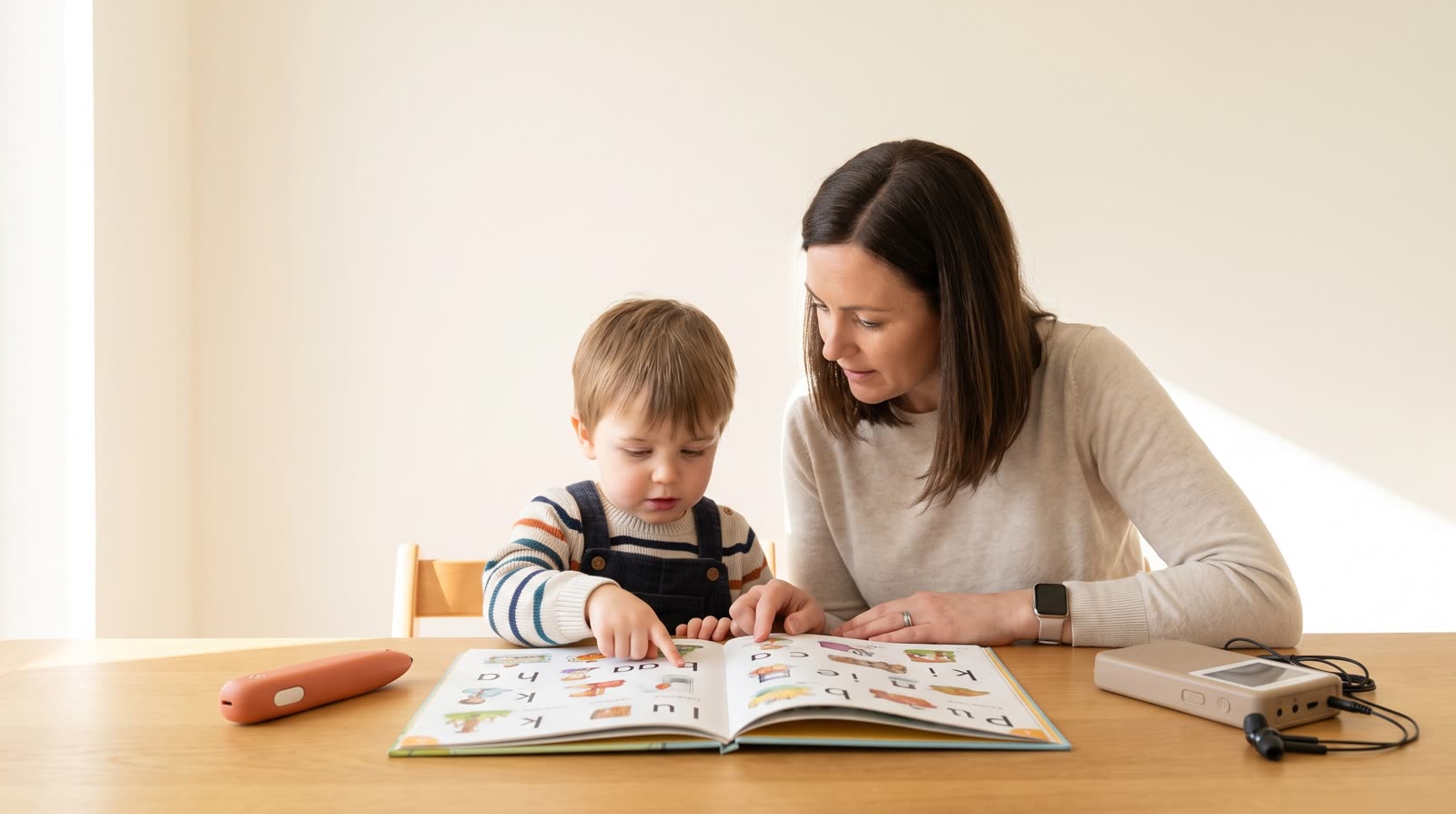
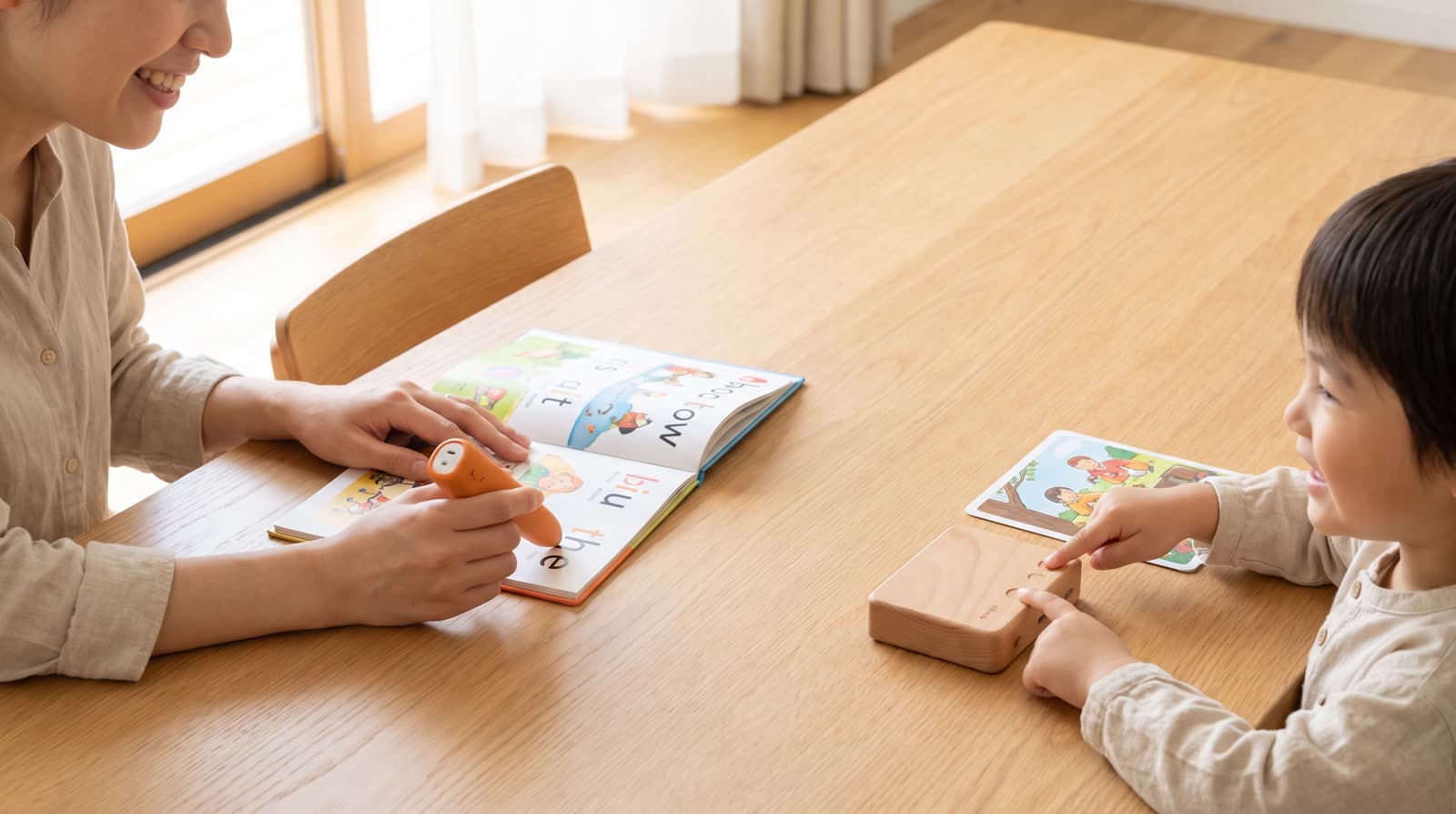
Phonics reading pens integrate miniature optical camera modules positioned at the tip of the enclosure, designed to read invisible micro-dot or optical identification (OID) codes embedded directly beneath printed illustrations and text on specialized talking picture books. When a toddler places the pen tip onto a specific word, letter, or graphic, the optical sensor captures the coordinate data, cross-references it with embedded audio files stored in internal flash memory or external micro-SD cards, and instantaneously triggers the corresponding phoneme, word pronunciation, dialogue, or sound effect via the integrated speaker. This point-and-read mechanism establishes a direct, tactile-to-auditory feedback loop that reinforces the concept that printed symbols carry specific linguistic meanings. From a manufacturing and specification review perspective, the fidelity of the optical reader, the processing speed of the internal microcontroller, and the resolution of the printed book codes dictate the responsiveness and reliability of the device. B2B buyers must examine sample units for sensor accuracy across varying lighting conditions and paper finishes, ensuring that surface glare or minor page curvature does not impede recognition performance.
Linear Audio Playback and Playlist Navigation Mechanics in Children’s Audio Players
Children's audio players, conversely, function primarily as dedicated media consumption devices. They deliver pre-recorded stories, music, and educational audio tracks through physical interfaces such as large navigational buttons, rotatable dials, card insertion slots, or radio-frequency identification (RFID) figurines placed on top of the unit. Rather than interacting directly with printed pages, the child engages with the hardware interface to control playback, volume, and track progression. Audio players excel at delivering continuous storytelling, ambient listening, and multi-track audio without requiring specialized or pre-coded print media. However, because the audio stream is decoupled from the physical page, the child's engagement is primarily auditory rather than visual-tactile. When reviewing audio player specifications for wholesale or retail distribution, procurement teams must assess firmware stability, maximum decibel limitations to protect developing hearing, and the structural robustness of mechanical buttons or card slots under repetitive toddler manipulation.
Technical Comparison of Spatial-Tactile Engagement vs. Auditory-Sequential Stimulation
A rigorous comparative analysis of these two device categories reveals fundamental differences in how toddlers process information. Phonics reading pens demand active, intentional physical action: the child must isolate a target, execute a precise motor grip, and apply contact pressure to elicit a response. This active engagement supports deliberate phonemic awareness and alphabet principle mastery, aligning closely with structured literacy frameworks. Audio players, on the other hand, promote continuous auditory-sequential stimulation, encouraging passive listening comprehension, narrative imagination, and vocabulary acquisition through song and story repetition. For B2B catalog planners, offering both product lines addresses distinct consumer segments: educators seeking targeted literacy intervention and phonics practice often favor reading pen sets, whereas parents seeking screen-free entertainment and bedtime listening routines frequently prefer robust audio players. Understanding these technical and pedagogical boundaries ensures that commercial positioning accurately reflects device capabilities.
Toddler Developmental Readiness and Independent Usability Evaluation
Fine Motor Skills, Grip Control, and Hand-Eye Coordination in Toddler Tool Operation
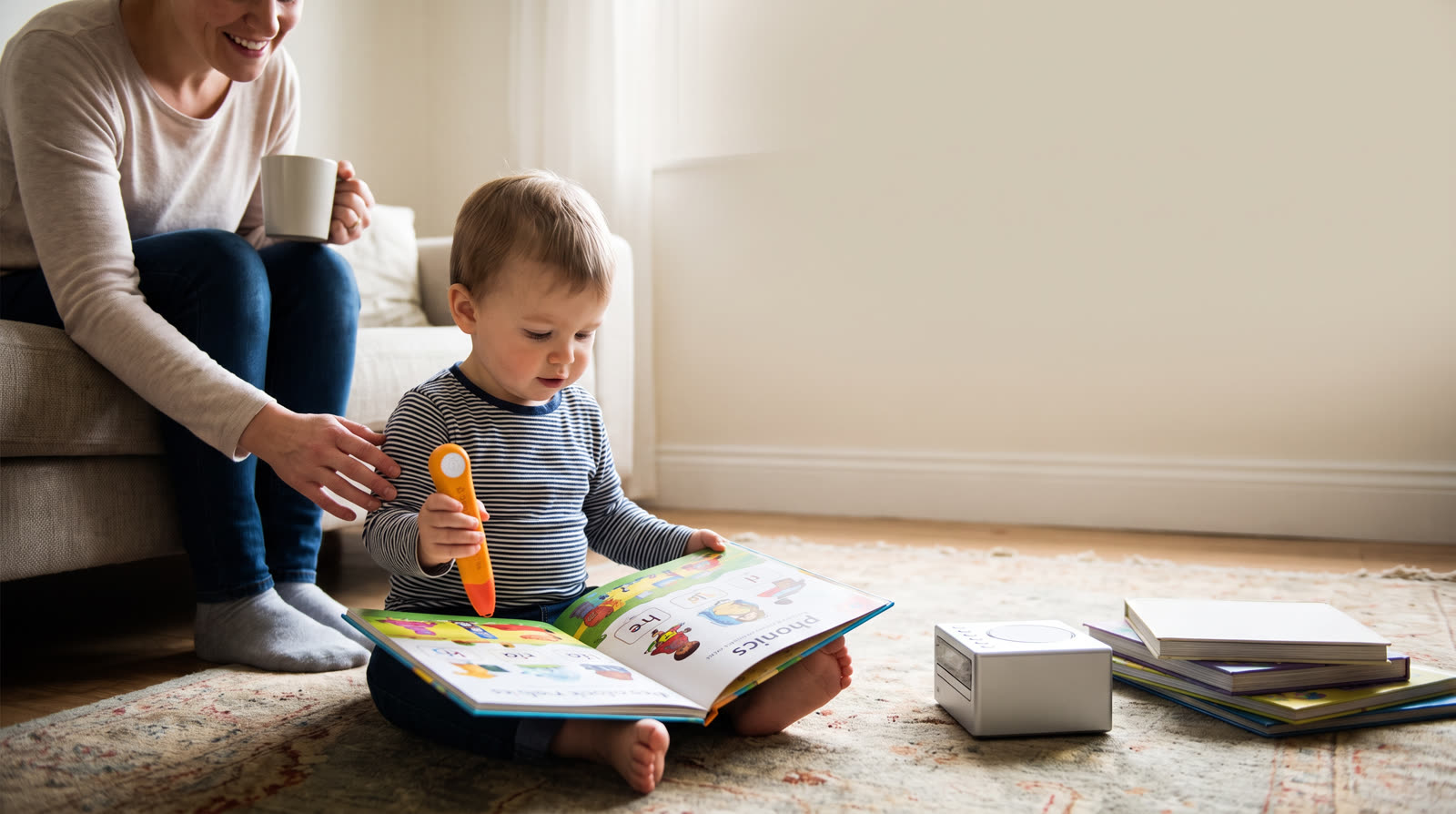
Independent operation by toddlers aged two to four years is heavily influenced by ergonomic design and fine motor development. Toddlers are actively refining their palmar and pincer grasps, making ergonomic form factors critical for device usability. Phonics reading pens require a stable grip and sustained hand-eye coordination to position the tip accurately onto tiny interactive targets or book icons. If a pen is too heavy, excessively thick, or poorly balanced, toddlers experience hand fatigue and frustration, leading to abandonment of the tool. Manufacturers must engineer lightweight, rubberized, cylindrical casings with intuitive tactile ridges that accommodate small hands. In contrast, audio players often feature larger, chunky enclosures, grab handles, or magnetic figurines, which demand broader gross motor movements rather than precise pointing. When conducting sample evaluations, quality assurance teams must observe how toddlers interact with both form factors, verifying that operational force requirements remain within safe developmental limits for early childhood.
Cognitive Mapping: Connecting Visual Print, Tactile Action, and Auditory Feedback
The cognitive bridge between physical action and linguistic output is a critical determinant of educational value. According to early literacy research highlighted by organizations such as Reading Rockets (referenced via Reading Rockets), multi-sensory reinforcement significantly aids early language acquisition. Phonics reading pens leverage this by linking visual symbols, tactile touch, and auditory phonemes into a unified cognitive loop. When a toddler hears the correct pronunciation of a blended phoneme immediately upon touching a printed letter, neural pathways connecting orthography to phonology are strengthened. Audio players provide auditory input without visual-print synchronization, meaning the child must independently connect heard words to seen books unless following along with a parent. For B2B product developers and educational publishers, designing talking picture books that pair seamlessly with reading pens requires meticulous layout planning, ensuring touch targets are appropriately sized for toddler motor control and clearly demarcated without cluttering the visual field.
Attention Span, Frustration Threshold, and Self-Correction Capabilities in Early Learners
Toddlers possess naturally short attention spans and low frustration thresholds. Educational hardware must provide immediate, unambiguous feedback to maintain engagement. Phonics reading pens deliver instantaneous auditory rewards—such as cheer-leading encouragement, clear phonetic sounds, or short musical prompts—when codes are successfully scanned. However, if sensor alignment fails due to incorrect pen angle or damaged page codes, the child may experience immediate frustration. Evaluating device error handling and sensor tolerance is therefore an essential step in pre-shipment specification review. Audio players generally present lower initial frustration barriers since pressing a play button yields immediate sound without requiring precise spatial targeting. Educators and retailers advising parents should emphasize that both tools benefit immensely from adult co-engagement during initial exploration phases, helping toddlers build competence, resilience, and independent operating habits over time.
B2B Procurement, Specification Review, and Quality Assurance Considerations
Evaluating Hardware Durability, Ergonomics, and Safety Standards for Toddler Devices
For B2B buyers, importing or distributing children's educational electronics requires adherence to stringent international safety and durability standards. Toddler devices are frequently subjected to dropping, mouthing, liquid spills, and rough handling. Procurement contracts must specify drop-test tolerances, non-toxic food-grade ABS housing materials, and smooth, rounded edges that eliminate laceration hazards. Specifications should mandate compliance with relevant toy and electronics safety directives, such as ASTM F963 and EN71 standards. Furthermore, battery compartment security is paramount; compartments housing rechargeable lithium-ion cells or replaceable button cells must feature screw-secured doors to prevent accidental ingestion or access by toddlers. Quality assurance protocols during factory audits must include verifying material safety data sheets (MSDS) and testing structural integrity under simulated impact conditions.
Content Interoperability, Book Code Encoding (OID/ixCode), and Firmware Management
A key technical consideration in phonics reading pen distribution is content interoperability and book code compatibility. Unlike audio players, which often rely on standard MP3 or WAV file structures that can be easily loaded onto any device, reading pens depend on proprietary optical code standards (such as OID versions or specialized ixCode formatting). If a publishing house prints books using one optical decoding standard, pens manufactured with a different sensor chipset will fail to read the content. B2B buyers must coordinate closely with manufacturing partners to ensure firmware compatibility, uniform code printing standards, and streamlined audio file management systems. Establishing clear protocols for software updates, storage capacity expansion (via internal flash or micro-SD support), and parental file downloading ensures long-term utility and customer satisfaction across retail markets.
Pre-Shipment Inspection Protocols, Component Verification, and Documentation Checks
Comprehensive pre-shipment inspection (PSI) protocols form the backbone of reliable B2B supply chain management. Inspection teams should systematically verify critical components, including speaker acoustic clarity, microphone functionality (if recording features are present), battery charge retention, and optical sensor calibration accuracy across a representative sample of manufactured units. Documentation checks must confirm that user manuals, safety warnings, charging instructions, and conformity certificates are fully aligned with target market regulations. By establishing transparent quality control checklists—covering functional testing, packaging drop tests, and barcode scannability—buyers mitigate downstream warranty claims and uphold brand reputation in competitive global markets.
ReadGlo project support
Get a Quote
Explore ReadGlo's wholesale catalog of phonics reading pens and interactive talking picture books for your retail or educational distribution needs.
Practical Guidance for Educators, Retailers, and Parents on Device Selection
Assessing Home and Classroom Environments for Optimal Device Integration
Selecting between a phonics reading pen set and an audio player depends heavily on the intended usage environment. In structured classroom settings or focused early intervention spaces, phonics reading pens provide invaluable support for small-group literacy centers, individualized phonics practice, and independent student exploration without disturbing peers (especially when used with volume-limited headphones). Conversely, in home environments, playrooms, or during quiet time and bedtime routines, audio players offer versatile ambient listening that engages multiple children simultaneously without requiring page turning or physical coordination. Retailers and educational consultants advising institutional buyers should conduct thorough environment assessments, matching hardware capabilities to daily schedule requirements, supervision ratios, and pedagogical objectives.
Balancing Screen-Free Audio Immersion with Active Literacy Engagement
Both phonics reading pens and audio players represent excellent screen-free alternatives to tablet devices and smartphones, supporting auditory and tactile sensory development without blue-light exposure or cognitive overload. However, stakeholders must balance passive listening with active engagement. While audio players foster listening comprehension and narrative imagination, reading pens cultivate print awareness, letter-sound correspondence, and early decoding skills. Educators and parents are encouraged to combine both tools strategically: utilizing audio players for storytelling and relaxation during transition periods, and integrating reading pens during dedicated literacy and book-sharing sessions. Guidance provided to retail customers should emphasize that hardware tools complement, rather than replace, interactive human reading and conversation.
When and How to Consult Educational Specialists and Pediatric Developmental Experts
When deploying educational tools for children with diverse learning needs, speech-language delays, or developmental challenges, stakeholders must maintain prudent professional boundaries. Hardware devices are supplementary learning aids and do not constitute clinical diagnostic or therapeutic treatments. If parents, educators, or early childhood specialists observe persistent language delays, significant motor difficulties, or sensory processing challenges, they should consult qualified professionals such as pediatricians, speech-language pathologists (SLPs), or developmental psychologists. Authoritative resources from organizations such as the American Academy of Pediatrics (AAP) and the Centers for Disease Control and Prevention provide comprehensive developmental milestones and guidance on supporting healthy early childhood communication.
Safety, Battery Care, and Long-Term Maintenance Standards
External Inspection Protocols and Non-Disassembly Compliance Guidelines
Ensuring ongoing product safety requires regular, low-risk external inspection by supervising adults. Users should periodically inspect device casings, charging ports, and optical tips for signs of wear, cracks, or accumulation of debris. Crucially, manufacturer guidelines and safety instructions must explicitly mandate that users—particularly children—must never attempt to open, disassemble, or tamper with the hardware housing. Disassembly exposes internal circuitry, lithium-ion battery cells, and small components that present severe choking, electrical, or chemical hazards. Any maintenance or repair work must be referred exclusively to authorized manufacturer service channels.
Battery Safety, Charging Station Hygiene, and Environmental Storage Best Practices
Electronic learning devices rely heavily on rechargeable lithium-ion batteries or alkaline power cells. To maintain optimal performance and prevent safety incidents, users must adhere to strict charging protocols: utilizing only certified 5V USB charging adapters, avoiding overnight charging in unventilated areas, and keeping devices away from extreme heat sources or direct sunlight. Safety guidelines aligned with recommendations from the Consumer Product Safety Commission (referenced via CPSC) dictate that if a device exhibits signs of moisture ingress, structural damage, abnormal overheating during charging, battery swelling, chemical leakage, or smoke emission, it must be powered off immediately, disconnected from power sources, and taken out of service permanently. Devices should be stored in cool, dry environments during periods of prolonged non-use.
Incident Escalation, Manufacturer Communication, and CPSC Compliance Alignment
B2B distributors and institutional buyers must establish clear protocols for quality reporting and incident escalation. If field reports indicate recurrent hardware anomalies, battery heating issues, or component failures, procurement officers must immediately notify the manufacturing partner, quarantine affected inventory lots, and review batch testing documentation. Aligning quality assurance practices with international regulatory bodies such as the CPSC ensures swift corrective action, transparent consumer communication, and robust legal compliance across global distribution networks.
Frequently Asked Questions
Can toddlers use a phonics reading pen entirely independently without adult supervision?
While phonics reading pens are designed for intuitive point-and-read interaction, toddlers aged two to three years typically require initial adult guidance to learn proper pen grip, angle positioning, and book placement. With short introductory practice, toddlers can independently explore pre-coded talking books, though adult co-reading remains essential for optimal language and literacy development.
What is the primary difference in cognitive development between using a reading pen and an audio player?
Phonics reading pens build print awareness and orthographic-phonological mapping by connecting physical touch on printed letters directly to spoken sounds. Children's audio players focus primarily on auditory-sequential processing, storytelling comprehension, and listening memory without direct visual-print synchronization.
Are reading pens and audio players safe for children who tend to mouth toys?
Both device categories intended for toddler markets must comply with strict material safety standards (such as ASTM F963 and EN71), utilizing non-toxic, food-grade plastics and secure battery compartments. However, supervisors should regularly inspect devices for external wear, and any cracked or damaged units must be removed from use immediately.
Can books from one manufacturer be used with a reading pen from another brand?
Generally, no. Phonics reading pens rely on proprietary optical code standards (OID/ixCode) printed beneath book illustrations that correspond to specific audio files in that brand's firmware. Cross-brand compatibility is rare unless explicitly licensed and engineered by the manufacturers.
What should I do if a reading pen or audio player overheats during charging?
Immediately disconnect the charging cable, power off the device if possible, and place it on a non-flammable surface away from heat sources and children. Never attempt to charge or use the device again. Contact the manufacturer or authorized service channel, referencing safety guidelines provided by the CPSC.
Conclusion
In summary, choosing between a phonics reading pen set and a children's audio player involves weighing distinct technological architectures, developmental benefits, and operational use cases. Phonics reading pens provide targeted, active multi-sensory engagement that accelerates early literacy, phonics mastery, and print awareness. Children's audio players offer robust, screen-free auditory immersion ideal for storytelling, group listening, and relaxation routines. For B2B buyers, educational publishers, and retail distributors, understanding these technical differences and maintaining rigorous quality assurance, material safety, and compliance standards ensures successful product deployment. By balancing independent toddler usability with appropriate adult guidance and adhering to authoritative safety guidelines from organizations like the AAP, CDC, and CPSC, stakeholders can deliver reliable, high-value educational solutions that foster a lifelong love of learning.
Continue your research
Related reading pen buyer guides
Use these related guides to compare the next product, content, sourcing or channel decision in your project.
- Product ComparisonPhonics Reading Pen Set vs. Kids Audio Player for Kids: A Comprehensive Long-Term Cost Analysis for B2B BuyersRead this guide
- Product ComparisonWhat Is the Difference Between a Phonics Reading Pen Set and an Audio Player for Kids in Terms of Learning Value?Read this guide
- Product ComparisonPhonics Reading Pen Sets vs. Kids' Audio Players: Evaluating Content Compatibility for B2B Sourcing and Educational PublishingRead this guide
Continue with ReadGlo
See product specifications and request model-specific documentation.
ReadGlo project support
Send Your Requirements
Partner with ReadGlo for reliable OEM/ODM manufacturing, rigorous pre-shipment quality inspection, and custom educational book publishing solutions.