Contents
Introduction
When evaluating early childhood educational tools for distribution, retail, or institutional adoption, B2B buyers frequently compare phonics reading pen sets with standalone audio players for kids. Directly speaking, phonics reading pen sets offer active, point-and-hear multimodal literacy engagement that directly links visual graphemes to auditory phonemes, making them exceptionally suited for grapheme-phoneme correspondence and independent decoding practice. In contrast, audio players deliver linear or playlist-based listening experiences that excel in building passive listening comprehension, storytelling immersion, and auditory attention without requiring direct book interaction. The boundary of applicability depends on whether the core educational objective is active decoding and print awareness or passive listening and narrative comprehension. According to guidelines from the American Academy of Pediatrics (AAP) on early literacy (AAP Early Literacy), multisensory engagement and adult-child shared reading interactions are vital catalysts for linguistic development. This article examines the pedagogical, technological, and operational differences between phonics reading pen sets and audio players to guide B2B procurement professionals, curriculum developers, and educational retailers.
Core Technological Mechanisms and Multisensory Engagement
Optical Dot-Code Recognition vs. Passive Audio Stream Playback
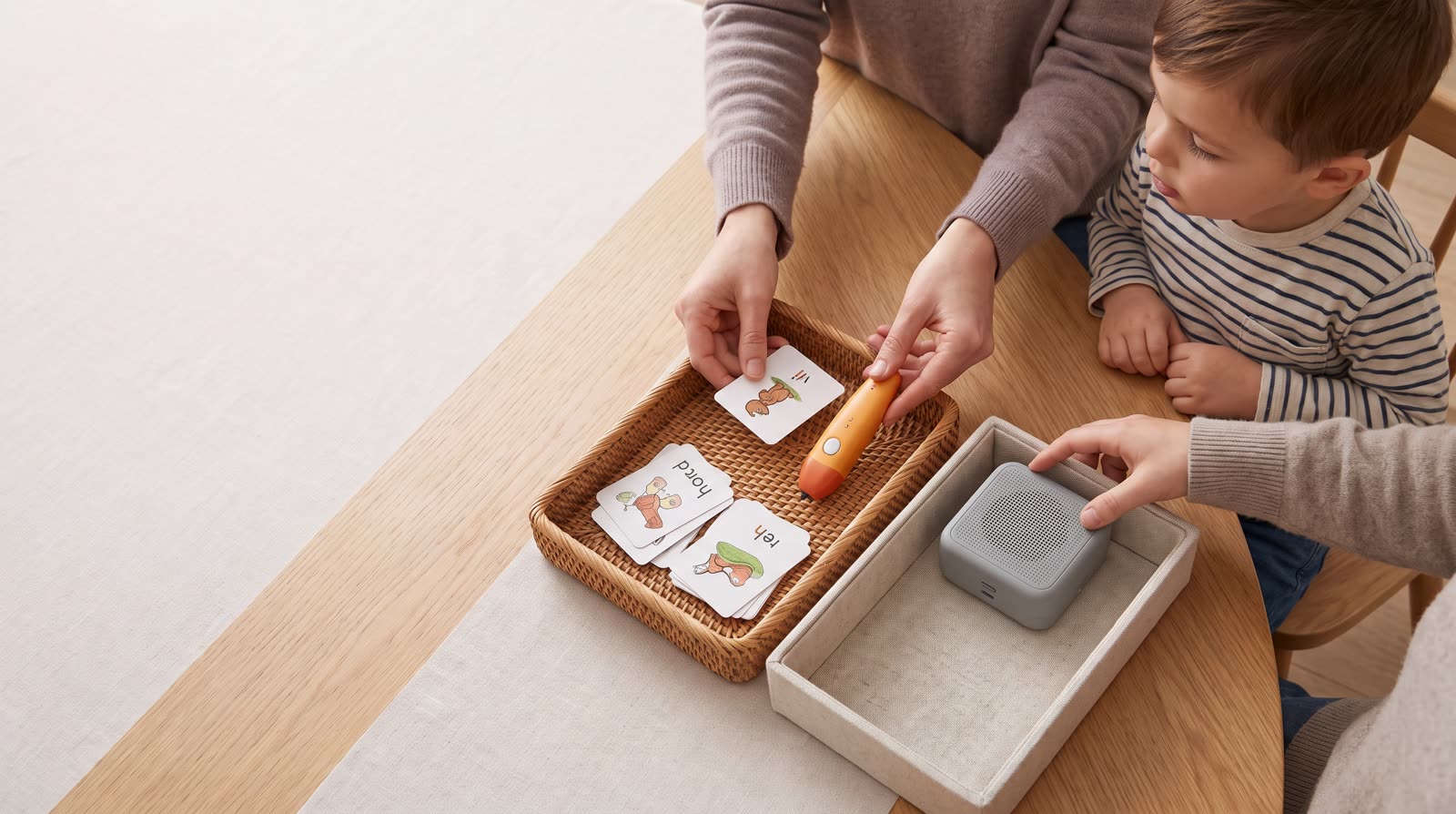
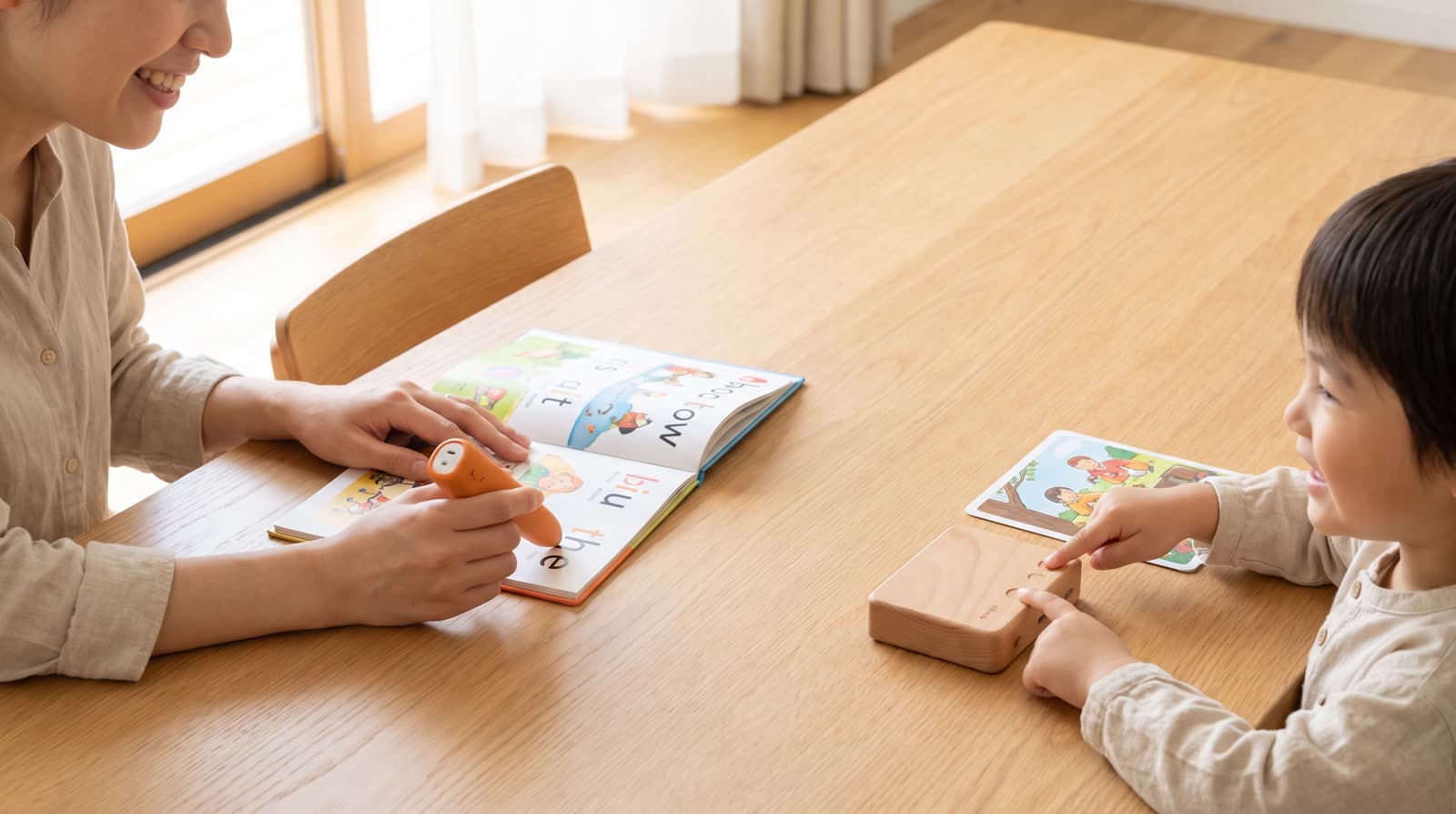
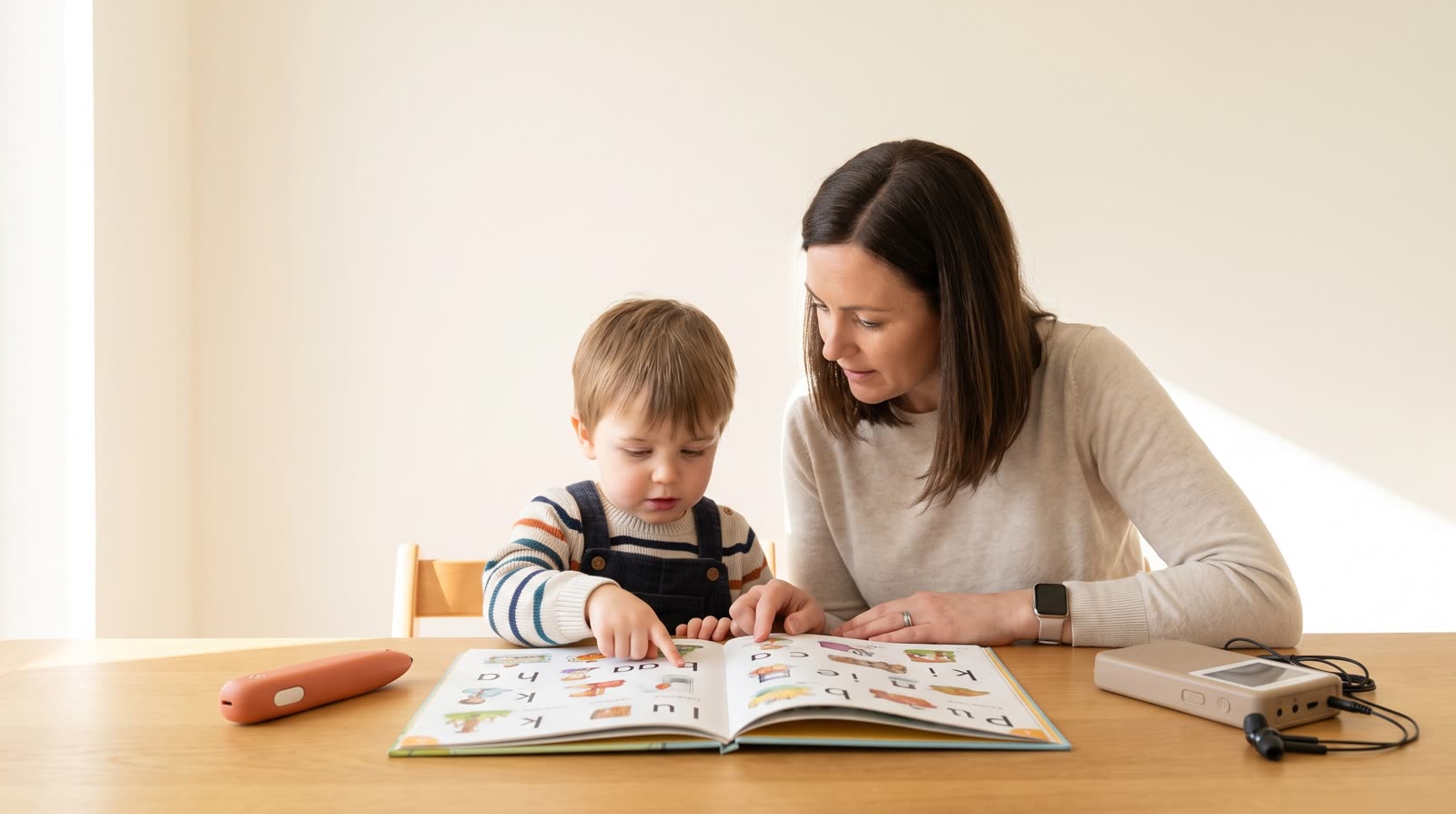
The foundational technological distinction between a phonics reading pen set and a standard children's audio player lies in how content is triggered and delivered. A phonics reading pen utilizes an integrated optical sensor (CMOS camera) that reads invisible OID (Optical Identification) micro-dot patterns printed alongside text and illustrations in specialized interactive books. When a child touches a specific word or phoneme, the pen instantaneously decodes the coordinate data and plays back the corresponding audio file stored in its internal flash memory or expandable TF card. This creates an immediate, deterministic cause-and-effect loop where tactile pointing maps directly to individual linguistic units. Conversely, an audio player relies on physical buttons, dials, or RFID figures to stream pre-recorded audio tracks, stories, or songs in a linear sequence. While audio players provide seamless background listening, they lack the spatial-textual binding mechanism inherent to optical dot-code technology.
Multisensory Synchrony: Connecting Visual Text, Auditory Phonics, and Tactile Pointing
Multisensory learning theory emphasizes that children construct robust neural pathways when visual, auditory, and tactile modalities are engaged simultaneously. Phonics reading pen sets achieve high multisensory synchrony by requiring the child's hand to actively track text while listening to correct pronunciation. The child sees the printed letter or word, physically touches it with the pen tip, and hears the precise phonemic sound or blended word instantly. This active triangulation reinforces print awareness—the understanding that print carries meaning and flows in a specific direction. Audio players, while supporting auditory and tactile (button-pressing) engagement, decouple the sound from the printed page. The child listens to a story or song while holding a figurine or pressing a play button, but the direct visual connection between the printed grapheme and the spoken phoneme is absent. For early reading acquisition, this distinction is critical in determining how effectively a tool supports decoding skills.
Comparative Analysis of Learning Value in Early Childhood Development
Phonemic Awareness and Grapheme-Phoneme Correspondence
Phonemic awareness—the ability to recognize, isolate, and manipulate individual sounds (phonemes) in spoken words—is a primary predictor of future reading success. Phonics reading pen sets are specifically engineered to support grapheme-phoneme correspondence. By allowing children to touch individual letters, digraphs, or blending segments within a structured phonics book set, the pen enables targeted, isolated practice of tricky sounds. A child struggling with short vowel sounds can repeatedly tap a specific vowel in context, hearing an articulate, slow-repeat pronunciation without disrupting the narrative flow of the page. Audio players do not offer granular, word-level or letter-level interactivity. While an audio player can broadcast phonics songs or spoken rhymes, it cannot respond to an individual child's hesitations or pinpoint a specific word on a page. Therefore, in terms of foundational decoding and phonics mastery, reading pen sets deliver targeted instructional value that passive audio players cannot replicate.
Listening Comprehension, Narrative Flow, and Auditory Attention
While reading pens excel in micro-level decoding, audio players hold distinct advantages in macro-level listening comprehension, vocabulary expansion through storytelling, and sustained auditory attention. Children's audio players often feature rich audio drama productions, orchestral background music, and expressive voice acting that capture a child's imagination during quiet time, bedtime routines, or transit. This immersive listening environment encourages children to visualize scenes, follow complex story arcs, and absorb sophisticated vocabulary structures without the visual fatigue sometimes associated with intensive print reading. Furthermore, audio players support group listening in classrooms or family settings, fostering shared discussions about plot and character development. B2B buyers must recognize that these two product categories are complementary rather than mutually exclusive; they serve different stages and facets of the broader early literacy ecosystem.
B2B Procurement, Product Specification, and Sample Evaluation Framework
Assessing Optical Sensor Precision, Audio Sampling Rate, and Speaker Clarity
For B2B importers, educational distributors, and brand owners, evaluating the manufacturing quality and technical specifications of reading pen sets versus audio players requires rigorous sample inspection protocols. When reviewing reading pen samples, quality control teams must test optical sensor reading accuracy across various paper finishes (matte vs. gloss) and ink densities to ensure zero lag or misread rates. Audio clarity is paramount in both product types: reading pens require high-fidelity micro-speakers or headphone outputs to ensure crisp phoneme articulation (critical for distinguishing similar sounds like /b/ and /d/), while audio players require robust acoustic chambers and distortion-free volume controls. Procurement specifications should mandate standardized audio sampling rates (e.g., 16-bit/44.1kHz or high-quality compressed formats) and durable ABS housing materials capable of withstanding toddler handling.
Content Alignment with Established Early Literacy Frameworks
Successful commercialization of educational hardware depends heavily on pedagogical alignment. B2B buyers collaborating with OEM/ODM manufacturers like ReadGlo must ensure that accompanying book content aligns with recognized literacy frameworks, such as systematic synthetic phonics progressions and developmental milestones outlined by organizations like Reading Rockets or the AAP. Evaluation committees should review sample curriculum scripts, phonetic ordering, and vocabulary scaling. For audio players, curation of audio content must emphasize age-appropriate pacing, clear diction, and cultural inclusivity. Establishing a structured pre-shipment inspection (PSI) checklist that verifies both hardware durability and content accuracy safeguards brand reputation and ensures compliance with international educational standards.
ReadGlo project support
Request OEM/ODM Catalog
Explore ReadGlo's advanced phonics reading pen sets and interactive book solutions designed for global educational brands and distributors.
Operational Safety, Material Compliance, and Quality Assurance Guidelines
Low-Risk External Inspection and Child-Safe Battery/Housing Standards
Safety compliance is non-negotiable in children's electronic products. B2B partners must ensure that both reading pens and children's audio players comply with stringent toy safety directives, such as ASTM F963, EN71, and guidelines issued by the Consumer Product Safety Commission (CPSC Children's Products Safety Education). During incoming goods inspection and routine quality checks, personnel should perform low-risk external inspections only: verifying secure battery door compartments, smooth rounded edges, non-toxic food-grade ABS plastics, and secure charging ports. Technicians and end-users must explicitly avoid disassembling electronic units. If any unit exhibits signs of moisture ingress, mechanical damage, abnormal heat during charging, battery swelling, fluid leakage, or smoke emission, operations must cease immediately, the unit must be disconnected from power sources, and the manufacturer or qualified service channels must be contacted.
Pre-Shipment Documentation Check and Standardized Quality Control Protocols
Maintaining quality consistency across large-scale manufacturing runs requires strict adherence to standardized inspection protocols, such as ANSI/ASQ Z1.4 (AQL) sampling tables. During the pre-shipment documentation check, quality assurance teams must verify conformity certificates, restricted substance testing reports (e.g., RoHS, REACH, phthalates), and battery transportation safety documentation (UN38.3). For reading pen sets, factory audits should inspect OID printing calibration presses to guarantee that dot-codes match audio firmware versions precisely. For audio players, firmware stability testing, drop resistance testing, and playback endurance stress tests must be documented in the final inspection report prior to container loading.
Guidance for Educators, Retailers, and Parents on Tool Selection and Implementation
Tailoring Tool Choice to Learning Objectives and Age-Appropriate Milestones
Retailers and educational consultants advising parents or institutional buyers must emphasize that tool selection should be driven by specific developmental objectives. For toddlers aged 2 to 4 focusing on sensory exploration, vocabulary listening, and bedtime storytelling, a durable audio player or simple talking board book provides excellent engagement. For preschoolers and early elementary children aged 4 to 7 embarking on formal literacy acquisition, phonics reading pen sets provide indispensable scaffolding for letter recognition, decoding, and independent reading practice. When children exhibit early reading difficulties or language delays, educators and specialists emphasize that tools should complement—never replace—individualized human instruction. Parents and educators should consult qualified speech-language pathologists or reading specialists if developmental concerns arise.
Avoiding Over-Reliance on Audio and Fostering Active Adult Participation
A common pitfall in educational technology implementation is passive over-reliance on automated devices. Whether using a reading pen or an audio player, digital tools function best as co-learning aids within an interactive environment. Adults should actively participate in shared reading sessions—asking open-ended questions, discussing story themes, and connecting audio content to real-world experiences. Google's digital content guidelines (Google Creating Helpful Content) underscore the importance of delivering original, expert-backed value that serves human users first. By combining high-quality hardware like ReadGlo reading pens with active adult mediation, families and classrooms maximize both cognitive learning value and emotional bonding.
Frequently Asked Questions
Can a phonics reading pen completely replace a human teacher or parent during early reading instruction?
No. While phonics reading pens provide excellent interactive scaffolding for independent decoding and phonemic practice, they cannot replace human guidance, emotional encouragement, and responsive dialogue. Educational experts and AAP guidelines emphasize that interactive adult-child shared reading remains irreplaceable for holistic language and social-emotional development.
How do children's audio players support learning if they lack point-and-read text interaction?
Audio players support learning by building robust listening comprehension, expanding vocabulary through expressive storytelling, and fostering auditory attention and imagination. They serve as excellent tools for background listening, storytelling immersion, and quiet time routines without requiring visual screen time.
What safety standards should B2B buyers verify when importing children's electronic learning devices?
B2B buyers should verify compliance with major international safety standards such as ASTM F963, EN71, and CPSC guidelines for children's products. This includes verifying non-toxic housing materials, secure battery compartments, electrical safety certifications, and restricted substance testing (RoHS, REACH).
How should parents and educators address a reading pen or audio player that exhibits abnormal heat or battery swelling?
Immediately stop using the device, disconnect it from any charging cable or power source, and do not attempt to disassemble or repair it. Store the unit in a safe, non-flammable area away from combustible materials and contact the manufacturer or authorized service channels for guidance, referencing CPSC safety recommendations.
How can retail buyers and educational distributors evaluate the audio clarity and sensor precision of sample units?
Buyers should conduct standardized sample testing across various paper stocks and ink finishes to ensure zero OID reading lag. Audio clarity should be evaluated for crisp phoneme articulation using high-fidelity recordings and distortion-free speaker outputs, supported by factory pre-shipment inspection (PSI) protocols.
Conclusion
In summary, choosing between a phonics reading pen set and a children's audio player depends on aligning product capabilities with specific educational goals. Phonics reading pens deliver unparalleled learning value in active decoding, grapheme-phoneme correspondence, and multisensory print awareness. Audio players excel in passive listening comprehension, narrative immersion, and auditory storytelling. For B2B distributors, educational retailers, and brand partners, offering a comprehensive portfolio that integrates both interactive reading technology and immersive audio experiences provides the ultimate solution for modern early childhood education. By maintaining rigorous quality assurance, adhering to safety standards, and promoting active adult participation, stakeholders can deliver exceptional, human-centric educational value.
Continue your research
Related reading pen buyer guides
Use these related guides to compare the next product, content, sourcing or channel decision in your project.
- Product ComparisonPhonics Reading Pen Set vs. Kids Audio Player for Kids: A Comprehensive Long-Term Cost Analysis for B2B BuyersRead this guide
- Product ComparisonPhonics Reading Pen Sets vs. Kids' Audio Players: Evaluating Content Compatibility for B2B Sourcing and Educational PublishingRead this guide
- Product ComparisonWhat Is the Difference Between a Phonics Reading Pen Set and an Audio Player for Kids in Terms of Screen-Free Use?Read this guide
Continue with ReadGlo
See product specifications and request model-specific documentation.
ReadGlo project support
Contact Our B2B Team
Ready to expand your product line with certified, high-quality interactive reading pens? Send your specifications and sample requests today.