
Contents
Introduction
When educational publishers, school district procurement directors, and early childhood toy distributors evaluate their product portfolios, the financial comparison between traditional ordinary picture books and interactive talking picture books involves far more than initial unit manufacturing invoices. While ordinary picture books generally exhibit a lower upfront cost per copy due to standard paper and offset printing requirements, calculating the true total cost of ownership (TCO) across institutional lifecycles requires a multidimensional economic framework. B2B buyers must weigh upfront capital expenditures against long-term durability, replacement frequency, content extensibility, firmware and audio asset management, warehousing logistics, and regulatory compliance. This comprehensive analysis provides procurement professionals and educational suppliers with an objective framework to assess the economic and operational differences between ordinary print editions and interactive talking book ecosystems, ensuring strategic alignment with institutional budgets and market demands without relying on speculative pricing or unverified commercial claims.
Total Cost of Ownership (TCO) Framework: Upfront Investment vs. Lifespan Value
Initial Procurement, Prepress, and Manufacturing Overhead
Analyzing baseline inventory economics begins with prepress and production setups. Ordinary picture books involve standard four-color offset or digital printing workflows, paper stock selection (such as high-GSM coated art paper or heavy board substrates), and conventional binding methods like saddle-stitching or case binding. In contrast, interactive talking picture books incorporate specialized optical identification (OID) dot matrix printing either layered beneath or embedded within standard CMYK ink channels. This requires rigorous pre-press calibration to ensure optical reading pens can accurately decode coordinates under varying lighting conditions without visual degradation. Furthermore, talking book production requires digital audio engineering, professional voice talent recording, file compression, and firmware synchronization. Although initial setup expenditures for talking picture books are higher, procurement teams must calculate how amortized manufacturing costs scale across target volume tiers, factoring in the long-term utility of the accompanying hardware and software infrastructure.
Durability, Physical Wear-and-Tear, and Replacement Frequency in Institutional Settings
Institutional environments such as preschool classrooms, public libraries, municipal daycare centers, and specialized early learning clinics subject physical books to intensive tactile handling. Ordinary picture books printed on standard paper substrates frequently suffer from page tearing, creasing, moisture damage, and spine degradation, leading to rapid wear that necessitates frequent inventory replenishment and ongoing budget allocation for replacement copies. Talking picture books are frequently engineered with heavy-duty board book stock, reinforced spine bindings, and protective gloss or matte laminations designed to withstand rigorous daily manipulation by toddlers and young children. However, total replacement costs in an interactive ecosystem also involve the physical lifespan of the accompanying optical reading pens, charging docks, and interface buttons. Procurement officers must review supplier quality control records, hinge durability test results, and drop-test certifications during sample evaluations to mitigate long-term replacement burdens and maintenance costs.
Logistics, Warehousing, and Inventory Holding Costs
Beyond unit production, supply chain economics differ significantly between static print and interactive electronic products. Ordinary picture books are straightforward to store, requiring standard climate-controlled warehousing to prevent paper humidity degradation. Conversely, talking book shipments often involve bundled electronic components, including rechargeable lithium-ion or replaceable alkaline battery-powered reading pens, USB charging cables, and custom blister-pack retail displays. This introduces complex warehousing considerations, such as battery shelf-life management, thermal stability monitoring, and increased shipping weight differentials that impact freight tariffs. Distributors must carefully analyze inventory holding costs, stock turnover velocities, and reverse logistics protocols for electronic accessories when projecting long-term operational expenditures.
Content Extensibility, Digital Upgrades, and Curriculum Longevity
Firmware Flexibility and Multi-Language Audio Pack Additions
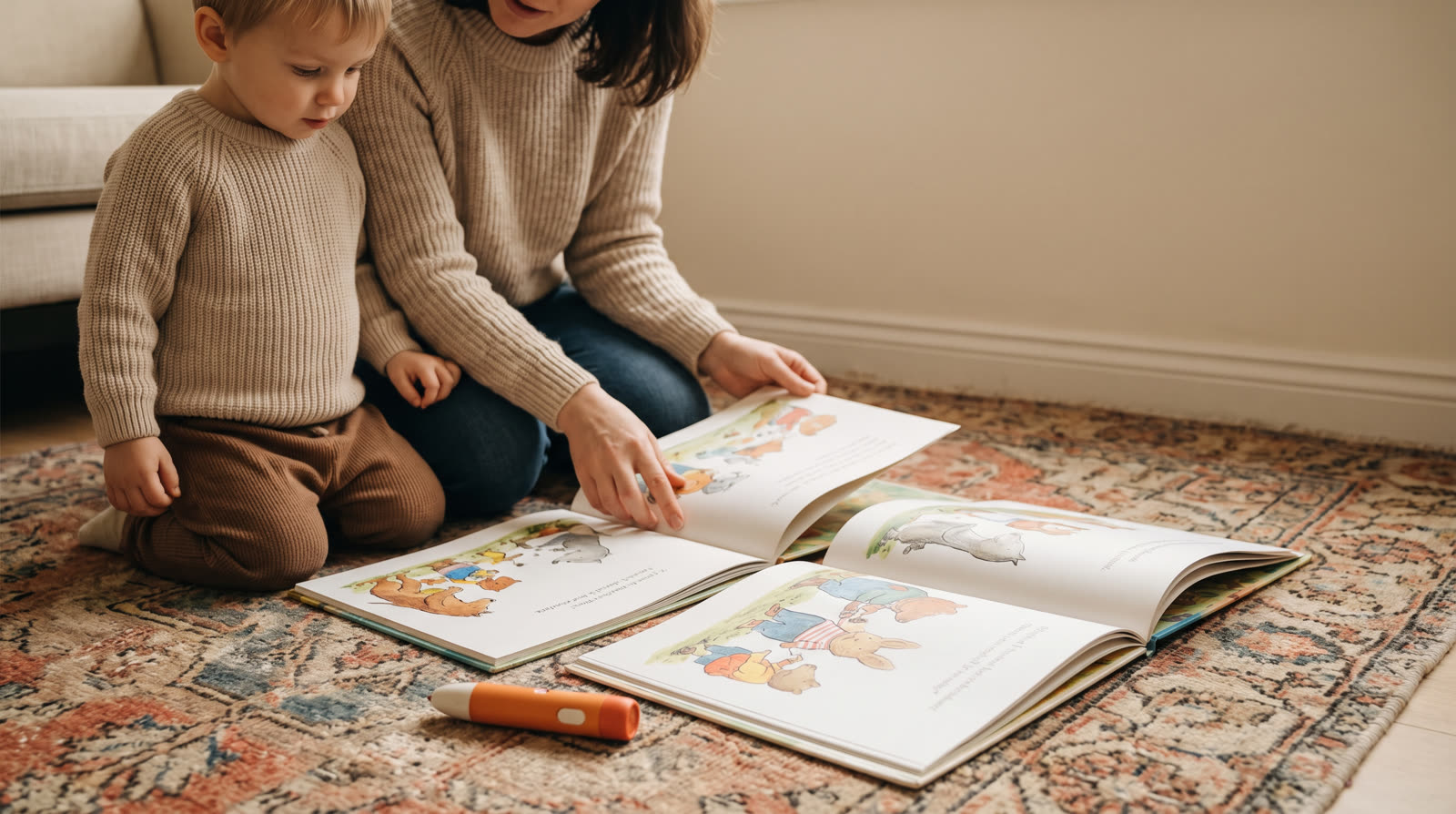
A critical economic advantage in long-term asset management is content adaptability. Ordinary picture books are static media objects; once printed, the narrative structure, vocabulary level, and linguistic scope cannot be altered without undertaking a complete editorial revision, new prepress plate creation, and an entire reprint run. Talking picture books, by leveraging downloadable or pre-loaded OID audio packets stored on flash memory within the reading pen or companion micro-SD cards, offer exceptional content extensibility. Publishers and educational distributors can issue supplementary audio files—such as secondary language translations, phonics exercises, reading comprehension prompts, or seasonal curricular updates—without modifying the physical paper book substrate. This digital upgrade capability allows schools and libraries to repurpose existing book inventories across multiple academic cycles, significantly reducing long-term educational investment costs and expanding market reach into multilingual communities.
Mitigating Static Print Obsolescence and Inventory Write-Off Risks
When ordinary picture books become outdated due to shifting educational standards or curriculum revisions, institutions face the burden of purchasing entirely new editions while absorbing inventory write-off losses for unsold or obsolete stock. For B2B distributors, managing static print inventories carries higher carrying costs when market demands shift toward interactive, multi-sensory learning tools. Assessing whether to stock static or interactive product lines requires evaluating end-user retention rates, curriculum longevity, and regional educational procurement subsidies. Stakeholders should review Google's guidance on helpful, people-first content standards to ensure product positioning emphasizes genuine educational value and practical utility over short-term promotional claims.
Supporting Diverse Learning Needs and Adult-Child Engagement
Interactive talking books provide structured auditory support that aids children with varying developmental paces, including those building early literacy foundations or acquiring a second language. However, B2B stakeholders and educational publishers must maintain strict objectivity: digital tools support, but do not replace, human interaction. According to early literacy recommendations from organizations such as the American Academy of Pediatrics (AAP), shared reading experiences that combine tactile interaction with responsive adult conversation significantly enhance language development and cognitive growth. Publishing houses should design content that encourages collaborative adult-child dialogue rather than isolated screen or pen time.
ReadGlo project support
Get a Quote
Ready to explore custom talking book solutions, sample evaluation kits, and volume manufacturing programs for your catalog? Send your specifications to our team today.
B2B Procurement Evaluation: Assessing Supplier Specifications and Quality Control
Material Standards, Paper GSM, Anti-Glare Coatings, and Safe Soy-Based Inks
Procurement officers conducting factory audits or sample evaluations must scrutinize raw material specifications to prevent hidden long-term costs associated with defective batches or safety recalls. Both ordinary and talking picture books require strict adherence to child safety and material toxicology standards. Buyers must verify that manufacturers utilize non-toxic soy-based inks, durable anti-glare coatings that protect developing eyes from optical strain, and appropriate paper weight (GSM) specifications. For talking books, the optical dot pattern must be seamlessly integrated without causing visual distortion or ink bleeding that could compromise pen scanning accuracy, leading to frustration and premature product rejection by end-users.
Audio Encoding Integrity, OID Code Density, and Sample Testing Protocols
The reliability of the interactive reading experience hinges on technical precision during pre-shipment inspection. B2B buyers should establish rigorous testing protocols during sample review, checking optical reading latency, audio clarity, battery compartment security, and code recognition rates across various lighting conditions. Ensuring that manufacturers implement stringent quality assurance checks prevents costly post-delivery disputes, warranty claims, and reverse logistics expenses. When reviewing safety compliance for electronic accessories accompanying books, reference official frameworks such as the CPSC Children's Products Business Education guidance to ensure proper understanding of regulatory obligations and safety standards.
Establishing Standardized Pre-Shipment Inspection (PSI) Checklists
To safeguard long-term capital investments, procurement managers must implement structured pre-shipment inspection (PSI) protocols aligned with international quality standards (such as ISO 2859-1 sampling procedures). Inspection checklists should cover critical checkpoints: physical dimension checks, color fidelity against approved color swatches, optical dot scan reliability across 100% of book pages, battery door securement mechanisms (requiring tools for access where mandated by safety laws), drop-test durability for reading pens, and packaging drop tests. By formalizing these verification procedures prior to final cargo release, B2B buyers protect their supply chains from latent defect liabilities and ensure consistent product performance across retail and institutional deployments.
Operational Considerations for Retailers, Distributors, and Educational Institutions
Retail Merchandising, Packaging Integrity, and Shelf-Appeal Economics
For B2B distributors and retail buyers, product presentation and packaging integrity directly influence sell-through rates and return merchandise authorization (RMA) frequencies. Ordinary picture books require minimal protective packaging beyond shrink-wrap, but are susceptible to shelf wear, corner bending, and cover scuffing in retail environments. Talking picture books bundled with electronic reading pens require sophisticated clamshell or compartmentalized box packaging that secures both the book and hardware components, prevents pilfering in open-display retail settings, and allows tactile customer interaction where permitted. Buyers must evaluate packaging material costs, environmental sustainability regulations (such as plastic reduction mandates in EU and North American markets), and dimensional weight shipping efficiencies when selecting product configurations.
Warranty Management, Defect Handling, and Customer Support Infrastructure
The introduction of electronic components into book publishing alters post-sale service obligations. Ordinary picture books rarely involve technical warranties beyond binding defect claims. Talking picture book ecosystems, however, involve hardware warranties for reading pens, charging cables, and internal microchip modules. B2B contracts must clearly define warranty periods, defective unit return thresholds, replacement part availability, and technical support escalation workflows. Establishing a reliable customer service infrastructure and clear troubleshooting guidelines for educators and parents reduces administrative friction and protects brand reputation in competitive global markets.
Professional Development and End-User Training Ecosystems
Maximizing the long-term value of educational publishing investments requires robust training and onboarding support for end-users. School districts and retail buyers favor suppliers who provide comprehensive instructional collateral, teacher training webinars, digital resource portals, and multi-language user manuals. Ensuring that educators and parents understand how to effectively integrate interactive audio tools into structured reading curricula enhances user satisfaction, drives repeat purchasing behavior, and establishes a sustainable competitive advantage for B2B publishers and distributors.
Frequently Asked Questions
Do talking picture books always result in a higher total cost of ownership than ordinary picture books?
While initial unit manufacturing and packaging costs for talking picture books are higher due to OID printing and electronic accessories, the long-term cost depends heavily on durability, institutional usage frequency, and content extensibility. Reusable digital audio updates can offset the need for frequent re-purchasing.
What key factors should B2B procurement teams check during sample evaluations?
Procurement teams should verify optical scanning accuracy, paper GSM and anti-glare coatings, audio file clarity, battery compartment mechanical security, and compliance with children's product safety regulations such as CPSC standards.
How do ordinary picture books compare in terms of lifecycle replacement costs in schools?
Ordinary picture books frequently incur higher replacement frequencies in high-traffic classrooms and libraries due to paper tearing, moisture damage, and static content obsolescence, which cannot be updated via digital files.
Can talking picture book audio content be updated after the initial purchase?
Yes, many modern talking book systems utilize downloadable audio packets stored on flash memory within the reading pen or micro-SD cards, enabling publishers to release secondary language translations or curriculum updates without reprinting physical books.
What safety and regulatory compliance standards apply to electronic reading pens bundled with books?
Electronic accessories must comply with children's product safety standards, including battery compartment securement, non-toxic material certifications, electromagnetic compatibility, and electrical safety directives. Refer to official regulatory bodies like the CPSC for detailed compliance frameworks.
Conclusion
In conclusion, evaluating the long-term cost difference between talking picture books and ordinary picture books requires a rigorous, multidimensional B2B framework that encompasses manufacturing overhead, physical durability, inventory holding costs, digital extensibility, and regulatory compliance. While ordinary picture books offer lower upfront unit costs, talking picture books provide superior long-term value through enhanced durability, multi-cycle curriculum adaptability, and engaging interactive learning experiences. B2B procurement professionals, publishers, and distributors must carefully assess supplier manufacturing standards, material certifications, and post-sale support ecosystems to optimize product portfolios and achieve sustainable commercial success in the global educational market.
Continue your research
Related reading pen buyer guides
Use these related guides to compare the next product, content, sourcing or channel decision in your project.
- Product ComparisonComparing Learning Value: Talking Picture Books Versus Ordinary Picture Books in Early Childhood EducationRead this guide
- Product ComparisonWhat is the Difference Between a Talking Picture Book and an Ordinary Picture Book in Terms of Screen-Free Use?Read this guide
- Product ComparisonWhat is the Difference Between a Talking Picture Book and an Ordinary Picture Book in Terms of Content Compatibility?Read this guide
Continue with ReadGlo
See product specifications and request model-specific documentation.
ReadGlo project support
Request Product Catalog
Contact our B2B team to discuss volume pricing, custom audio integration, and comprehensive manufacturing catalogs tailored to your market.