
Contents
Introduction
When considering whether an interactive reading pen and talking picture book set makes a suitable gift or retail product for a two-year-old, B2B buyers, educational publishers, and retailers must balance technological innovation with early childhood developmental realities. Direct answer: While two-year-olds are at a dynamic stage of language acquisition and sensory exploration, a talking pen set is generally an advanced or transitional tool rather than an independent toy. At age two, children primarily learn through tactile manipulation, caregiver interaction, and physical exploration of books. Therefore, an audio reading pen can be a valuable gift only when mediated by active adult participation and when the hardware meets stringent safety, ergonomic, and durability standards. This guide provides an in-depth, E-E-A-T compliant evaluation for B2B professionals, educators, and buyers assessing talking pen systems for early childhood markets.
1. Developmental Readiness and Cognitive Alignment for Two-Year-Olds
1.1 Sensorimotor Exploration vs. Audio-Visual Interactivity
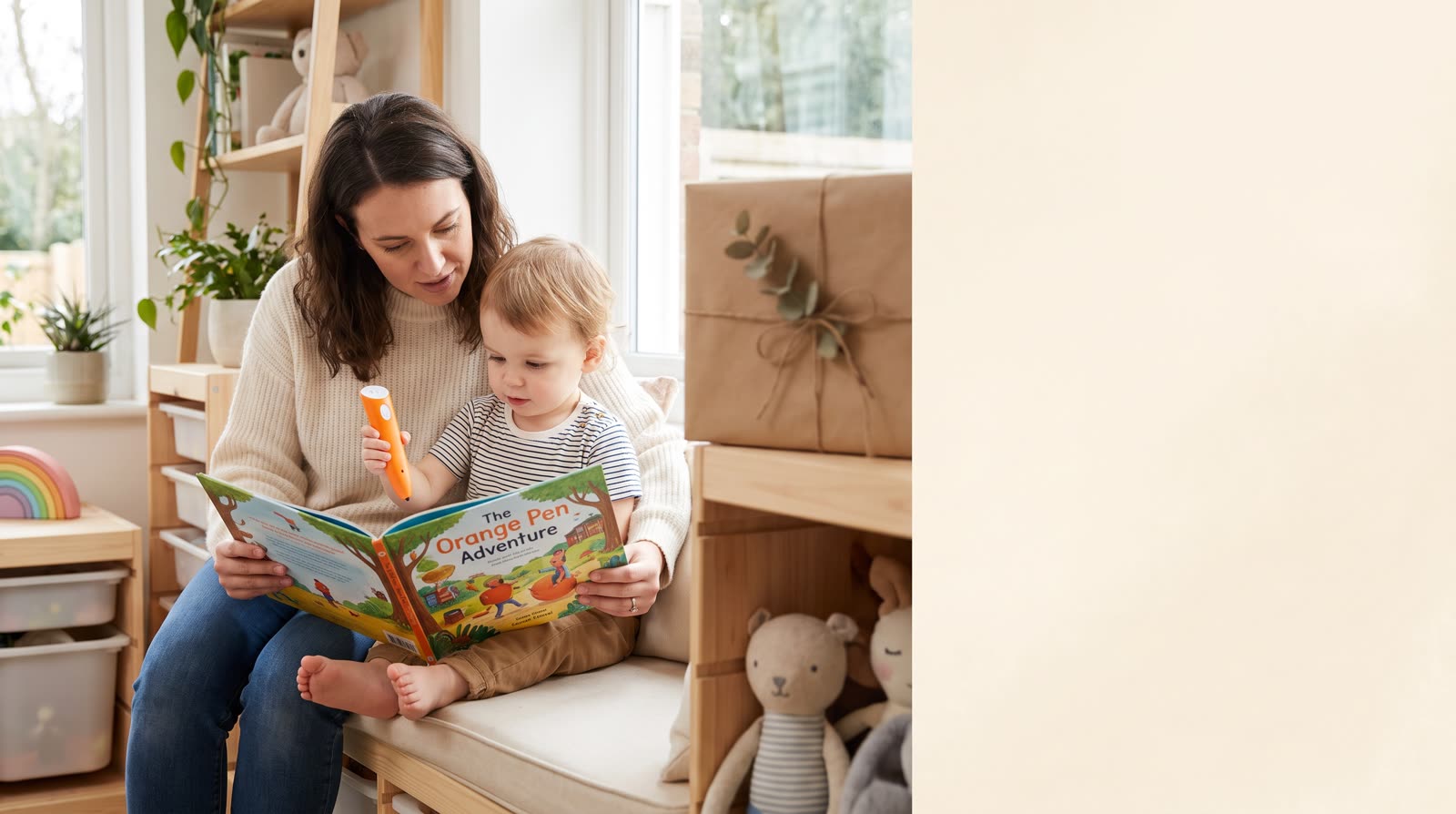
At two years of age, toddlers are transitioning from late infancy into active toddlerhood, characterized by rapid vocabulary expansion, physical coordination, and symbolic play. During this stage, children explore objects through all five senses—touching, mouthing, dropping, and turning pages. Traditional board books with sturdy pages and tactile elements remain foundational. When introducing an electronic talking pen and optical-coded picture book set, developers and educators must assess whether the child has the fine motor control required to grip a stylus and align its tip precisely with optical dot codes on the page. While many two-year-olds enjoy auditory feedback such as animal sounds, music, or simple spoken words triggered by touching illustrations, independent navigation of complex digital audio features is often beyond their developmental scope. Sourcing professionals must verify that companion picture books feature thick, tear-resistant board pages and large, responsive optical trigger zones that accommodate a toddler's developing hand-eye coordination.
1.2 The Critical Role of Adult-Mediated Joint Engagement
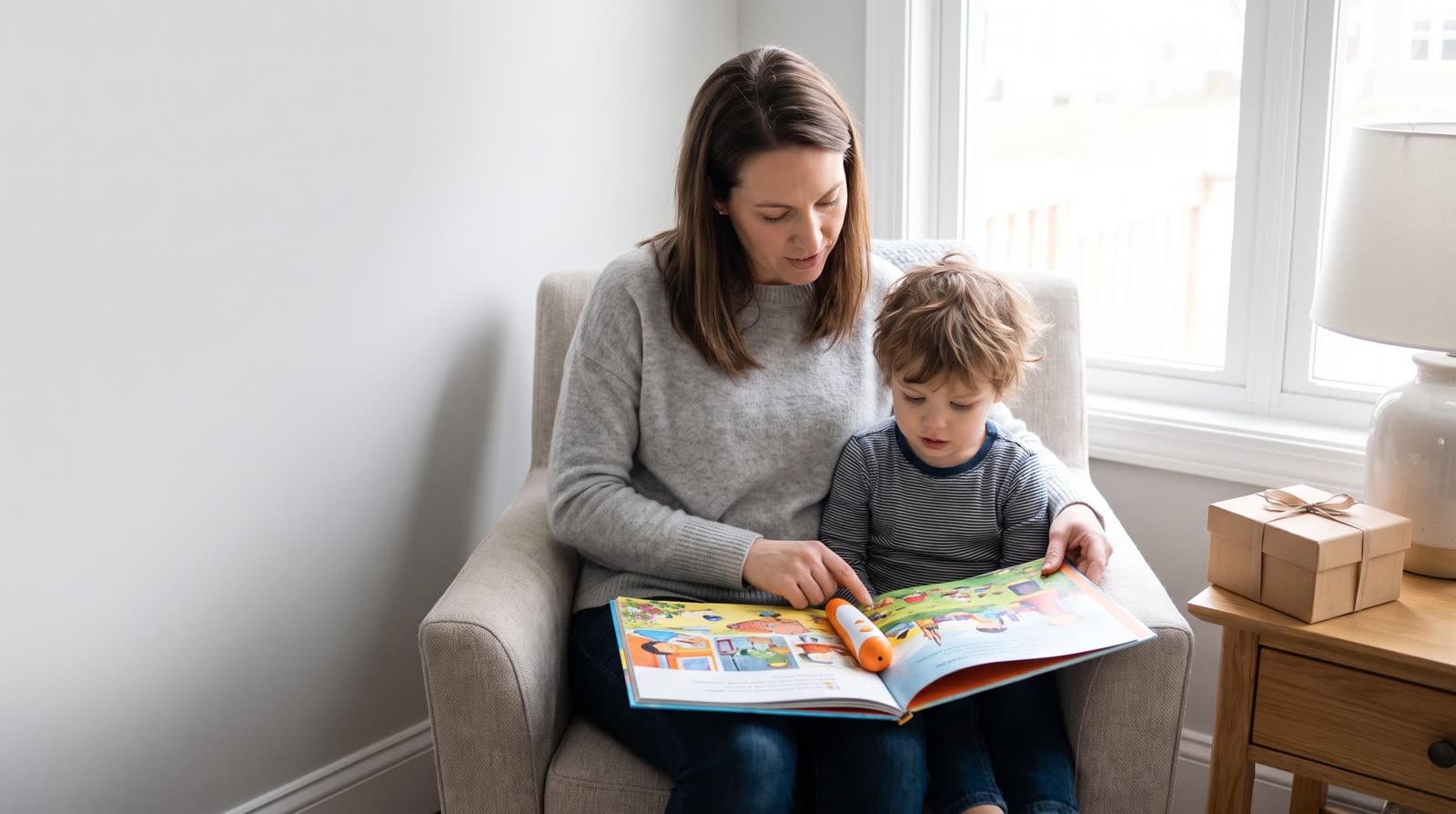
Child development research consistently emphasizes that young children learn language and literacy best through social interaction and responsive caregiver dialogue. According to guidance from the American Academy of Pediatrics (AAP) on early childhood literacy (AAP Early Literacy Guidance), shared reading between adults and young children fosters vocabulary growth, emotional bonding, and cognitive comprehension far more effectively than passive screen or electronic media use. Consequently, a reading pen set should never be treated as a babysitting device or a substitute for caregiver engagement. When positioned as a gift or retail product for a two-year-old, the product's value proposition relies heavily on its ability to facilitate joint attention—where the adult and child explore the sounds, stories, and images together. B2B buyers should evaluate whether the accompanying book content prompts conversational turns, guiding parents on how to ask open-ended questions rather than relying solely on automated audio playback.
2. Evaluating Interactive Reading Pen Sets: B2B Sourcing and Quality Criteria
2.1 Hardware Ergonomics, Durability, and Safe Materials
For B2B distributors and toy retailers, sourcing reading pens intended for young children requires rigorous evaluation of physical and mechanical specifications. Two-year-olds frequently subject toys to heavy drops, chewing, and rough handling. Sourcing protocols must prioritize robust ABS or food-grade silicone enclosures that withstand drop tests without fracturing into small, hazardous choking fragments. Ergonomically, the pen casing should feature a chunky, easy-to-grip profile suitable for palmar grasps rather than refined adult pincer grasps. Furthermore, manufacturers and suppliers must provide comprehensive material safety documentation, verifying compliance with international heavy metal, phthalate, and BPA restrictions. During sample review stages, quality assurance teams should inspect seam tolerances, battery door security mechanisms (requiring a tool or screw to prevent toddler access), and speaker grille integrity to ensure liquid or particulate ingress is minimized.
2.2 Optical Code Technology and Audio-Book Synchronization
The core technical mechanism of any talking pen system relies on an optical sensor embedded in the tip that reads invisible dot codes (such as OID - Optical Identification technology) printed on the book pages. For a two-year-old user base, optical tracking reliability is paramount. If the optical sensor struggles to read codes due to faint printing, low contrast, or page glare, toddler frustration quickly ensues. B2B buyers must review sample print runs to ensure high-resolution offset or digital printing fidelity where optical dots do not distort or fade under normal household lighting. Additionally, audio file management—stored either on internal flash memory or a removable TF card—must feature low latency, delivering crisp, distortion-free voice prompts and sound effects instantaneously upon contact. Evaluating sample stability, firmware update procedures, and audio compression formats forms an essential part of the pre-shipment inspection workflow.
3. Safety, Product Care, and Compliance Standards for Early Childhood Devices
3.1 Low-Risk External Inspection and Non-Disassembly Protocols
Ensuring the ongoing safety of electronic educational toys requires adherence to strict product care and maintenance protocols. Retailers and educational institutions should advise end-users—parents and educators—to conduct routine low-risk external inspections of both the reading pen and picture books. This includes checking the pen body for cracks, inspecting the optical lens tip for dirt or obstruction, and verifying that charging ports are clean. Crucially, users must never attempt to disassemble the reading pen. Unauthorized teardowns expose internal lithium-ion batteries and delicate circuitry, creating severe electrical and mechanical hazards. If a device shows signs of moisture ingress, structural damage, abnormal heat during operation, battery swelling, chemical leakage, or smoke, users must immediately cease operation, disconnect from any power source, refrain from recharging, and contact the manufacturer or authorized service channels for professional evaluation.
3.2 Battery Safety, Thermal Management, and CPSC Guidance
Electronic learning aids powered by rechargeable lithium-ion or replaceable alkaline batteries demand rigorous safety compliance. Sourcing managers must ensure that manufactured goods comply with national and international electrical safety standards, incorporating overcharge, over-discharge, and short-circuit protection circuits. According to consumer safety advisories from the U.S. Consumer Product Safety Commission (CPSC Children's Products Guidelines), children's products must eliminate accessible battery compartments that a child can open without tools, preventing ingestion or thermal burn risks. B2B partners should verify factory testing reports covering thermal stability, drop impact resistance, and electrical insulation. Educational buyers must also establish clear protocols for storage and charging, ensuring devices are charged using certified low-voltage adapters under adult supervision.
ReadGlo project support
Request Product Catalog
Explore our wholesale catalog of certified, child-safe interactive reading pens and multimodal picture book sets designed for early learning distributors and educational brands.
4. Addressing Diverse Learning Needs and Developmental Considerations
4.1 Supporting Language Exposure Without Overstimulation
When introducing audio-enhanced learning tools to toddlers, developers and educators must remain mindful of sensory processing and cognitive load. Two-year-olds process sensory inputs at varying paces; excessive flashing lights, loud synthesized sound effects, or rapid-fire audio switching can lead to sensory fatigue or distraction rather than meaningful language learning. High-quality interactive books prioritize natural human narration, soothing background melodies, and clear, uncluttered page layouts. When products are marketed or evaluated for diverse learning environments, publishers must avoid making unverified therapeutic or developmental acceleration claims. As outlined in guidelines from Google's content evaluation standards (Google Creating Helpful Content), helpful, people-first content must prioritize factual accuracy, transparency, and user well-being over sensationalized marketing promises.
4.2 Consulting Qualified Educators and Clinical Professionals
Every child develops at a unique trajectory. While interactive reading tools can enrich a toddler's environment, they do not replace professional developmental assessments. If parents, educators, or early childhood specialists observe persistent delays in speech production, atypical responses to sensory stimuli, or significant challenges with joint attention around age two, they should seek guidance from qualified pediatricians, speech-language pathologists, or early intervention specialists. Manufacturers, distributors, and retail brands should refrain from diagnosing or offering medical claims regarding developmental milestones. Instead, educational product literature should encourage active adult observation and professional consultation when developmental milestones warrant specialized support.
5. Procurement, Sourcing Evaluation, and Verification Best Practices
5.1 Verifying Age-Grading Labels and Book Code Compatibility
For B2B buyers, wholesale distributors, and retail category managers, ensuring product compliance begins long before goods reach store shelves. Procurement checklists must mandate rigorous verification of age-grading labels, ensuring products explicitly state appropriate age brackets (e.g., 2+ years with adult supervision) and display mandatory choking hazard warnings where applicable. Furthermore, buyers must verify book code compatibility. In many talking pen systems, firmware versions must match specific book series editions. Sourcing teams should review technical documentation confirming that book OID dot matrices, audio chip firmware versions, and language packs are fully synchronized across production batches to prevent cross-compatibility failures in retail markets.
5.2 Conducting Sample Reviews and Pre-Shipment Document Checks
A disciplined quality assurance workflow involves systematic sample reviews and pre-shipment data checks. Before finalizing bulk procurement orders, purchasing managers should request golden samples for comprehensive laboratory and functional testing. Evaluation protocols should include acoustic clarity assessments, battery lifespan cycling tests, optical reading accuracy across varying paper stocks, and drop durability verifications. During pre-shipment inspections, quality control personnel must cross-check bill-of-materials specifications, packaging integrity, multilingual manual accuracy, and safety certification validity (such as CE, RoHS, ASTM F963, and EN71). Maintaining this rigorous, transparent sourcing framework protects brand reputation and ensures ultimate user safety.
Frequently Asked Questions
Is a talking pen set appropriate as a gift for every two-year-old?
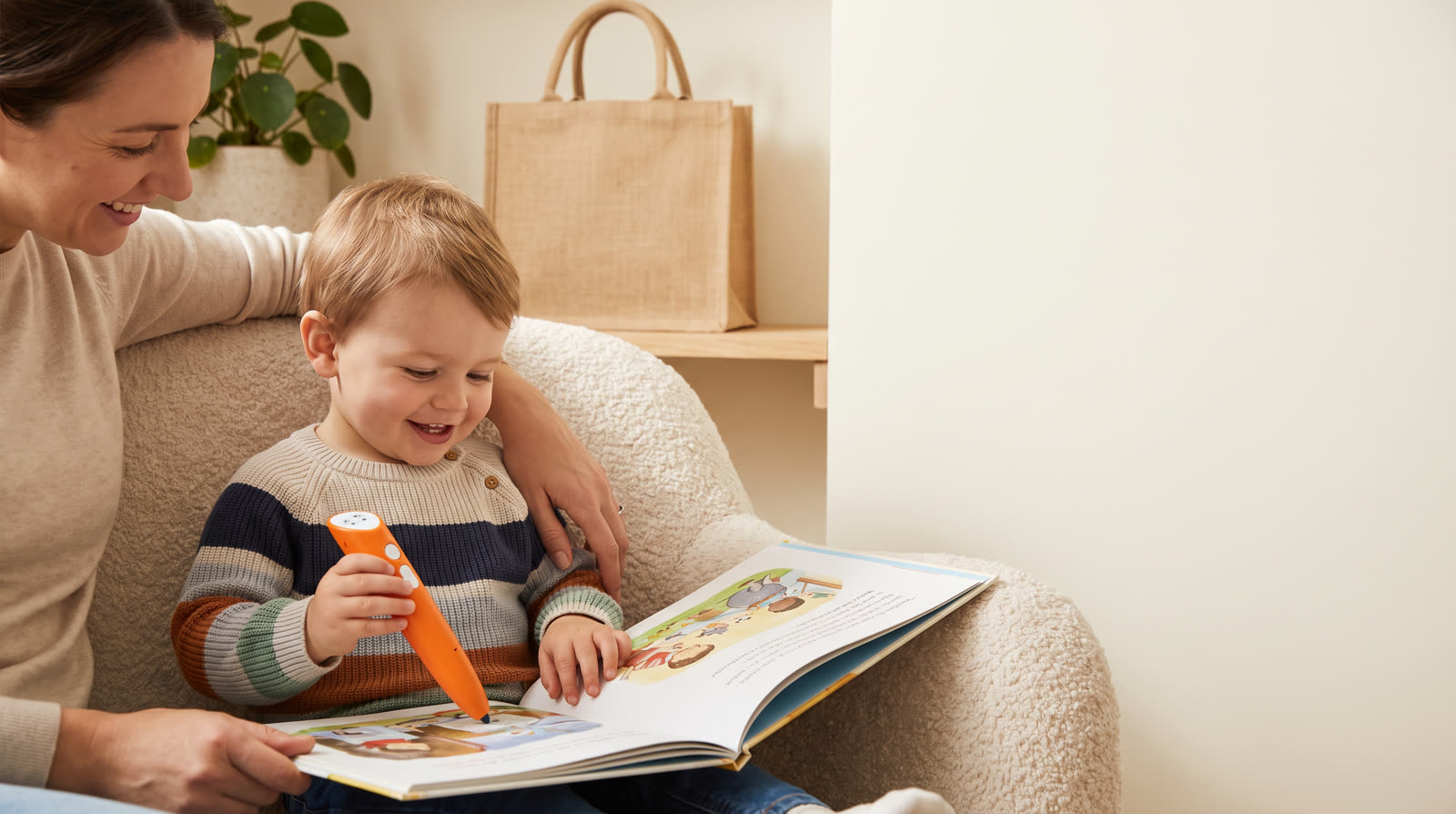
Not necessarily. While some two-year-olds engage enthusiastically with auditory and tactile picture books under adult supervision, others may lack the fine motor precision or sustained attention span required for stylus manipulation. It is best introduced as a shared activity with a caregiver rather than an independent toy.
What safety precautions should be taken with talking pen batteries?
Ensure the device complies with CPSC safety standards and features a secure, tool-fastened battery compartment. Users should only charge devices with certified low-voltage adapters under adult supervision, and never attempt to disassemble the unit or use damaged chargers.
Can talking reading pens replace traditional shared reading between adults and toddlers?
No. Research from organizations like the American Academy of Pediatrics highlights that language acquisition and emotional bonding in toddlers occur primarily through responsive human interaction and conversational dialogue during shared reading.
What should B2B buyers verify during sample reviews of reading pen sets?
Buyers should verify physical durability (drop resistance), safe non-toxic materials, optical code recognition reliability, audio playback clarity, and proper age-grading and regulatory compliance documentation.
What should be done if a reading pen shows signs of abnormal heat or moisture damage?
Immediately cease operation, disconnect the device from any power source, do not attempt to recharge it, and contact the manufacturer or authorized service channels for professional evaluation.
Conclusion
In conclusion, whether a reading pen and talking picture book set makes a valuable gift or commercial product for a two-year-old depends heavily on product quality, design ergonomics, and the presence of adult mediation. For B2B buyers, educational publishers, and retailers, success in this category requires strict adherence to safety standards, rigorous sample verification, and transparent product positioning that emphasizes shared family engagement over automated gadgetry. By prioritizing child safety, robust optical-audio synchronization, and developmental appropriateness, brands can deliver enriching early literacy tools that support both young learners and commercial growth.
Continue your research
Related reading pen buyer guides
Use these related guides to compare the next product, content, sourcing or channel decision in your project.
- Gift GuideEvaluating Talking Pen and Interactive Picture Book Sets as 4-Year-Old Sibling Gifts for Baby Showers: A B2B Buyer and Retail Strategist GuideRead this guide
- Gift GuideIs a Reading Pen and Talking Picture Book Set a Good Gift for a 3-Year-Old? Developmental Analysis and B2B Sourcing InsightsRead this guide
- Gift GuideIs a Reading Pen and Talking Picture Book Set a Good Baby Shower Gift for a Bilingual Family?Read this guide
Continue with ReadGlo
See product specifications and request model-specific documentation.
ReadGlo project support
Get a Custom Quote
Partner with ReadGlo to source high-quality, compliant talking pen solutions tailored to your educational publishing and retail requirements.