Contents
Introduction
In the global educational publishing and toy manufacturing sectors, selecting the appropriate hardware ecosystem is critical for distributors, publishers, and edtech brands. Among interactive audio tools, two distinct categories dominate the market: brand-specific reading pens (commonly utilizing Optical Identification or OID dot codes embedded in proprietary books) and universal scanning pens (often relying on Optical Character Recognition, barcode reading, or general text scanning). For B2B decision-makers, understanding the nuanced differences in content compatibility, licensing models, publishing workflows, and end-user engagement is essential before committing to bulk manufacturing or catalog integration. Brand-specific reading pens offer tightly integrated, publisher-controlled multimedia storytelling experiences tailored to early childhood development, whereas universal scanning pens appeal to older students seeking multi-text translation and OCR functionality. This comprehensive guide examines the technical architecture, content encoding mechanisms, publishing workflows, and strategic purchasing criteria to help B2B buyers navigate content compatibility and select optimal hardware solutions for their target markets.
Understanding Content Encoding and Technology Architecture
Optical Identification (OID) Code Technology in Brand-Specific Pens
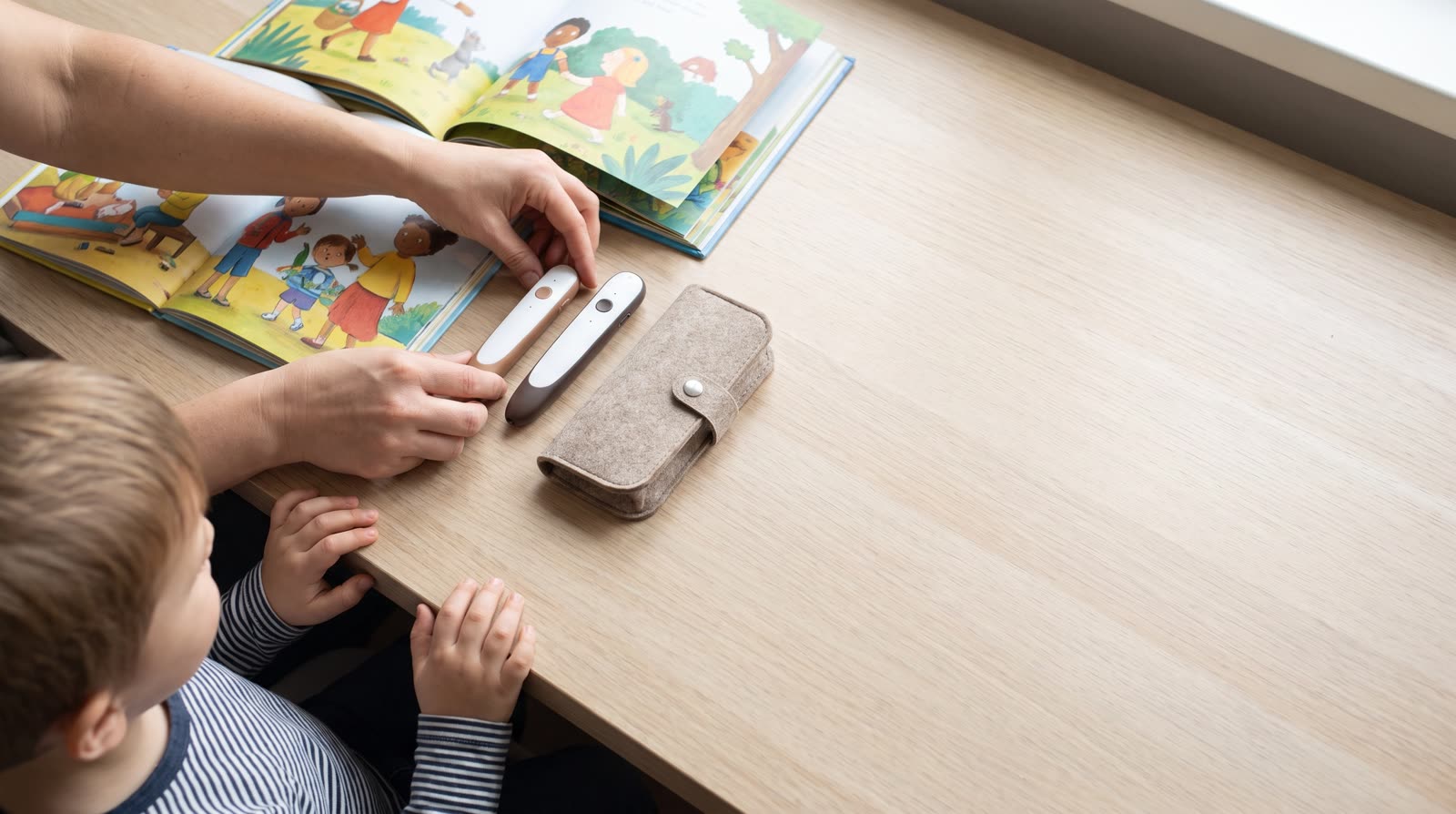
Brand-specific reading pens operate primarily through Optical Identification (OID) technology, which relies on microscopic dot patterns printed alongside or beneath visual artwork on paper. These invisible or semi-visible dot matrices encode precise coordinate data corresponding to audio files stored on the device's internal flash memory or external TF card. When the optical sensor at the tip of the pen touches a specific spot on the page, the microprocessor instantly decodes the coordinate data and plays the corresponding audio track—such as a word pronunciation, sound effect, character dialogue, or musical note. Because the OID coding scheme is bound to a specific book series or publishing house, the content compatibility is inherently closed-loop. Publishers must compile audio data into proprietary formats (such as .BNK, .DAT, or encrypted WAV files) that match the pen's firmware checksum and decoding dictionary. This architecture ensures high fidelity, instant response times, and zero latency, making it ideal for toddlers and early pre-readers who require immediate auditory reinforcement without navigating complex menus or digital interfaces.
Optical Character Recognition (OCR) and Text-to-Speech in Universal Scanning Pens
In contrast, universal scanning pens are engineered around Optical Character Recognition (OCR) engines, line-scanning cameras, and Text-to-Speech (TTS) synthesis algorithms. Rather than depending on pre-printed invisible dot codes, a universal scanning pen captures a visual image of printed text lines as the user glides the device across a page. The onboard processor or companion software runs OCR algorithms to convert pixel data into editable character strings, which are then processed by synthesized voice engines or offline translation dictionaries to read the text aloud. This technology architecture allows universal scanning pens to achieve near-infinite content compatibility with standard printed materials, textbooks, newspapers, and novels without requiring special publishing pre-press preparation. However, this flexibility comes with distinct trade-offs: universal scanners rely heavily on linear text tracking, steady hand coordination, and clear typography, rendering them less suitable for young children, picture books with non-linear layouts, or interactive illustrated storytelling where touching specific graphical elements triggers contextual audio.
Core Architectural Differences in Audio Data Handling
The fundamental divergence between brand-specific reading pens and universal scanning pens lies in how audio content is authored, stored, and retrieved. Brand-specific systems utilize pre-recorded human-voice narration, professional sound design, and structured interactive scripts compiled specifically for each book title. The audio files are pre-loaded onto the pen via USB or downloaded from publisher portals, ensuring that every pronunciation, inflection, and musical arrangement is culturally polished and pedagogically verified. Universal scanning pens, conversely, depend largely on dynamic Text-to-Speech synthesis or cloud-based translation servers. While TTS offers boundless scalability across multiple foreign languages without custom recording studio sessions, synthesized voices often lack the natural cadence, emotional warmth, and dramatic inflection crucial for early childhood literacy development. For B2B publishers and educational distributors, evaluating whether their target audience requires pre-recorded human-voice storytelling or general-purpose text decoding is the primary architectural decision.
Content Compatibility Across Publishing Ecosystems
Publisher-Controlled Interactive Books and Custom Audio Files
Brand-specific reading pens establish a closed publishing ecosystem where every book title must be explicitly programmed into the pen's firmware or audio library. For publishing houses, this closed architecture provides robust intellectual property (IP) protection, preventing unauthorized duplication of copyrighted audio files or pirated book companions. When distributors or publishers partner with manufacturers to develop custom book sets, they maintain absolute control over the curriculum structure, vocabulary progression, cultural localization, and audio content. Each book page is designed with designated interactive touch zones that trigger specific narrative tracks, encouraging active participation. However, this closed content compatibility means that end-users cannot use a brand A reading pen on brand B talking books unless both brands share identical OID encoding specifications and firmware protocols—a rare occurrence in commercial markets due to proprietary licensing agreements.
Open-Text Compatibility and Limitations of Universal Scanners
Universal scanning pens offer open-content compatibility, allowing users to scan printed text across virtually any standard book, worksheet, or publication. This makes them popular among middle school students, language learners, and adults requiring dictionary lookups or quick document translation. From a B2B distribution perspective, universal scanners eliminate the need to bundle specific physical book inventories with the hardware, reducing inventory management complexity. Nevertheless, open content compatibility introduces severe limitations when applied to early childhood education. Toddlers and preschoolers lack the fine motor control required to steadily glide a scanning tip across a single line of text. Furthermore, universal scanners cannot interpret illustrations, spot illustrations, interactive game icons, or multi-directional story elements found in modern picture books, limiting their utility in pre-literacy settings where visual-auditory association is paramount.
Multi-Language and Custom Curriculum Integration Challenges
As global educational markets demand versatile language learning tools, B2B buyers must evaluate how each pen type handles multi-language content. Brand-specific reading pens accommodate bilingual or multilingual publishing by assigning different OID coordinate channels or multi-language audio files to the same book layout. For instance, touching the English text triggers an English native recording, while touching the adjacent Spanish text triggers a Spanish recording—all within the same printed page. Universal scanning pens achieve multi-language support through onboard translation engines and offline language packs, allowing users to scan foreign text and instantly hear translations. While universal pens excel at cross-lingual dictionary support for independent learners, brand-specific pens provide superior structured bilingual immersion, where professional voice actors deliver culturally authentic pronunciation tailored to early language acquisition milestones.
Hardware and Software Sourcing Considerations for B2B Buyers
Firmware Customization and Proprietary Security Protocols
When sourcing reading pens from Original Equipment Manufacturers (OEM) or Original Design Manufacturers (ODM), B2B buyers must examine firmware customization capabilities. Brand-specific reading pens require custom firmware integration, including unique boot logos, localized menu voices, custom volume limits, and proprietary encryption keys that ensure only authorized audio files can be loaded onto the device. Manufacturers collaborate with publishers to establish secure file transfer protocols and software update utilities. Universal scanning pens, conversely, focus firmware development on high-speed OCR processing, memory management for multilingual dictionaries, Wi-Fi connectivity modules, and Bluetooth audio syncing. For distributors aiming to build a proprietary brand, custom OID firmware development offers stronger brand loyalty and ecosystem lock-in, whereas generic universal scanners offer faster time-to-market with standard off-the-shelf software.
Firmware Upgrades, Data Management, and Content Packaging
Managing software updates and content packaging across international distribution channels represents a vital operational consideration. Brand-specific reading pens require users or institutional administrators to download structured audio packages (.pack or .bin files) corresponding to newly purchased book titles and copy them to the pen storage via USB cable or companion mobile application. B2B buyers must ensure that their manufacturing partners provide stable content management software and clear documentation for end-users and schools. Universal scanning pens often rely on OTA (Over-The-Air) Wi-Fi firmware updates, cloud dictionary synchronization, and automatic system patches. While OTA updates offer convenience for tech-savvy users, they require robust server infrastructure, data privacy compliance (such as COPPA and GDPR for child-facing devices), and ongoing maintenance that publishers must factor into their long-term operational budget.
Quality Control and Component Standardization in Manufacturing
Manufacturing consistency directly impacts product reliability and brand reputation in B2B supply chains. Brand-specific reading pens depend heavily on the precision of optical sensor modules (such as high-speed CMOS cameras embedded in the pen tip), infrared LED illumination, and durable ABS plastic enclosures designed to withstand drops by young children. Strict quality control protocols during OID dot-code printing and sensor calibration are paramount; even minor printing discrepancies or optical misalignments can cause reading errors. Universal scanning pens require advanced optical character recognition camera modules, high-resolution touch screens or display panels, and high-capacity processors. B2B purchasers should verify manufacturer certifications, sample testing procedures, and component sourcing transparency to ensure long-term durability and compliance with international electrical safety standards.
ReadGlo project support
Request Technical Specification
Explore ReadGlo's customizable talking pen hardware and OID publishing solutions for your next educational book project.
Evaluating End-User Experience for Children and Educators
Tactile Interaction, Simplicity, and Cognitive Load for Young Readers
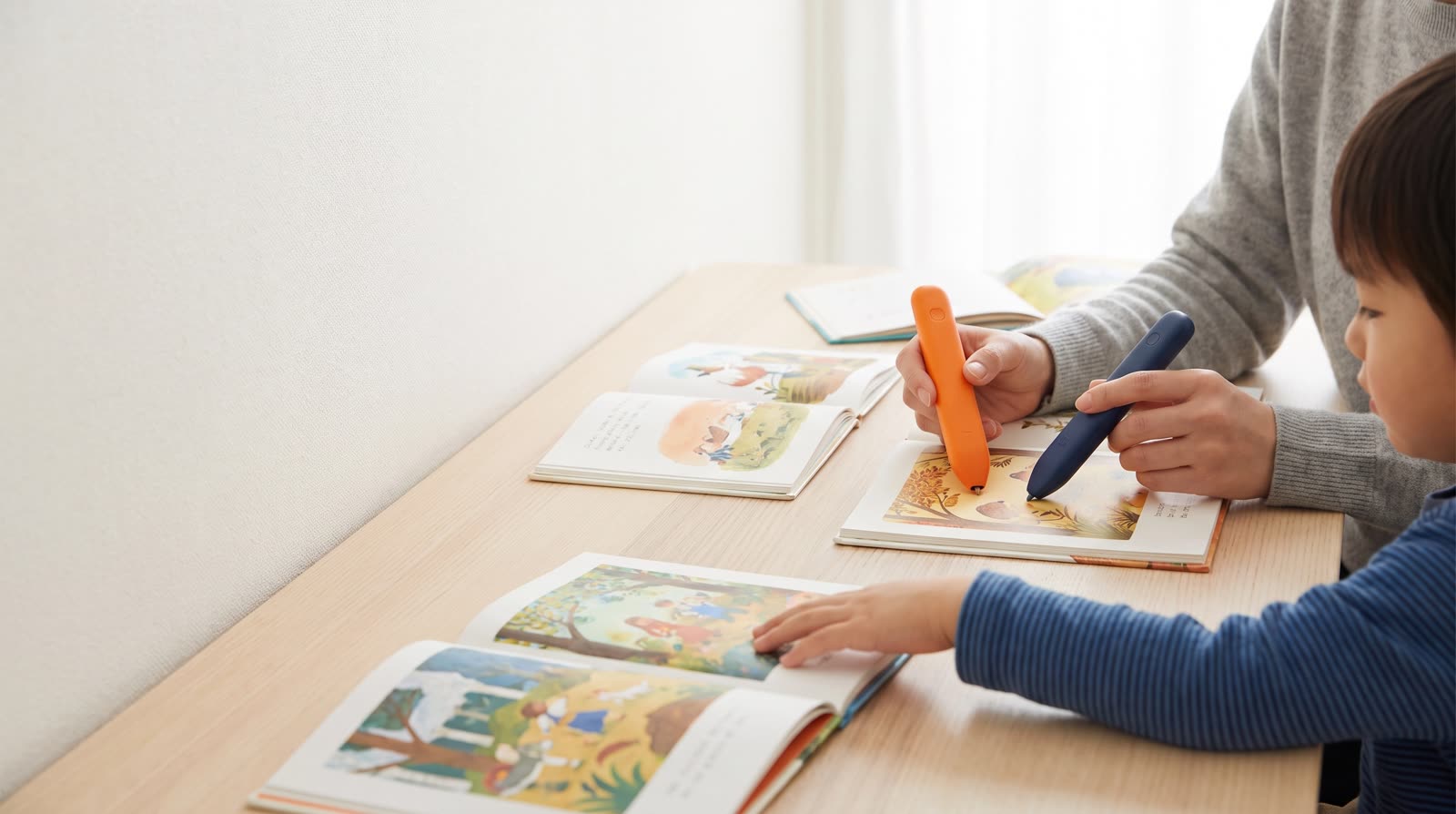
Pedagogical effectiveness depends heavily on ergonomic design and cognitive load management. Brand-specific reading pens are explicitly engineered for early childhood learners, featuring chunky, tactile grips, simplified button layouts (power, volume, recording), and intuitive point-and-click operation. Touching any illustration or word provides immediate sensory feedback, fostering independent exploration and intrinsic motivation without causing frustration. Universal scanning pens feature slimmer, pen-like profiles with digital screens, directional buttons, and menu navigation systems tailored for older students and adults. For young children, the complex menu structures and scanning motions required by universal pens create high cognitive load, frequently leading to abandonment. B2B buyers must align product ergonomics and interaction paradigms with the cognitive developmental stage of their target demographic.
Audio Synchronization, Pronunciation Accuracy, and Pacing
The quality of auditory delivery shapes language acquisition and phonetic awareness. Brand-specific reading pens utilize pre-recorded audio tracks produced by professional voice talent in recording studios, ensuring flawless phonemic pronunciation, natural sentence phrasing, and appropriate emotional pacing for stories. This is particularly crucial for early literacy and phonics instruction. Universal scanning pens rely on Text-to-Speech synthesis engines which, while increasingly sophisticated, occasionally exhibit robotic intonation, mispronunciations of proper nouns, or unnatural phrasing pauses. When evaluating product lines for educational publishing, distributors must assess whether the audio output meets professional educational standards endorsed by literacy experts and early childhood educators.
Adult Supervision, Safety, and Compliance Standards (CPSC, AAP)
Safety and regulatory compliance are non-negotiable requirements for B2B educational products. Children's learning devices must adhere to rigorous international safety frameworks, including the U.S. Consumer Product Safety Commission (CPSC) guidelines for children's products, EN71 toy safety standards in Europe, and battery safety certifications (UN38.3, MSDS). Furthermore, professional guidelines from organizations such as the American Academy of Pediatrics (AAP) emphasize the importance of co-viewing, screen-free tactile engagement, and balanced media use in early childhood development. Brand-specific reading pens, by focusing on physical book interaction and screen-free audio playback, align closely with AAP recommendations for reducing passive screen time while promoting active parent-child reading routines.
Strategic Guidelines for Publishers, Distributors, and EdTech Brands
When to Select Brand-Specific Reading Pen Solutions
Publishers and distributors should prioritize brand-specific reading pen solutions when targeting preschool, kindergarten, and early elementary school segments (ages 2 to 8). This hardware model is ideal for companies building proprietary book series, graded reading programs, bilingual immersion curricula, and interactive storybooks. By locking content compatibility to a branded ecosystem, publishers secure long-term customer lifetime value (LTV), as families and schools continuously purchase new book titles that work with their existing reading pens. Collaborating with specialized OEM/ODM manufacturers like ReadGlo ensures access to robust OID encoding technology, custom audio packaging tools, and tailored manufacturing support.
When to Consider Universal Scanning or Hybrid Approaches
Conversely, B2B buyers should consider universal scanning pens or hybrid product lines when targeting older students (middle school, high school, university), adult language learners, or general stationery retail markets where book compatibility cannot be restricted. Universal scanners serve a distinct purpose for vocabulary lookup, translation, and reference study across diverse publishers. However, for dedicated early reading initiatives, combining brand-specific OID reading pens with high-quality talking picture books remains the benchmark industry standard. Some advanced EdTech brands also explore hybrid devices featuring dual-mode scanning and OID reading, though cost and firmware complexity must be carefully weighed during product planning.
Sample Evaluation, Specification Review, and Manufacturer Collaboration
Before committing to large-scale B2B procurement, publishers and distributors must execute a rigorous sample evaluation protocol. Key evaluation steps include: (1) Requesting physical working samples of both the reading pen hardware and corresponding sample book sets; (2) Testing optical sensor responsiveness across various paper finishes, matte lamination, and color densities; (3) Verifying audio clarity, volume control limits, battery longevity, and USB/charging stability; (4) Inspecting software tools used for audio compilation and firmware flashing; and (5) Reviewing third-party compliance testing reports (CPSC, CE, RoHS, FCC). Collaborating closely with experienced manufacturing partners ensures that custom specifications are accurately executed, minimizing production risks and accelerating market entry.
Frequently Asked Questions
What is the primary technical difference between a brand-specific reading pen and a universal scanning pen?
Brand-specific reading pens use Optical Identification (OID) technology to read invisible dot codes printed on specific book pages, playing pre-recorded audio files bound to that publisher's ecosystem. Universal scanning pens use Optical Character Recognition (OCR) and Text-to-Speech (TTS) engines to scan standard printed text lines and read them aloud dynamically without requiring proprietary dot-coded books.
Can a brand-specific reading pen play books from different publishing brands?
Generally no. Brand-specific reading pens have closed content compatibility. A reading pen from Brand A will only recognize and play audio for books specifically encoded and compiled for Brand A's OID dot pattern and firmware checksum, unless both brands share an identical, interoperable licensing standard.
Why are brand-specific reading pens recommended over universal scanners for toddlers and preschoolers?
Toddlers and preschoolers lack the fine motor skills required to steadily glide a scanning pen across a line of text. Brand-specific reading pens feature simple point-and-click operation on illustrations and words, immediate audio feedback, pre-recorded human voice narration, and screen-free tactile engagement that aligns with early childhood developmental guidelines.
How do educational publishers protect their intellectual property when using OID reading pens?
Publishers protect their IP through proprietary OID encoding algorithms, encrypted audio file formats (.BNK or .DAT), and hardware firmware locks. These security measures ensure that unauthorized audio files cannot be played on the device and that companion book files cannot be easily pirated or copied to competing hardware.
What should B2B buyers evaluate when selecting a manufacturing partner for reading pen projects?
B2B buyers should evaluate optical sensor precision, OID printing quality control, audio compilation software stability, firmware customization capabilities, battery safety certifications, and compliance with international children's product safety standards such as CPSC and EN71.
How do universal scanning pens handle multi-language content compared to brand-specific pens?
Universal scanning pens rely on onboard translation dictionaries and offline language packs to translate scanned text into various languages dynamically. Brand-specific reading pens handle multi-language content through pre-recorded audio tracks assigned to different OID coordinate channels on the same printed page, offering native human pronunciation for bilingual curricula.
Conclusion
Choosing between brand-specific reading pens and universal scanning pens is a foundational strategic decision for educational publishers, distributors, and EdTech brands. While universal scanning pens offer open-content flexibility and OCR translation for older independent learners, brand-specific reading pens utilizing OID technology remain the definitive gold standard for early childhood literacy, toddler engagement, and proprietary publishing ecosystems. By understanding the technological trade-offs in content encoding, audio production, firmware customization, and end-user ergonomics, B2B buyers can curate product lines that deliver exceptional educational value and sustainable commercial success. Partnering with seasoned manufacturing leaders like ReadGlo ensures rigorous quality control, robust technical support, and seamless integration for your next educational publishing venture.
Continue your research
Related reading pen buyer guides
Use these related guides to compare the next product, content, sourcing or channel decision in your project.
- Product ComparisonBrand-Specific Reading Pen vs. Universal Scanning Pen: Evaluating Long-Term Costs for B2B Educational BuyersRead this guide
- Product ComparisonBrand-Specific Reading Pens vs. Universal Scanning Pens for Toddlers: Evaluating Independent Usability for B2B ProcurementRead this guide
- Product ComparisonComparing Learning Value: Talking Picture Books Versus Ordinary Picture Books in Early Childhood EducationRead this guide
Continue with ReadGlo
See product specifications and request model-specific documentation.
ReadGlo project support
Partner With ReadGlo
Contact our B2B team to discuss OEM/ODM requirements, custom audio packaging, and sample evaluation for your publishing catalog.