
Keep item categories separate
List books, devices, cards and accessories separately. For a reading pen gift set, do not assume chargers or pouches are included.
Retail gift-set planning / B2B planning
Define a consumer-facing set before requesting a quote: separate proposed items, editions, pack counts and packaging decisions. This brief starts a review, not an available bundle or confirmed order.
Your next purchasing decision—not an order or an already approved service.
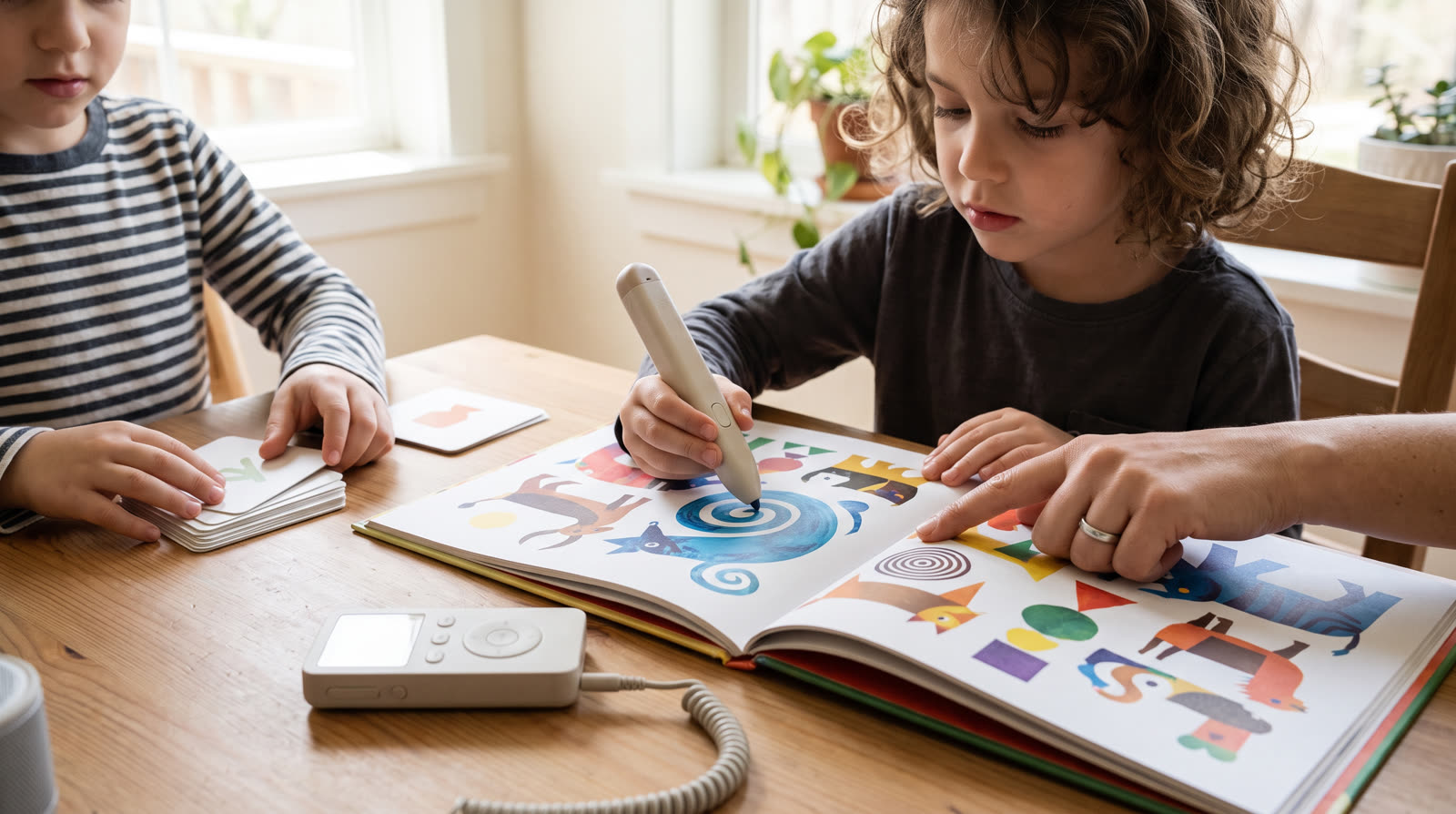
Separate composition, edition, presentation and market review; accepting one detail does not approve the whole pack.
| Decision | Your starting input | Review before approval | Do not assume |
|---|---|---|---|
| Consumer-facing composition | List each book, device, card and accessory; identify exclusions. | Compare the proposed contents with the intended shopper experience. | A reference list does not establish supported contents or availability. |
| Edition and function | Specify text, audio, instruction language and version references. | Define a functional sample check for the proposed configuration. | Language preference alone does not confirm pairing or content permission. |
| Retail presentation | Provide pack counts, artwork drafts and shelf-display needs. | Review inclusions, copy, labels and unpacking instructions together. | A packaging draft is not a released or approved retail pack. |
| Market responsibilities | Identify destination, responsible importer and records questions. | Ask your specialist to assess the final configuration and obligations. | Functional approval is separate from rights and market review. |
01 / A specific buying task
For educational gift sets wholesale, begin with a clear proposed consumer pack rather than a distributor assortment list.
List books, devices, cards and accessories separately. For a reading pen gift set, do not assume chargers or pouches are included.
Record per-pack item counts and requested retail pack quantity separately. Identify spare items and flag alternatives instead of silently substituting them.
Identify separately needed items and decorative props. A retail learning product bundle needs an explicit contents list, not just a lifestyle image.
02 / A specific buying task
Specify text, audio and instruction versions separately. Give each edition its own register row.
List text edition, audio language, device reference and instruction version. Flag pronunciation questions; matching language labels do not establish component pairing.
Record rightsholder, territory, medium, language, term, attribution and written permission. Check reproduction, translation and recording separately; purchasing content does not grant blanket reuse rights.
For a private label learning kit, separate brand-artwork and educational-content permissions. Share permitted references and flag gaps; logo placement does not authorise recordings.
Send the market, proposed scope and the decision you need to make. Unknown optional references can remain to be confirmed.
Send Your Retail Gift-Set Brief03 / A specific buying task
For reading pen retail packaging, align consumer-facing contents, instructions and labels.
Describe box format, shelf orientation, opening sequence and gift-wrapping needs. Draft identification and instruction spaces; defer fit claims until configuration review.
Separate box copy, device markings, book details and inserts. Specify languages, attribution and versions; remove unverified compatibility, certification or learning-outcome claims.
For a proposed U.S. children's-product pack, ask your specialist about applicable product and packaging tracking information. Draft labels do not prove compliance.
04 / A specific buying task
Tie gift set sample approval to a named configuration, recorded scope and open issues.
Request checks of proposed interaction, audio, instructions and unpacking. Sample scope, arrangements and costs remain for discussion; no free samples are offered.
Record observations by set reference and edition. Separate accepted details from open questions; request renewed review for changed contents, recordings or packaging.
Identify destination and responsible specialist. Ask about applicable tests, documents, warnings and permissions; a working sample does not confirm market requirements are met.
No. This route collects proposed compositions and packaging requirements. References are planning inputs, not an available pack catalogue or an approved configuration.
State per-pack counts for every separate item, then the number of retail packs requested. Identify additional loose or spare items separately to prevent ambiguous totals.
Propose each edition on its own row, with text, audio and instruction versions. Each needs its own pairing questions and permission review; no edition support is implied.
Show proposed contents, exclusions, label language, artwork status and instructions. Mark illustrative images clearly and identify claims or layout decisions that still require review.
No. A functional check covers its recorded configuration and questions. Rights, applicable rules and market-specific records require separate review by the responsible parties.
Do not assume purchase grants reuse rights. Identify the rightsholder and written permissions for the intended territory, medium, language and term, including attribution requirements.
No. Checkboxes express requests for discussion, not a supplied document catalogue. Explain the proposed set and market so the relevant record questions can be identified.
Use distributor assortment planning for a first-order multi-SKU RFQ, or OEM/ODM for product-development scope. This route focuses on what a retail shopper receives and how it is presented.
Identify proposed items without assuming pack inclusion or availability.
Use the separate first-order multi-SKU RFQ route.
Separate product development from retail pack planning.
Discuss manuscript, recording and publishing-edition requirements.
Consider shopper context before proposing set composition.
Connect presentation choices with the proposed retail contents.
An editable preparation checklist, not a quotation, report or approval.
Sources explain review areas. They are not certifications, audited evidence or approval of a ReadGlo product.
CPSC: Tracking labels — U.S. children's-product guidance on origin and batch identification, to the extent practicable; not proof of this proposed set's compliance or a CPC.
CPSC: Children's Product Certificate — Guidance on covered products, issuers and supporting tests. Ask your specialist to review the final configuration and current obligations; a generic badge is not matching evidence.
WIPO: Copyright questions — General copyright guidance: reproduction, translation and recording can need different permissions. Buyer rights records and written permission remain necessary; prior purchase is not a blanket licence.
A focused next decision
Share proposed references and open questions. Context fields are optional; requests do not mean materials are supplied.
Start with permitted summaries, not confidential manuscripts, source files, payment documents or children's personal data. No upload or phone number is required.
Download Project Checklist (TXT)Prefer email?
info@readglo.comManuscripts, authorized audio and edition acceptance.
Select catalogue references and send line-item requirements together.
Class and site context, allocation planning and evaluation questions.
German-language brief for editions, rights and destination-market review.
Compare title directions, requested interaction and sample scope.
Define card themes, language versions and the intended interaction route.
Compare product references with edition, rights and review records.
Record existing book editions, device builds and open pairing questions.
Request identity, configuration and evidence details for buyer review.
Compare prior references, proposed repeat quantities and open changes.